Get Full Government Meeting Transcripts, Videos, & Alerts Forever!
Get email alerts on the Identification And Elections topic
No spam. Unsubscribe anytime.
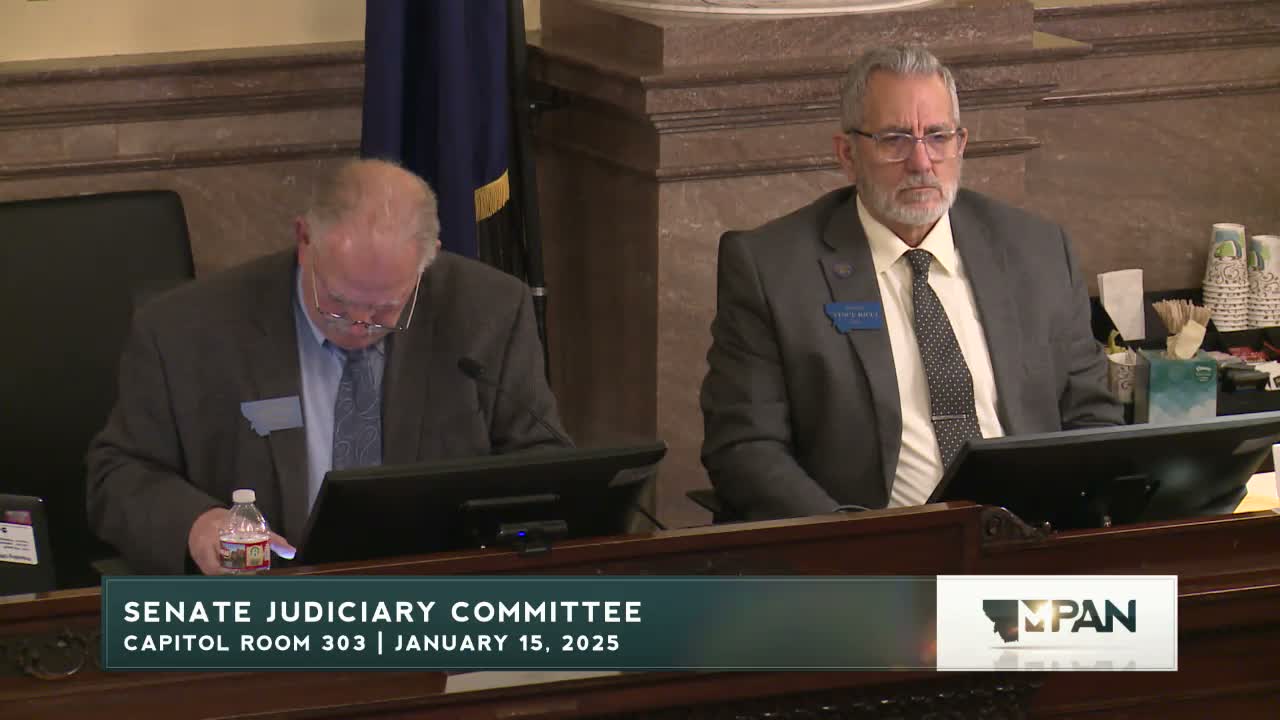
Senate panel hears SB 91 to add citizenship marker to Montana driver’s licenses
Summary
Sen. Teresa Manzella’s SB 91 would place an eagle image on licenses and IDs for U.S. citizens beginning Jan. 1, 2026; supporters said it would aid election officials and law enforcement, while opponents warned it could add barriers for Native voters. The Motor Vehicle Division estimated a one-time fiscal impact of about $177,000 and a phased rollout of up to 12 years.
Sen. Teresa Manzella, sponsor of Senate Bill 91, told the Senate Judiciary Committee the bill would require driver’s licenses and state identification cards to display an eagle image to signify U.S. citizenship beginning Jan. 1, 2026. "This is a simple bill that makes a large impact," Manzella said, arguing the marker would help election administrators and benefit programs distinguish citizens from noncitizens.
Supporters at the hearing included officials and election workers. Austin James, speaking for Secretary of State Christy Jacobson’s office, said SB 91 "allows Americans to proudly display their status as an American" and asked the committee to give the bill a "do pass." Darren Gaub, an election judge from Lewis and Clark County, told senators a visible citizenship marker would speed the processing of same-day registrations and help election judges tell who is eligible to vote.
Several members of the public described concerns about immigration and public safety and urged passage. Bill Lisonbee recounted border observations and argued the marker could help law enforcement and employers; he urged senators to "see fit to move forward with Senate bill 91."
Opponents questioned whether the marker would solve the problems sponsors described and raised access concerns for Native Americans. Keaton Sunchild of Western Native Voice said tribal IDs and other barriers already complicate voting and that putting a citizenship symbol on state IDs "is just one more piece of busy work" for voters and election officials.
Informational testimony from the Motor Vehicle Division clarified current practice and costs. MVD Administrator Laurie Bakri said current licenses and Real ID endorsements certify lawful presence but do not denote citizenship on the face of the card. She described vendor and systems work needed to add a citizenship marker, saying the vendor’s input reduced an initially larger estimate and that the combined one-time fiscal-note change is about $177,000. Bakri also outlined rollout timing: the change would begin on Jan. 1, 2026, and, because of existing renewal cycles (CDL/over-75: 4 years; Real ID endorsement: 8 years; standard license: 12 years), full saturation of the marker could take up to 12 years though citizens could request replacements earlier.
Committee members asked whether published statistics exist on voter fraud; Austin James said his office has not published such statistics. Senators also questioned whether a marker could cause misinterpretation by police or the public and whether it was necessary because current licensing already requires lawful presence to obtain a license. Bakri replied that lawful presence for driving does not equal voting eligibility, and the marker would make that distinction visible.
Sponsor Manzella closed by citing federal law on voter registration verification and said the marker would improve election accuracy and benefit distribution; she asked for a do-pass. The chair said executive action on SB 91 will be postponed until an updated fiscal note reflecting the revised vendor estimate is printed.
Next steps: the committee held the bill for updated fiscal documentation; no final vote was recorded at the hearing.