Get Full Government Meeting Transcripts, Videos, & Alerts Forever!
Get email alerts on the Public Access Land Enforcement topic
No spam. Unsubscribe anytime.
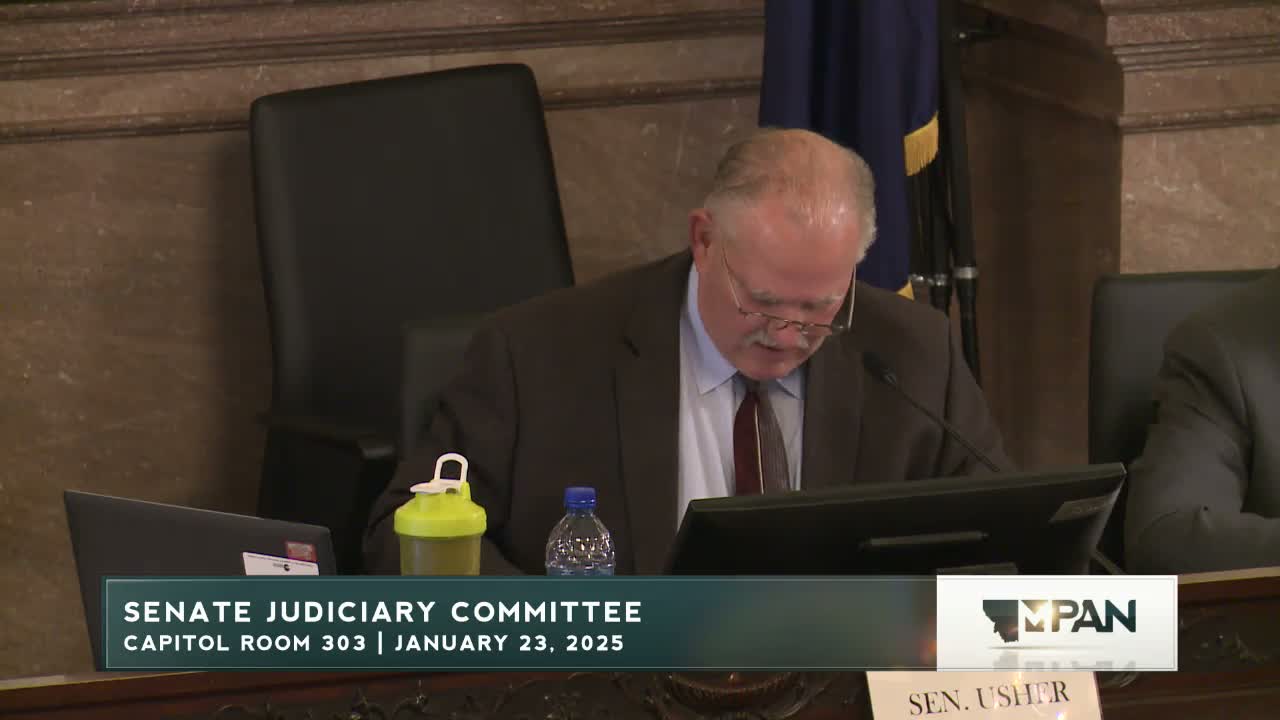
Committee hears bill to let FWP enforce landowner 'ranch rules' on enrolled private lands
Summary
Senate Bill 83 would let Montana Fish, Wildlife & Parks help enforce landowner-drafted rules on private property enrolled in public-access agreements; supporters say it will protect voluntary access, opponents and some senators urged clearer language about limits on agency authority. The committee later tabled the measure in executive action.
Senate Bill 83, introduced by Senator Barry Logie, would authorize Montana Fish, Wildlife & Parks (FWP) to assist private landowners by enforcing “ranch rules” on parcels enrolled in public-access agreements, supporters told the Senate Judiciary Committee. The sponsor said the change is intended to help ranchers who allow public hunting and other access but are frustrated by repeat rule violations.
The bill’s supporters framed it as a tool to preserve voluntary public access. Christy Clark, director of Montana Fish, Wildlife & Parks, told the committee that access programs depend on landowner cooperation and that “rules without enforcement are just simply suggestions.” Representatives of conservation groups and hunting organizations said a lack of enforcement has contributed to lost acreage from the block-management program, and a large private landowner, Green Diamond Resource Company, said the bill would help keep working-forest land open to recreation.
FWP’s chief of law enforcement, Ron Howell, described practical examples to explain the enforcement gap the bill addresses. Howell cited a scenario in which landowner rules require hunters to park in a designated area and walk in; under current law, outside of formal block-management circumstances, enforcement options are limited to criminal trespass notices. Howell said SB 83 would add “another tool in the toolbox” that could include verbal warnings, written warnings or citations tailored to landowner rules rather than relying only on trespass notices.
Committee members pressed FWP officials on how the bill would work in practice. Senators asked whether wardens could already enforce rules with landowner permission and whether sheriffs could handle the same violations; witnesses said local law enforcement can be called, but that FWP’s temporary presence during hunting seasons often makes enforcement by game wardens more practical. Some senators worried the bill could reduce flexibility or expand agency authority over private property and urged clearer drafting to ensure the rules being enforced are those set by landowners, not new rules imposed by the department.
After the hearing the sponsor asked for a due pass, but during executive action the committee voted to table SB 83 pending further drafting and stakeholder conversations. The hearing record and committee debate show supporters view the bill as a way to keep voluntary access open by addressing repeat offenders, while some legislators want narrower language and assurances the statute will not convert landowner-drafted rules into broad agency mandates.