Get Full Government Meeting Transcripts, Videos, & Alerts Forever!
Get email alerts on the Homelessness Pathways Home topic
No spam. Unsubscribe anytime.
La Crosse presenters report progress on Pathways Home plan, outline housing and services to reduce homelessness
Summary
City and county Pathways Home leaders gave a 20-month update on a five-year plan launched in January 2024, reporting data-driven progress, new staffing and near-term housing additions while urging sustained funding and community support to reach a projected 'functional zero' by 2028.
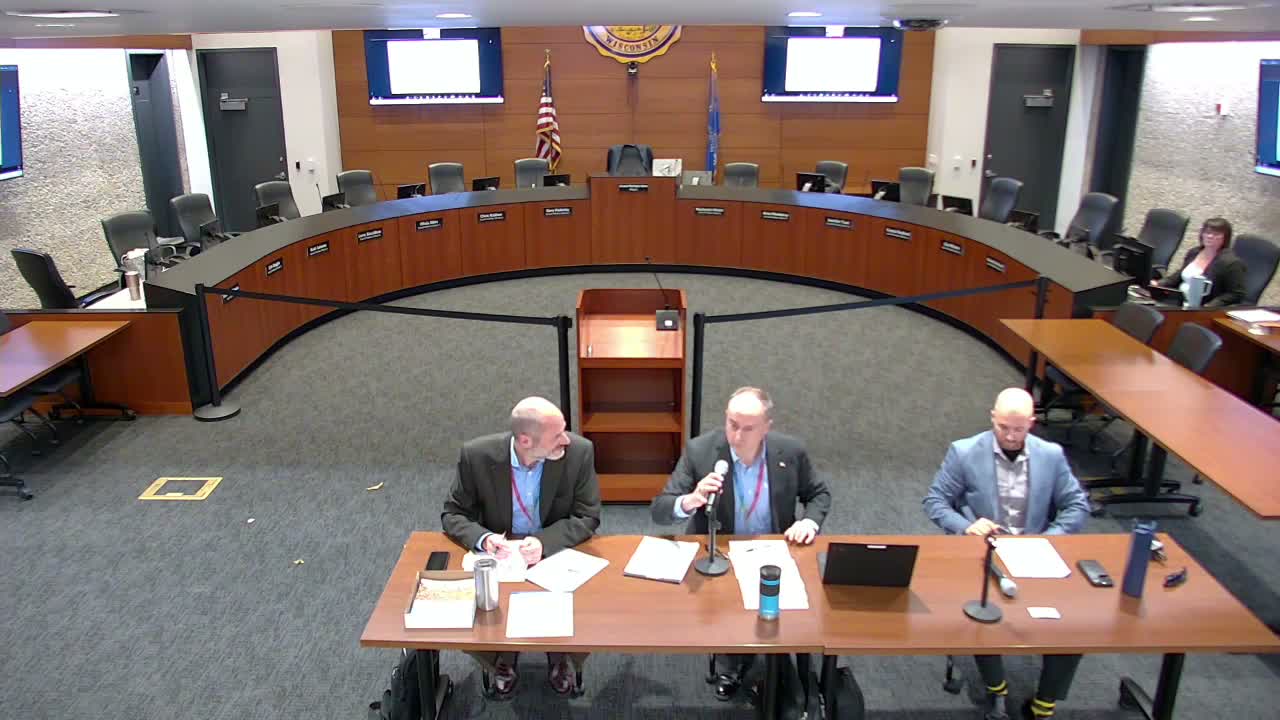
Jason Witt, director of the La Crosse County Human Services Department, and project staff presented a 20-month status update on Pathways Home — a joint city–county initiative launched in January 2024 aimed at ending outdoor homelessness in La Crosse.
The session, billed as an informational presentation, laid out the initiative’s two core goals: eliminate visible street homelessness and reach a “functional zero” by creating a system that quickly connects people to shelter, housing and supportive services. "Each number up here represents a human being," said Brian Sampson, a Pathways Home presenter, summarizing the project’s emphasis on by-name data and individualized case planning.
Pathways staff described several elements they say are already producing results. They created a by-name list to track people experiencing homelessness and a public data dashboard on lacrossecounty.com/pathwayshome; Sampson said that monthly updates and narrative posts accompany the posted metrics to increase transparency. He said the team’s "pathways conferencing," a weekly coordination meeting with more than a dozen nonprofit partners focused on roughly 30 households, has shortened the average time from first experiencing homelessness to permanent housing from about 314 days to about 90 days for people engaged in the process.
Presenters also described the specialized services and staffing that support placements. The team said it now has six social workers on the Pathways effort (three focused on intake, three on ongoing support) and recently added three peer support specialists with lived experience, bringing the specialized unit to nine staff. Jim Drees, the project manager hired in July 2024, said these roles aim to expand case management capacity that, staff contend, is essential to sustaining housing placements.
Several near‑term housing and shelter additions were listed: 10 beds at Hillview/Park Lane Studios expected in late 2025, 12 beds at Karuna funded from city ARPA dollars anticipated in 2026, 12–16 units through Coulee Cap, and an initial five units under a pathways-held-lease approach that the presenters said could expand if successful. Under pathways-held leases, the city would sign leases with private landlords and sublease to people exiting homelessness, staff said.
Speakers reviewed funding prospects and partnerships. Presenters said La Crosse County administrators were considering directing $200,000 from opioid settlement funds to housing. The county has also committed $100,000 per year for three years to the Reach Center to support housing navigation and tenant–landlord mediation. Staff said they are pursuing federal and philanthropic sources — including HUD, ARPA, Department of Justice grant opportunities and local philanthropy through the La Crosse Area Community Foundation — to fill remaining gaps.
Staff highlighted new service supports: Wisconsin’s Medicaid supportive housing program (referred to in the presentation as a '1915' approval) was noted as providing up to 150 hours of paid support per person and up to $2,000 in relocation assistance; presenters said the county was an early adopter in the state and had used the relocation assistance twice. The team also applied for a two‑year Department of Justice grant to fund an assertive case management position designed to deflect people from arrest and connect them to housing and services; presenters said the grant could potentially extend to a third year under some scenarios.
On projected need, staff estimated the community will require roughly 80 intensive units and 354 light/moderate units by 2028 to reach functional zero, and said more than a quarter of that projected need is already in process. Sampson noted the community currently needs to house about six more people each month, on average, than become newly unhoused to meet the projection on the planned timeline.
Presenters closed by encouraging community engagement: they said a documentary screening and panel about homelessness responses in other cities would be shown at the Weber Center in mid‑October and that the public dashboard and supplemental narrative are posted monthly so residents can track progress. The information session ended and leaders moved into a planned break before the common council meeting.
No formal motions or votes were taken during the information session; presenters asked attendees to submit questions by email to staff for follow-up.