Get Full Government Meeting Transcripts, Videos, & Alerts Forever!
Get email alerts on the Volunteer Firefighters topic
No spam. Unsubscribe anytime.
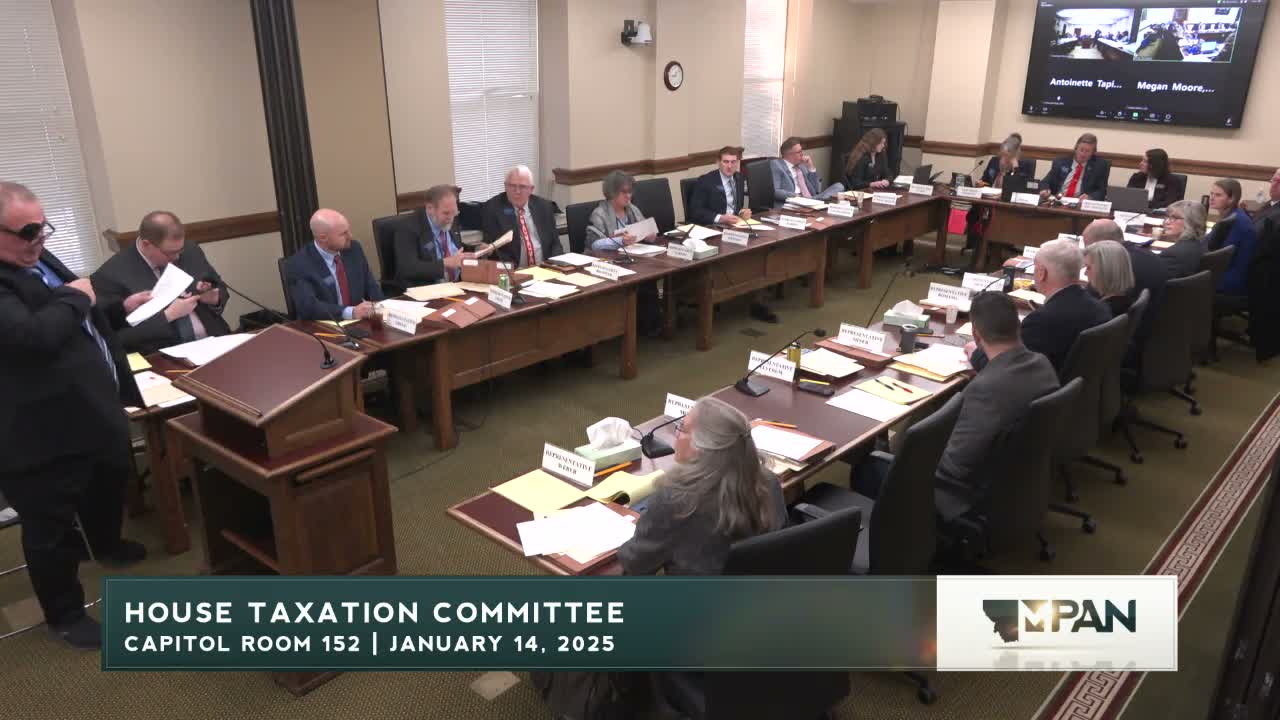
Committee hears bill to exempt about $3,000 of income for volunteer firefighters
Summary
Representative Lou Jones introduced HB129 to provide roughly a $3,000 income exemption for active volunteer firefighters and EMS to aid recruitment and retention; proponents emphasized workforce strains while the Montana Society of CPAs urged direct payments or budgeted support instead of tax-code changes.
Representative Lou Jones opened the hearing on House Bill 129, saying the measure would ‘‘provide some meaningful support and recognition from Montana's volunteer firefighters and emergency medical services.’’ The bill would exclude roughly $3,000 of income for qualifying, year‑round active volunteers, producing a per‑person tax benefit the sponsor estimated at about $150–$180 depending on income tax rates.
Several volunteer chiefs and advocates testified in support. Mike Doto, chief of the Centerville Volunteer Fire Department and Montana delegate to the National Volunteer Fire Council, described declining rosters and urged the committee to consider the bill ‘‘as a recruitment and retention’’ tool for departments that struggle to replace volunteers. Eric Somerfeld of the Montana Farmers Union and Ross Fitzgerald, a long‑time volunteer, stressed that training and response demands are greater than in the past and that modest recognition can help keep volunteers engaged. Katie Mack of the Montana Hospital Association told the committee that volunteer EMS is critical to rural health‑care delivery and supported legislative action to bolster retention.
Opposition testimony focused on process and administration rather than opposing recognition of volunteers. Allen Lloyd, executive director of the Montana Society of CPAs, said the society ‘‘reluctantly oppose[s] House Bill 129’’ because implementing benefits in the tax code complicates returns, delays the practical benefit until the next tax filing, and ‘‘circumvents the budget system’’ instead of using an appropriated payment if the legislature wants to provide direct financial support.
Committee members asked technical questions about training requirements, the fiscal note (which sponsors said arrived the same morning), and the population of eligible volunteers (sponsor referenced roughly 4,400 potential beneficiaries). Representative Jones closed by restating the bill’s modest cost and symbolic intent: ‘‘This is about recognition and respect’’ for people who volunteer emergency services.
The committee did not take a vote during the hearing; Chair Fielder closed the record on HB129 and made the witnesses available for follow‑up questions when the fiscal note was finalized.
Ending: The hearing closed with the sponsor available for follow‑up; any subsequent executive action or amendment will be recorded separately.