Get Full Government Meeting Transcripts, Videos, & Alerts Forever!
Get email alerts on the Hb932 Habitat Legacy topic
No spam. Unsubscribe anytime.
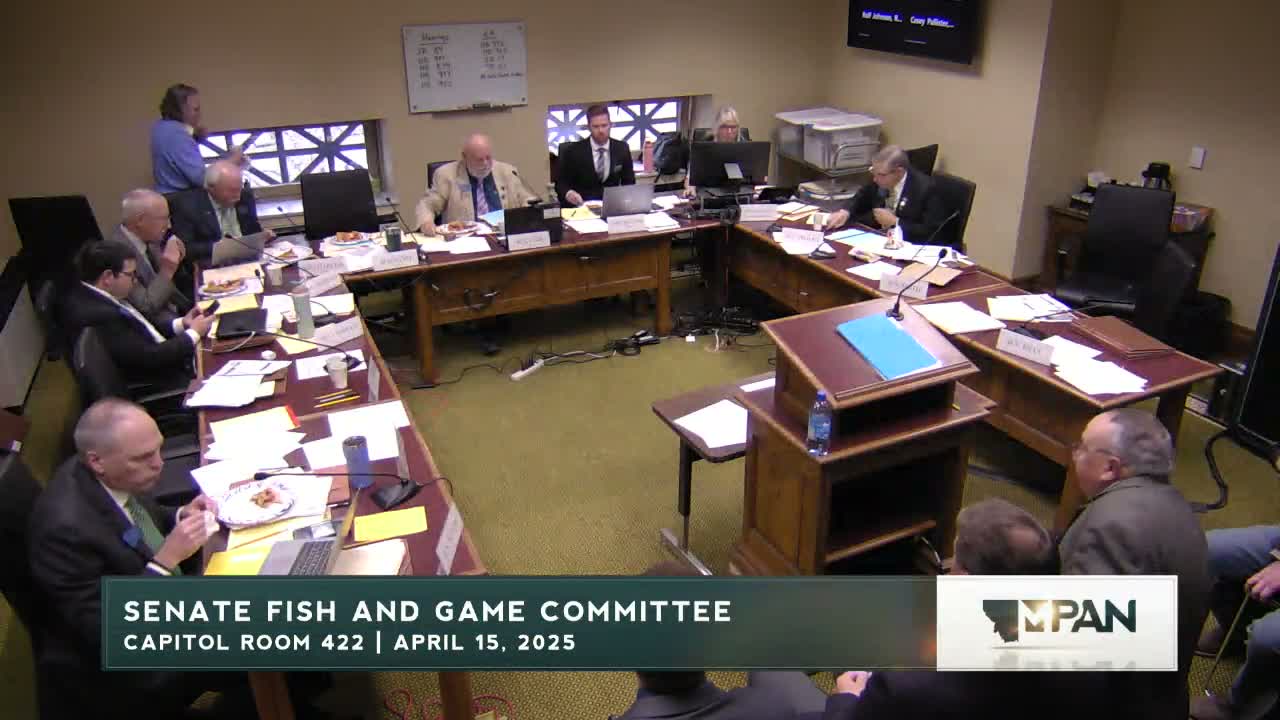
Senate committee advances bill to create Habitat Legacy account for conservation, WIP expansion and wildlife crossings
Summary
House Bill 932 would reallocate a portion of marijuana tax revenue into a new Habitat Legacy account to support landowner stewardship, expand the Wildlife Habitat Improvement Program (WIP) and create a dedicated wildlife‑crossings account; the committee reviewed amendments and sent the bill to the floor.
Representative Ken Walsh presented House Bill 932 to revise the allocation of the recreational marijuana tax dedicated to conservation and access programs. The bill creates a Habitat Legacy account that would direct a portion of the existing Habitat Montana funding into three focused areas: a Stewardship fund, an expanded WIP (Wildlife Habitat Improvement Program) and a big‑game and wildlife crossings account.
Proponents from the Montana Wildlife Federation, Trust for Public Land, Rocky Mountain Elk Foundation and other conservation groups testified in favor, emphasizing the ability to fund on‑the‑ground habitat work, conifer removal, noxious‑weed control, water infrastructure and to provide state matching funds that help Montana secure federal wildlife‑crossing grants. Representative Walsh and committee staff negotiated technical amendments clarifying eligible project types, modifying council membership and preserving administrative caps.
The bill includes targeted appropriations in committee‑agreed amendments (illustrative amounts discussed in the hearing: biennial allocations such as $7.5M for Habitat Montana in one amendment, $2M for WIP, and $500K for wildlife crossings; sponsors and FWP clarified appropriation timing depends on revenue receipts). FWP CFO Lena Havron and other proponents said the bill preserves existing programs while enabling new, priority projects such as highway crossings that reduce vehicle–wildlife collisions.
Opponents raised concerns about administrative capacity for large grants, long‑term management of purchased lands (noxious‑weed liabilities), and the need to preserve sufficient funding for proven programs; sponsor and stakeholders said amendments and administrative caps were intended to address those concerns.
Outcome: The committee adopted negotiated amendments and moved HB932 to the floor with a recommendation to continue work on precise appropriation language in follow‑up amendments. The bill received wide proponent support and will be available for further amendment on the floor.
What to watch: specific appropriation text and amendment language before final passage, and how the bill balances fee‑collection timing and biennial appropriations.