Get Full Government Meeting Transcripts, Videos, & Alerts Forever!
Get email alerts on the Hb907 Landowner Preference topic
No spam. Unsubscribe anytime.
Committee grills sponsors and witnesses as lawmakers debate repeal and rewrite of nonresident landowner license perks
Summary
House Bill 907 seeks to repeal a portion of last session’s HB635 and replace guaranteed nonresident landowner licenses with an incentive tied to state-managed access programs; the bill faced sustained pro– and anti‑testimony and was tabled in committee after amendments failed.
Representative Katie Sullivan opened the public hearing on House Bill 907, which would repeal the provision of last session’s HB635 that created a dedicated nonresident landowner license pool and retain only a modified incentive for landowners who enroll in state access programs.
The bill’s sponsor told the committee HB907 removes the guaranteed nonresident license piece while preserving and expanding the bonus‑point incentive for enrolment in a department-administered access program (reducing the acreage threshold from 2,500 acres to 640 acres and raising the bonus-point fee from $20 to $25).
Proponents — largely resident hunters and conservation groups — argued HB707 restores equity to applicant pools, prevents privatization of public wildlife access and re‑focuses incentives toward verified, public-access programs. Andrew Posewitz said HB635 “did no such thing” to reduce crowding and appealed to Montana values: “We don’t care who you are ... you’ll wait your turn like the rest of us,” he testified.
Opponents — including outfitters, landowner groups and some conservation nonprofits — urged caution, saying HB635 encouraged access and that regional programs and landowners have opened hundreds of thousands of acres voluntarily; they asked for more time and data and cautioned about unintended consequences such as fragmentation and the difficulty of reversing long‑standing program changes.
The committee’s fiscal and legal questions focused on transparency and accountability: witnesses and members debated whether there is reporting or public tracking of who received landowner licenses under HB635 and whether the statute effectively ‘guaranteed’ a set-aside of nonresident licenses (a licensing official explained the program reserves 15% of the nonresident combo license pool for the landowner preference pool and the number of eligible nonresident landowners is small relative to that set‑aside).
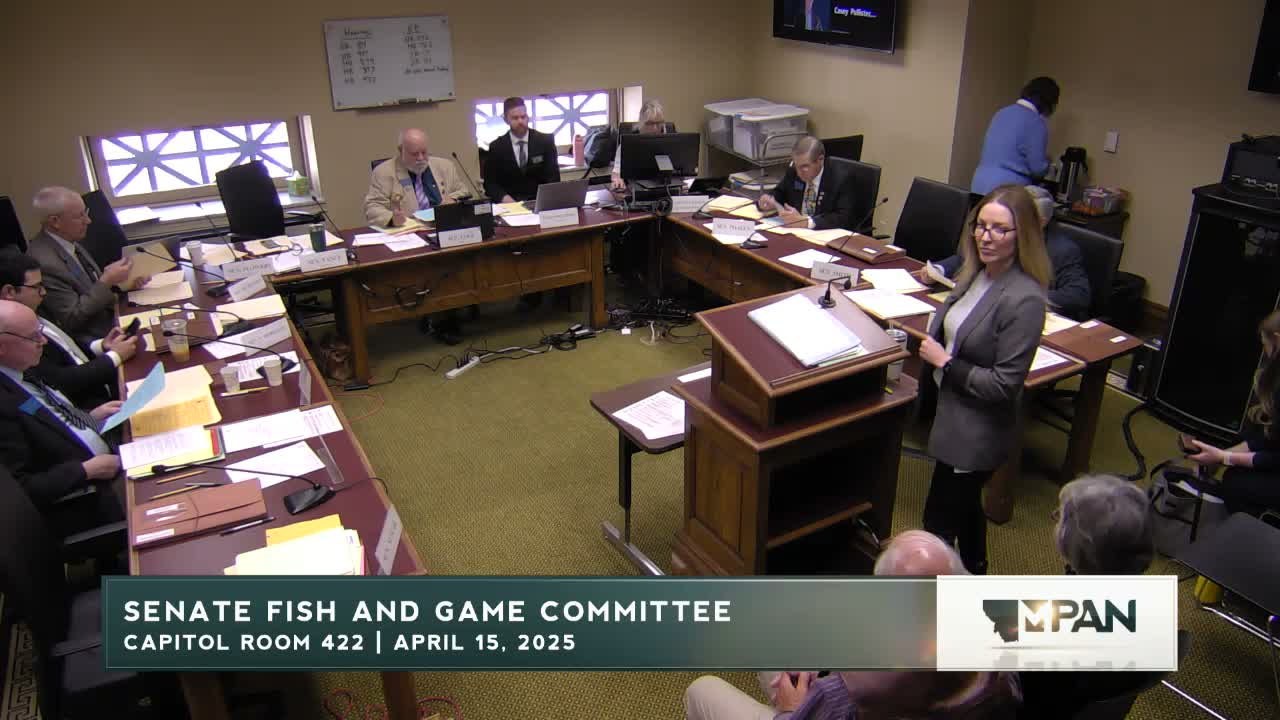
Outcome: After floor amendment attempts and two committee amendments were considered (one that would have made the bonus‑point offer available to resident landowners as well), the committee voted to table HB907. Members cited an incomplete evidence base and strongly divided opinions among constituents.
What to watch: The committee recorded requests for better reporting and transparency from FWP on participation, and sponsors signaled they may rework the statutory language and bring amendments later.