Get Full Government Meeting Transcripts, Videos, & Alerts Forever!
Get email alerts on the Property Rights topic
No spam. Unsubscribe anytime.
Senate committee hears hours of testimony as lawmakers weigh strict new property-rights standard
Summary
Supporters of SB 146 urged the Senate Judiciary Committee to elevate review of local land-use rules to strict scrutiny, saying the change would protect Montana property owners; opponents — counties, conservation groups and tribal representatives — warned it would curtail local planning, threaten wildlife and cultural protections and invite litigation.
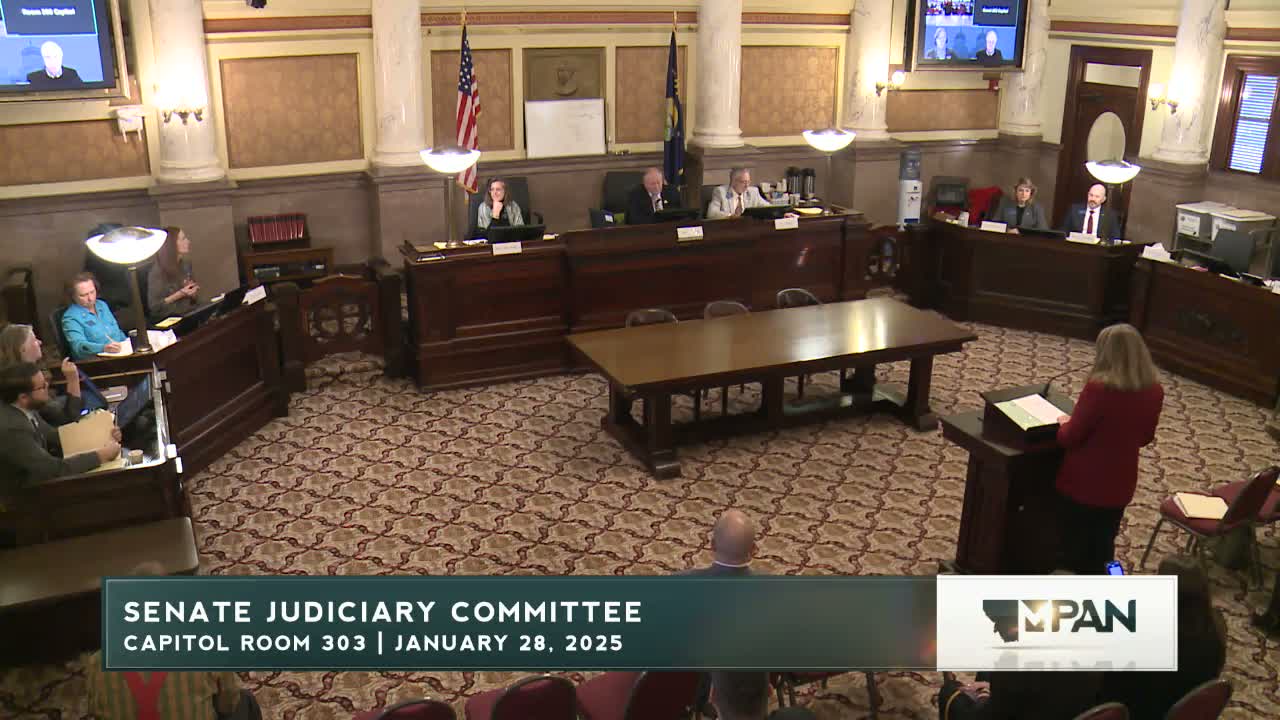
Senate Bill 146, introduced by Sen. Becky Beard, would require courts to apply a heightened standard of review to many local land-use regulations and shift substantial burdens to local governments defending those rules. Supporters told the Senate Judiciary Committee on Jan. 28 that the change is needed to protect property owners from what they described as arbitrary or overbroad zoning.
"Our right to use our property must be respected," said Kendall Cotton of the Frontier Institute, a policy group, arguing Montana courts should treat certain property-use restrictions like other fundamental rights protected by Article II, Section 3 of the Montana Constitution. Multiple individual property owners and land-use professionals gave examples — from bans on short-term rentals to rules on exterior colors and riparian buffers — and said those rules have harmed livelihoods and created legal uncertainty.
Opponents offered a different picture. Counsel for the Montana League of Cities and Towns and representatives of counties, conservation groups, and tribal organizations said SB 146 would effectively displace local planning authority and gut long-standing tools used to protect wildlife habitat, water resources and cultural sites. Kelly Lynch, legal counsel for the League, told the committee that the bill "attempts to sidestep that existing framework" of takings, subdivision review and other statutes and would prompt extensive litigation.
Speakers from Bozeman, Missoula and other communities described local zoning and subdivision review as mechanisms that balance competing community goals — from housing supply to wildfire risk, infrastructure and scenic values. Conservation and wildlife advocates said narrowing allowable regulatory grounds to a compelling public-health-and-safety threshold would leave many environmental and planning considerations unprotected.
Committee members pressed witnesses on specific impacts. Opponents cited a long list of review criteria in the Montana Subdivision and Planning Act (water, soils, wildlife corridors, access, emergency response) that local governments use to assess developments; proponents said the bill targets only a narrow subset of Title 76 and would not affect state-regulated water rights or other non-land-use statutes.
Sen. Beard told the committee she is open to amendments, including a delayed effective date, and asked members to consider the constitutional arguments for stronger property protections. The committee closed the hearing after several hours of testimony and questioning; no vote was recorded on the floor of the committee during this session.
What happens next: The committee may consider amendments before executive action. If advanced, the bill would return for further committee work and possible floor action.