Get Full Government Meeting Transcripts, Videos, & Alerts Forever!
Get email alerts on the Staffing Plan topic
No spam. Unsubscribe anytime.
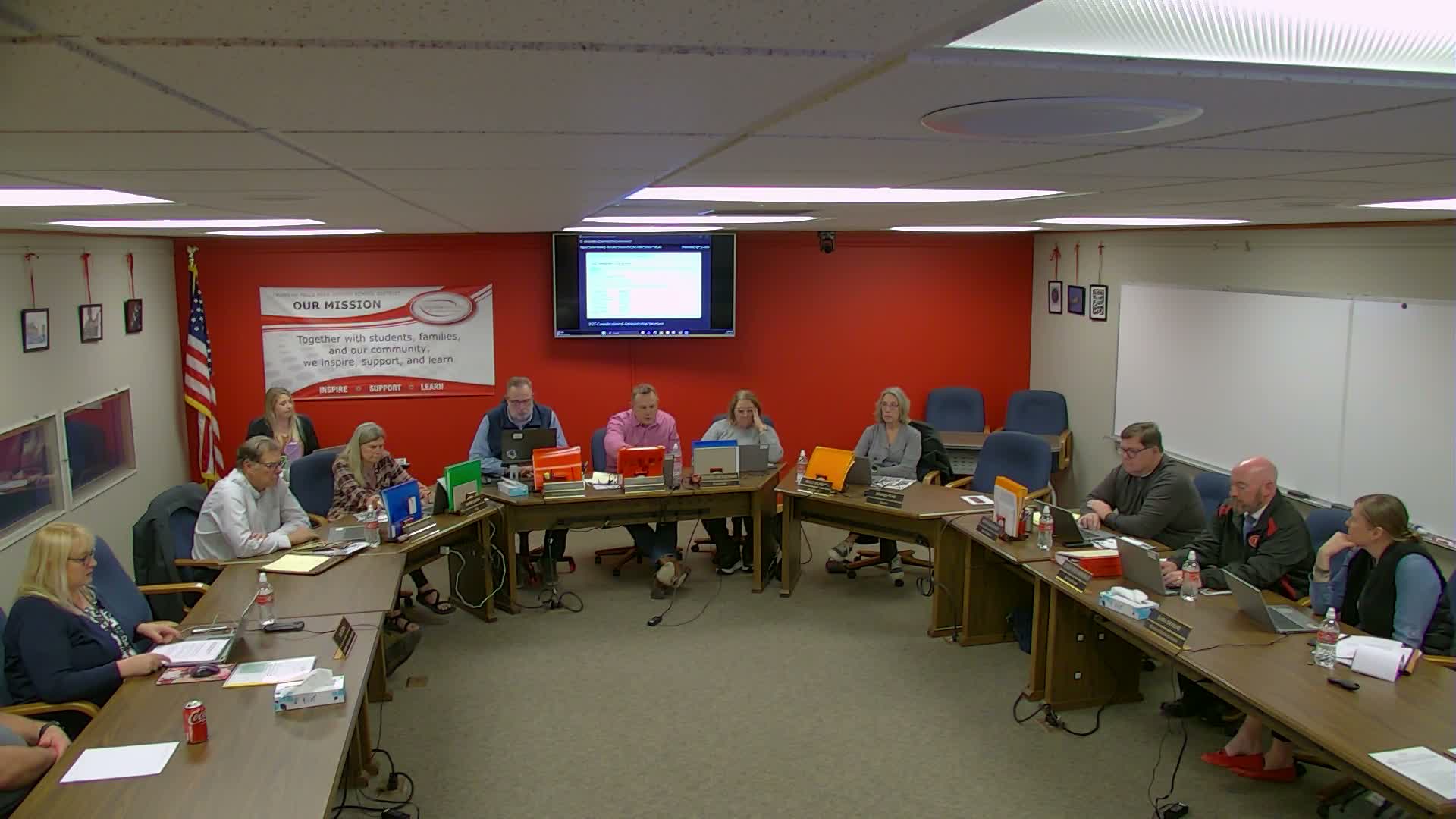
Board approves 2025–26 staffing plan and preliminary budget after contentious debate over administrative and classroom positions
Summary
After extended discussion about administrative slotting and reductions at middle and high school levels, the board approved the district's 2025–26 staffing plan (net -2.24 FTEs) and the preliminary budget. A motion to reinstate two high‑school positions failed for lack of a second; staffing and budget measures passed by roll call with at least one No vote recorded.
The Chippewa Falls Area Unified School District board approved the district's 2025–26 staffing plan and the preliminary budget after a lengthy discussion that included debate over administrative staffing and reductions at the secondary level.
Administration recommended preserving the assistant director of teaching and learning role and slotting Katie Koppenbarger into the director role while hiring an assistant; administrators said the change reflects a lean administrative structure and continuity for curriculum leadership. Board members asked whether the director position needed to be publicly posted or could be "slotted" internally; administrators cited past precedent for internal placements and pointed to policy language that vacancies are to be posted but may be interpreted by the board.
Board member Dave Martineau strongly objected to filling an administrative slot while teachers and sections at middle and high schools are being reduced. He said adding an administrative position with a $90,000‑plus salary (he estimated total cost including benefits at about $130,000) would be counterproductive while staffing for classrooms has declined over a decade. Another motion to immediately reinstate two high‑school positions (a math teacher and a technology‑education teacher) failed for lack of a second.
Administration presented the staffing plan details: the district recommended adding 3.2 FTEs (including specially designed K–8 PE, two educational assistants and an early‑childhood teacher) while reducing 5.44 FTEs through attrition for a net decrease of about 2.24 FTEs. Administration and board members said reductions are intended to be accomplished by attrition and not layoffs; Trowbridge said the staffing plan anticipates continued declines in enrollment and seeks to avoid future layoffs.
Concerns were also raised about class‑size parameters, special‑education caseloads and the availability of qualified candidates for technical positions. Administrators said some vacancy decisions reflected an inability to recruit qualified applicants for positions such as a tech‑ed role. The board ultimately approved the staffing plan; the roll call recorded in the minutes shows one member (Dave Martineau) voting No and other members voting Aye. The board then approved the preliminary 2025–26 budget aligned with the staffing plan; the budget was presented as balanced against available revenues and assumptions about state aid and enrollment.
The board record reflects robust debate about priorities and the tradeoffs imposed by revenue limits and declining enrollment. Administration and several board members emphasized that the staffing plan was built with extensive internal inputs and attempts to prioritize special education, early childhood and other high‑need areas.