Get Full Government Meeting Transcripts, Videos, & Alerts Forever!
Get email alerts on the Due Process topic
No spam. Unsubscribe anytime.
Respondent’s Counsel Says Rules Risk Bias, Asks for More Time and Protections
Summary
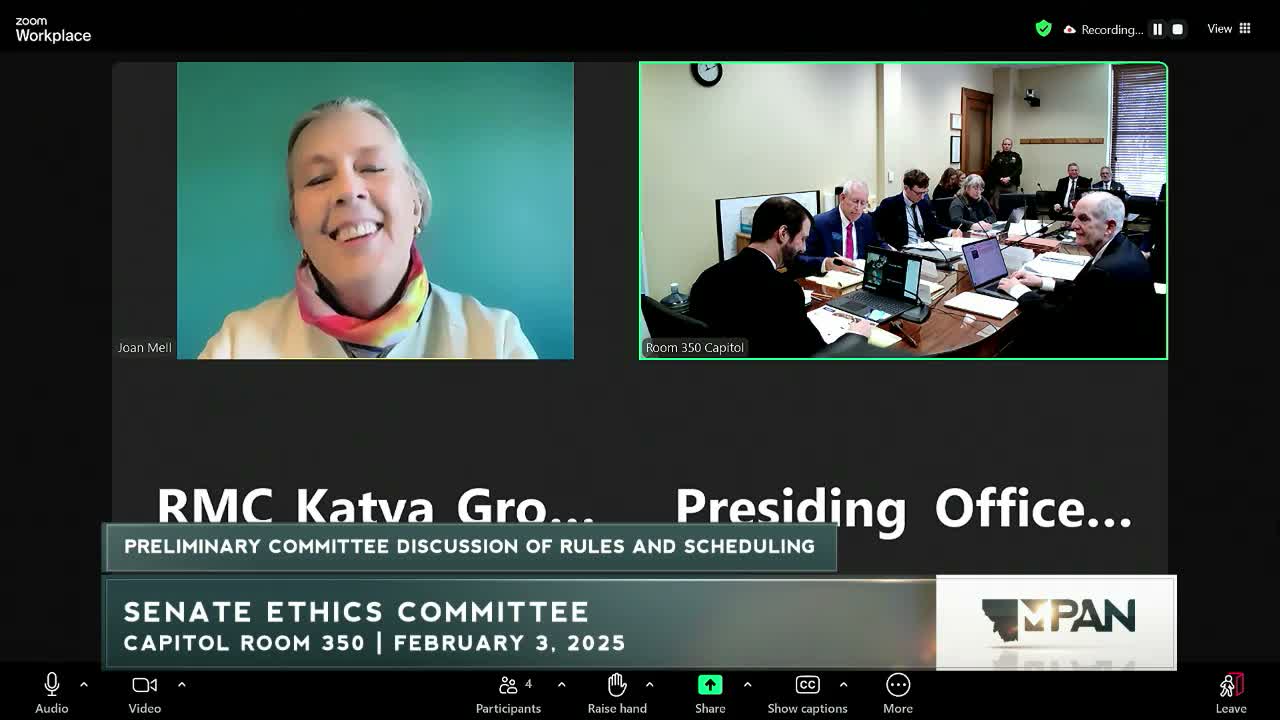
Joan Veil, counsel for former Senate President Jason Ellsworth, told the Senate Ethics Committee that the proposed rules and reliance on an audit report risk prejudging the case; she sought extended response time, discovery protections, and procedures for protective orders and in-camera review.
Joan Veil, counsel for former Senate President Jason Ellsworth, delivered a sustained objection to the committee's proposed rules and timeline, saying they risk presuming culpability before an adjudicatory fact-finding process begins. Veil argued the rules' introduction references the legislative auditor's findings and therefore may bake in bias, invoking what she described as a "cat's-paw" theory whereby earlier adverse conclusions are imputed to the committee's work.
Veil raised multiple procedural concerns: she contended the allegations under review arose outside the current legislative session and may therefore present a jurisdictional problem under the Senate rules; she asked for standard motion practice and briefing time (she referenced a typical 28-day practice). She also urged the committee not to adopt short response windows in the rules (she specifically criticized a four‑day initial-response requirement she identified in rule E10‑30) because she could not prepare a meaningful defense without documents, witness statements and time to retain experts.
Veil stressed the committee must address how it will handle production and public disclosure of sensitive material. She noted the need for in‑camera review, carefully drafted protective orders and clarity about what will be made public once the committee 'uses or relies on' submitted materials. She cited statutory limits on remedies for procurement disputes (as she described, pointing to MCA provisions) and stressed that criminal prosecution authority rests with the Attorney General, not the committee.
Special counsel Adam Duerk responded that the committee's process is a fact-finding proceeding that will seek to preserve due process protections; he said the proposed rules already address many of the issues Veil raised and that he would work with her on the timing and scope of document and witness lists. Committee members and counsel agreed to allow Veil additional time to review documents and prepare a responsive witness and exhibit list and to meet after this session to try to narrow or resolve scheduling and discovery details.
Veil also warned of practical obstacles in serving subpoenas and of the need to consider retaliation risks for legislative staff who may be asked to produce communications. The committee directed counsel to consider protective procedures and to return with proposed language in the next meeting. Veil concluded by urging the committee to consider alternatives to a strictly investigative path if the current rules cannot be made to provide the protections she described.