Get Full Government Meeting Transcripts, Videos, & Alerts Forever!
Get email alerts on the School Chaplains topic
No spam. Unsubscribe anytime.
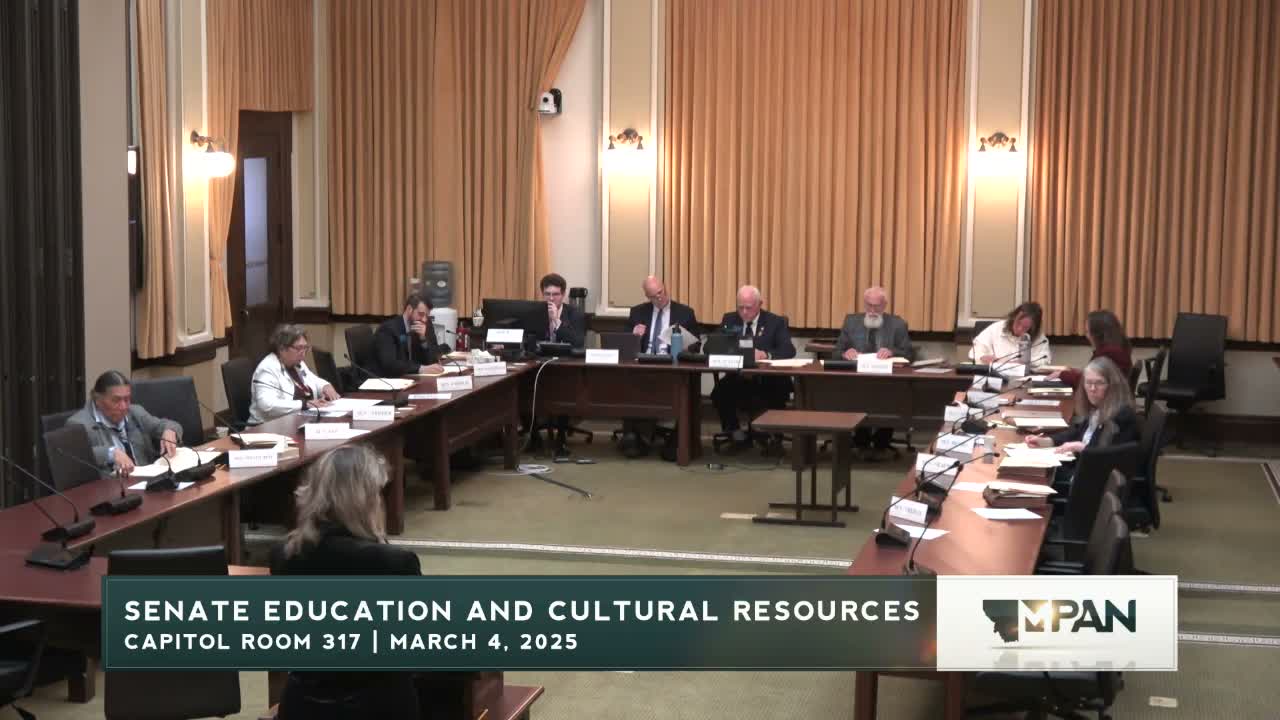
Senate education committee advances bill allowing school chaplains after heated testimony
Summary
The Senate Education Committee voted 8–6 to pass SB 525, which would permit school districts or public charter schools to adopt paid or volunteer school chaplains; proponents argued chaplains fill counseling gaps in rural districts, while opponents said the measure risks replacing licensed counselors and raises constitutional concerns.
Senate Education Committee members voted to advance Senate Bill 525 on party-line and bipartisan questions after more than two hours of testimony and questioning. The bill, sponsored by Sen. Therese Manzella, would allow local school districts and public charter schools to adopt policies enabling paid or volunteer school chaplains to provide specified supports and services.
Proponents said chaplains can expand supports where licensed counselors are scarce. Johnny Davis, chief development officer for the National School Chaplain Association, told the committee, "Chaplaincy isn't a new or experimental idea" and described chaplains' training in crisis intervention and referrals. Matt Furlong of the Montana Child Protection Alliance said the proposal would help rural districts with limited counseling resources and asked the panel for a "due pass." Joseph Suchanek and other proponents cited survey and program data, including reduced disciplinary referrals in Texas districts after chaplain programs were introduced.
Opponents said the bill does not meet existing licensure standards and could let unqualified people perform counselor duties. McCall Flynn, executive director of the Board of Public Education, said the board sets certification and licensure standards for school counselors and that "chaplains may not" satisfy those requirements as written. The ACLU of Montana warned the measure could improperly insert religion into public schools and lead to coercion, and multiple counselor and education groups said the bill's minimum requirement—that a chaplain be 18 and of "good moral character"—is insufficient to replace licensed professionals.
Committee members pressed sponsors and witnesses on training, certification, parental consent and the intersection with Board of Public Education rules. Sen. Emmerich noted that SB 525 requires written parental consent for students to receive chaplain services "on page 1, lines 23 and 24," and asked whether that was consistent with counseling practices for licensed counselors; sponsor Manzella said she favored parental involvement and was open to friendly amendments.
After debate and a roll-call vote in executive session, the committee reported the bill passed out of Senate Education by a recorded vote of 8 in favor and 6 opposed. Committee members and several witnesses noted the bill will likely face amendments on the floor; sponsors said they were open to changes that clarify chaplains' role and certification.
The committee record shows a mix of support and concern: proponents emphasized expanded access and crisis support, while opponents warned of constitutional and professional-licensure problems. The bill now proceeds from the Senate Education Committee to the next stage of legislative consideration.