Get Full Government Meeting Transcripts, Videos, & Alerts Forever!
Get email alerts on the Workforce Housing topic
No spam. Unsubscribe anytime.
Committee approves bill allowing Board of Investments to retain interest on workforce-housing fund for prison and hospital employees
Summary
SB223 clarifies that the Board of Investments may retain interest and income from a $12 million workforce housing fund used to build short-term rental units for entry-level staff near correctional and mental-health facilities; the BOI director said the Pindler Meadows project currently has 28 units under construction and a lottery for employee assignments opens soon. The committee passed SB223.
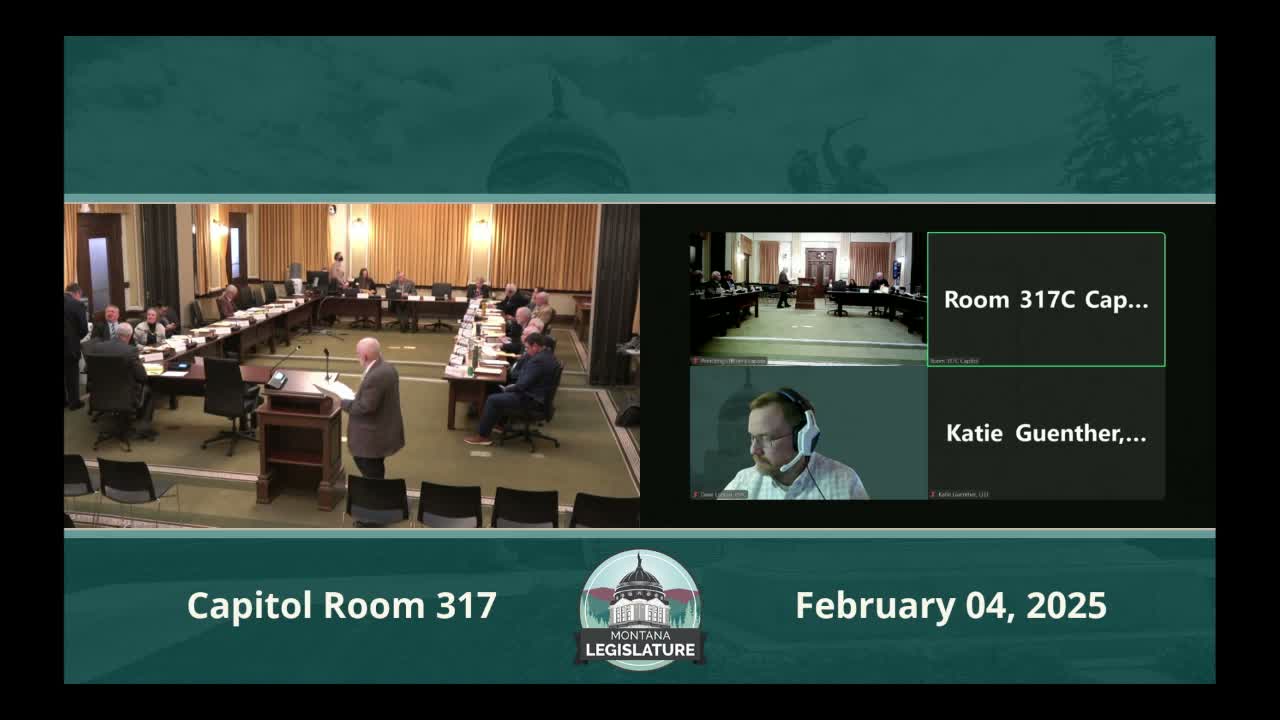
Senator John Esp (Senate District 29) opened a hearing on Senate Bill 223, describing it as a technical correction to a prior session's amendment that changed the original trust fund to a state special revenue fund. He said SB223 authorizes the Board of Investments to retain interest and income from the fund so those earnings can be reused for upkeep and to seed down payments for employees after five-year leases.
Dan Veil, identified in the transcript as executive director of the Board of Investments, explained the BOI's market survey and project work. He said the Pindler Meadows Subdivision is under construction with 28 units completed and space to expand to 56; the project targeted corrections and state hospital entry-level staff and uses an 80/20 split between the Department of Corrections and the Department of Public Health. Veil described a negotiated land swap that enabled the development and urged the committee that the BOI is not trying to be a permanent landlord but instead a recruitment and retention tool.
Veil described administrative costs as de minimis relative to the BOI portfolio and said the agency charged roughly $300 on the $12 million in the example, calling that amount "de minimis at best." He also noted construction milestones, that a lottery for eligible employees would open soon, and that a tentative move-in date was July 1 (timeline subject to construction progress).
After questions about program mechanics and administrative charges, the committee used a voice vote (proxies assumed) and the clerk announced Senate Bill 223 has passed Finance and Claims. The committee recorded that the bill will allow the BOI to keep interest and income on the special-revenue fund to support the workforce-housing model.