Get Full Government Meeting Transcripts, Videos, & Alerts Forever!
Get email alerts on the Occupational Licensing topic
No spam. Unsubscribe anytime.
Committee hears bid to standardize discipline across Montana's licensing boards
Summary
House Bill 435 would align definitions, reporting timelines and penalties across occupational licensing boards and raise the maximum administrative fine to $5,000; backers say the change reduces inconsistent treatment between boards and helps licensees and staff know rules in advance.
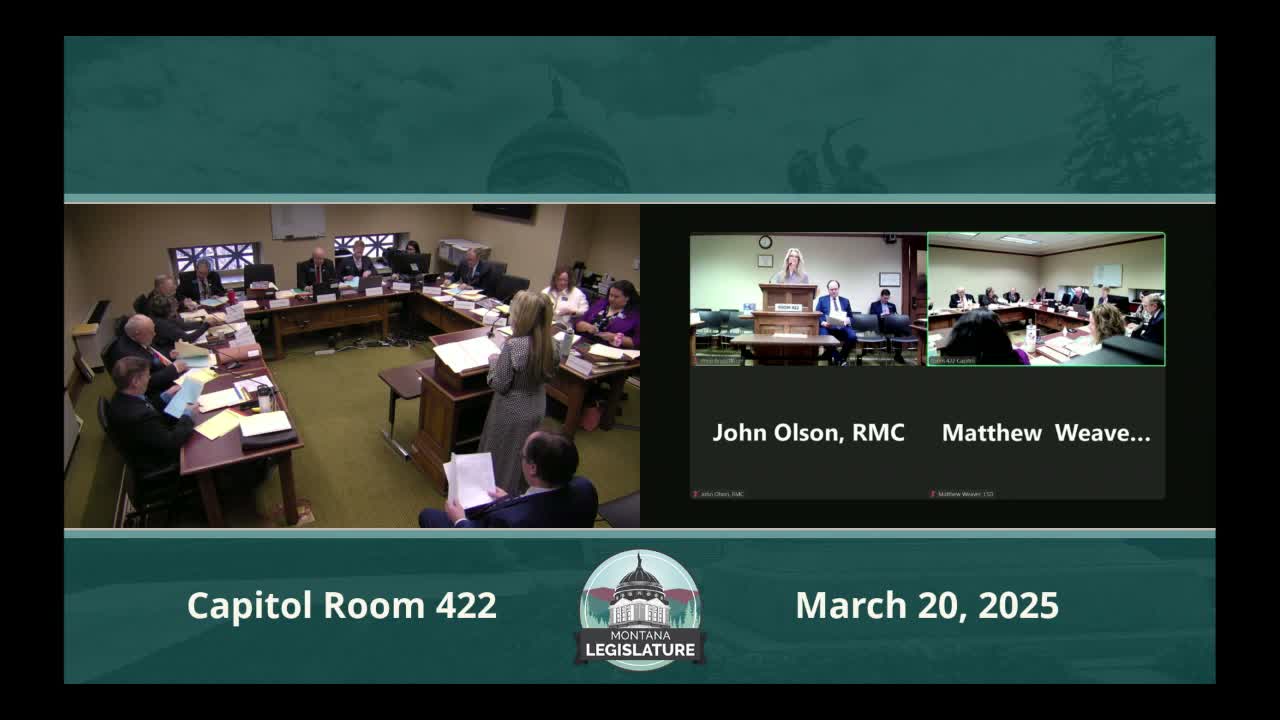
Senators on the Business, Labor and Economic Affairs Committee heard House Bill 435, a broad effort to standardize disciplinary procedures and terminology across Montana's occupational licensing boards.
Quinlan O'Connor of the Department of Labor and Industry told the committee the measure aligns part 3 (boards) and part 4 (programs) of Title 37 so terms such as "reinstatement," "censure," "revocation" and "suspension" follow a consistent statutory order. "So it's 30 days from the final action," he said in explaining a proposed standardized reporting window for licensees.
The bill also would increase the maximum administrative fine for some licensing penalties from $1,000 to $5,000; O'Connor said the change was intended to give boards more meaningful enforcement options while noting that not every penalty would be at that level.
Proponents including the Montana Medical Association and the Montana Athletic Trainers Association said the bill narrows loopholes and avoids costly, repeated rulemaking across many boards. Jean Branscum of the Montana Medical Association said the bill's amendments maintain protections such as limiting record access to relevant evaluation materials and preserving physician-to-physician evaluations where appropriate.
Committee members asked about specific provisions such as listing contagious disease as unprofessional conduct in limited circumstances; O'Connor said that the provision echoes existing language in a common unprofessional-conduct statute and has rarely been used except in clear cases (for example, deliberate attempts to transmit disease).
Supporters asked the committee for a do pass recommendation; the committee returned later in the day for executive action that included the bill.