Get Full Government Meeting Transcripts, Videos, & Alerts Forever!
Get email alerts on the Occupational Licensing topic
No spam. Unsubscribe anytime.
Senate panel hears bill to set standards for mental, physical evaluations of licensees
Summary
House Bill 238 would codify when state licensing boards may order mental or physical evaluations of licensees by listing four factors—duration, nature/severity, likelihood and imminence of harm—and standardize the process across health-related boards.
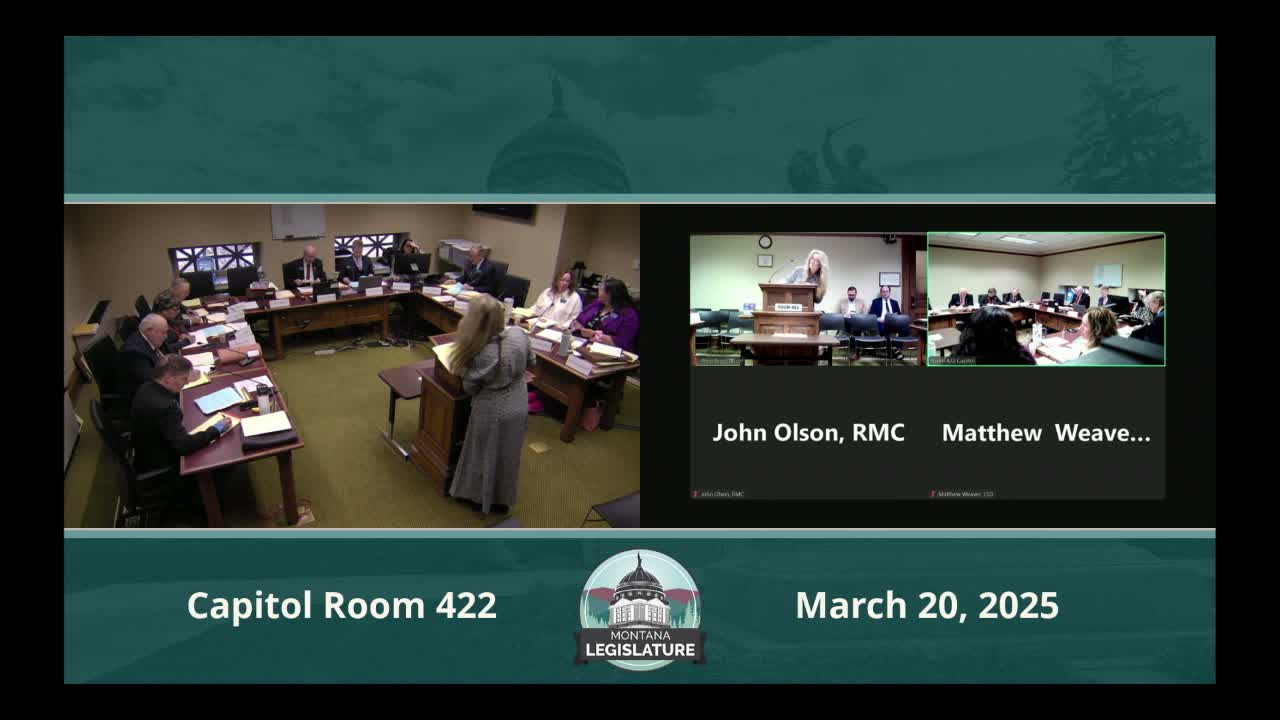
The Senate Business, Labor and Economic Affairs Committee heard House Bill 238, which would clarify when licensing boards may order invasive mental or physical evaluations of licensees, and would standardize procedures across several health-related boards.
Sponsor Representative Jody Etchart said the bill is intended to "set parameters" so different boards (dentistry, optometry, pharmacy, osteopathy and podiatry, among others) handle rare evaluation orders in a consistent way. ‘‘So this is just setting how evaluations are conducted,’’ she said.
Quinlan O'Connor, chief legal counsel for the Department of Labor and Industry, told senators the bill lists the four factors boards should consider before ordering an evaluation: the duration of risk, the nature and severity of potential harm, the likelihood that harm will occur, and the imminence of that harm. O'Connor said the department already advises boards on these matters and that the bill gives licensees and boards clearer statutory standards.
Jean Branscum of the Montana Medical Association and other supporters said standardization protects patients and provides clearer expectations for physicians and other providers. They also noted that records access would be limited to relevant evaluation records and that, in many physician cases, evaluations are best performed by other physicians.
Committee members asked how often evaluations are ordered and whether the bill overlaps with other measures aimed at practitioner burnout. O'Connor said evaluations are not frequent and that the bill targets cases where there is concern the licensee could cause patient harm; he said the ‘‘burnout’’ bill is separate and encourages voluntary treatment.
Kevin Bragg, bureau chief for professional licensing, described department outreach plans to notify licensees of statutory changes and acknowledged communication remains a challenge; the department will use email, the licensing portal and associations to inform licensees.
The committee took questions on specifics including who typically files complaints (Bragg said many physician complaints come from patients) and what sanctions might follow for failure to report concerns (O'Connor said failing to report can itself be unprofessional conduct but discipline would depend on facts).
The hearing concluded with the sponsor asking the committee to do pass.