Get Full Government Meeting Transcripts, Videos, & Alerts Forever!
Get email alerts on the Peo Licensing topic
No spam. Unsubscribe anytime.
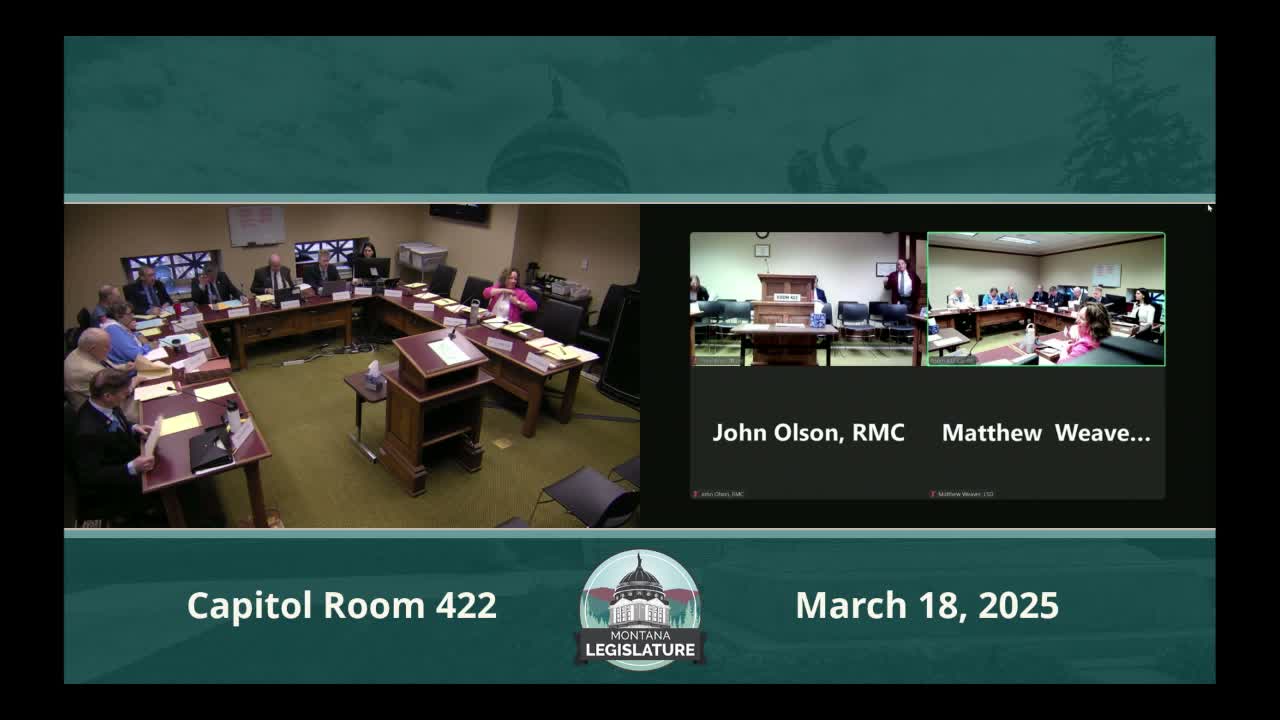
Committee hears bill to remove PEO CEO background checks (House Bill 254)
Summary
House Bill 254 would remove fingerprint and criminal background check requirements for professional employer organization (PEO) CEOs, a sponsor and agency witnesses said, noting Montana is currently the only state with that requirement and the Department of Labor has not used it to deny licenses. Supporters said the change would streamline registrations and encourage industry growth.
Representative Melissa Nicholas Kackos introduced House Bill 254, saying the measure "saves both time and money by streamlining the application process for professional employer organizations known as PEOs." The bill would remove fingerprint and criminal background check requirements for PEO CEOs in Montana.
Quinlan O'Connor, chief legal counsel for the Department of Labor and Industry, told the Senate committee the state currently conducts criminal background checks for PEO licensing and "we are... the only state in the country that is running a criminal background check for PEO licensing." O'Connor said the department conducts financial oversight of PEOs and that the criminal‑background component "is not something that's proven to be meaningful" and can slow the application process.
Olivia Plemmons, director of state government affairs at the National Association of Professional Employer Organizations, said the proposed change would "streamline the registration and renewal process for PEOs, which could encourage growth of our industry in the state of Montana." She described PEOs as firms that provide payroll, workers' compensation and HR services for small and midsize employers.
No opponents appeared in the committee room or online. Committee members asked no substantive questions and the sponsor closed without amendment. The hearing concluded with no formal vote recorded; next procedural steps were not scheduled during this session.