Get Full Government Meeting Transcripts, Videos, & Alerts Forever!
Get email alerts on the Taxation topic
No spam. Unsubscribe anytime.
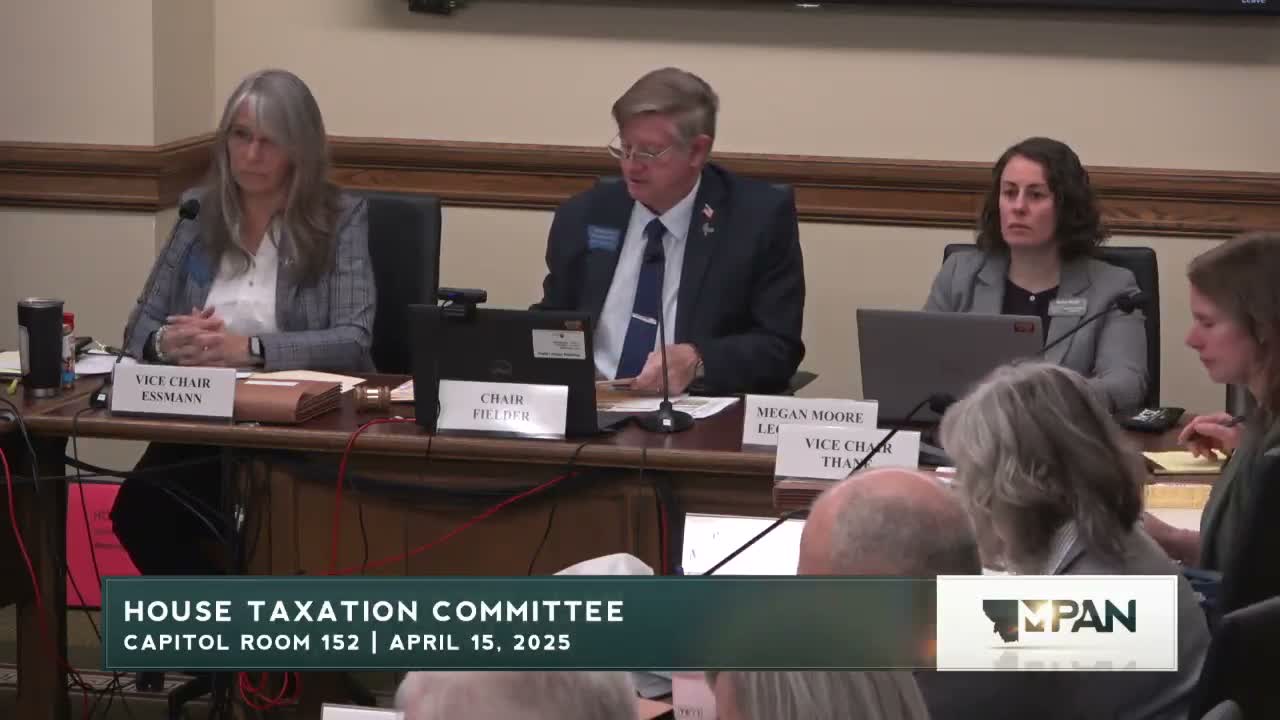
Committee hears bill to add wireless infrastructure to property‑tax abatement
Summary
Sen. Greg Hurts told the House Taxation Committee SB 534 would extend a five‑year property‑tax abatement now used for fiber and coax to include wireless signal transmission facilities, arguing it would encourage rural wireless deployment; T‑Mobile, AT&T and Verizon testified in favor, while Department of Revenue staff answered fiscal questions.
Senator Greg Hurts opened testimony on Senate Bill 534, saying the measure adds wireless infrastructure to an existing five‑year property tax abatement that currently applies to fiber optic and coaxial cable. "Adding wireless makes sense," Hurts said, describing how new wireless towers often require fiber connections and arguing the change will encourage rural deployment.
Industry witnesses described why the abatement matters. Margaret Morgan of T‑Mobile testified that wireless and wireline infrastructure operate as a partnership and that a targeted abatement can make building towers in lower‑profit rural markets more financially attractive. "This promotes investment in areas with limited or no service, potentially leading to faster deployment of improved connectivity," she said. Mark Baker, representing AT&T, and Amy Grimoljez for Verizon echoed that the framework used for the 2021 wireline abatement has driven investment and includes audit and reinvestment safeguards.
Sponsor and proponents flagged the fiscal note: Department of Revenue economists estimated a cost range (the sponsor summarized the fiscal note as roughly $214,000 to $400,000 a year but emphasized assumptions in the note that only 20% of investments would be eligible for exemption). Sen. Hurts said that dynamic effects and additional taxable investment would likely offset much of the estimated revenue loss over time.
Department of Revenue informational witnesses (Derek Bell and Jared Isom) were present to answer technical and fiscal questions. Committee members asked whether the bill includes language directing deployment to rural areas; the sponsor replied there is no such rural‑only requirement in current text.
The hearing closed without a committee vote; no formal action was taken at this hearing. The bill will advance to executive action at a later date.