Get Full Government Meeting Transcripts, Videos, & Alerts Forever!
Get email alerts on the Election Reconciliation topic
No spam. Unsubscribe anytime.
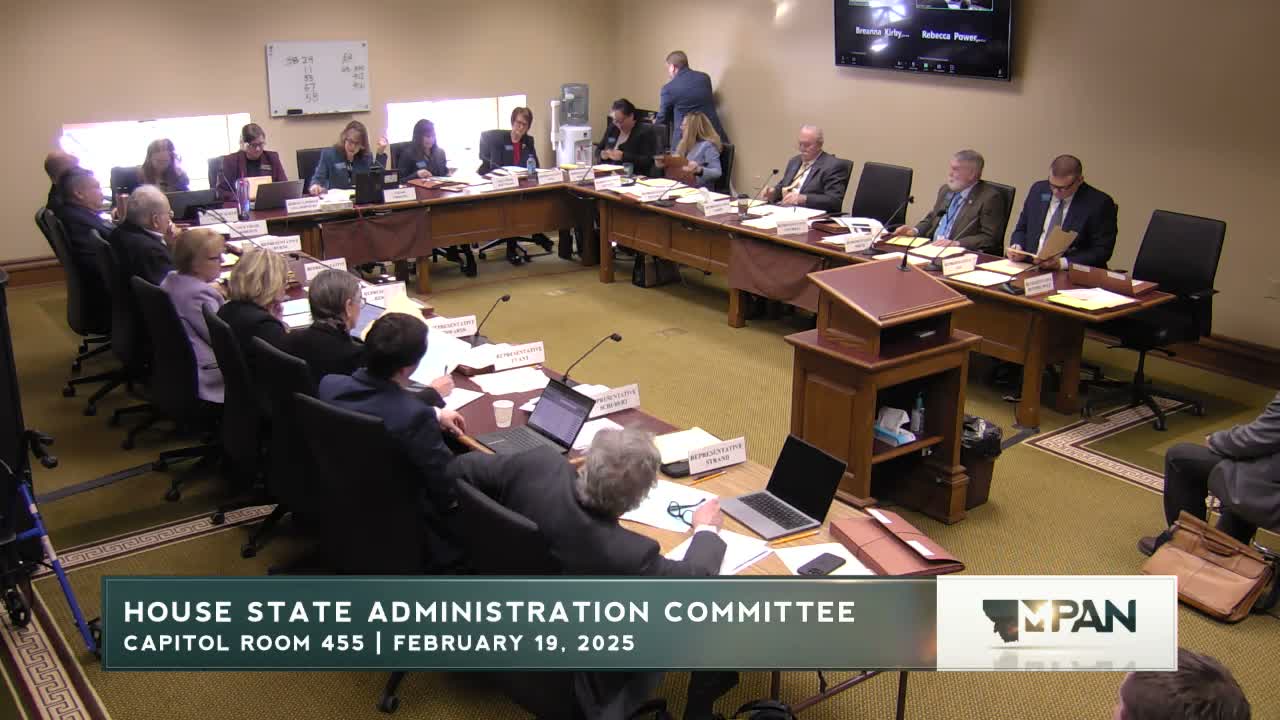
Committee hears election-reconciliation reforms after Butte-Silver Bow recount
Summary
After the Butte-Silver Bow overcount, the committee considered SB58 (requiring election-administrator investigations of unreconciled discrepancies) and SB57 (requiring county canvass boards to investigate and, if needed, order recounts); supporters said statutory requirements will prevent late discovery of errors, while witnesses urged clarifying language and timing.
Lawmakers and election officials told the House State Administration Committee that two bills, SB58 and SB57, are meant to ensure counties reconcile ballots and vote counts before certification following the Butte-Silver Bow recount.
Senator Mike Cuffe, sponsor of both bills and chair of the special select committee that reviewed the Butte incident, recounted how an overcount of roughly 1,130 votes emerged and described the select committee's observations of recount procedures. "One possibility (for the overcount) is somebody took a stack of ballots and fed them through a second time," Cuffe said, describing the committee's work to trace the anomaly and recommending statutory fixes to prevent future occurrences.
SB58 would require the election administrator to investigate discrepancies between the counting-board totals and the record of accepted ballots, potentially including recounts and a report to the county canvassing board. Austin James, representing the Secretary of State's Office, supported the change as "good accounting" that should be finished prior to the county canvass so certified results reflect reconciled totals.
SB57 would require boards of county canvassers to compare counted votes to the number of electors and persons who voted, investigate discrepancies within two days, and document reconciliation or a determination that the discrepancy does not affect the outcome; the board could order recounts or inspections as part of the investigation.
Witness Lisa Bennett, who described citizen involvement in uncovering discrepancies, supported statutory investigation requirements but urged amendments: she asked that the language cover both cases where tabulation "exceeds or falls short" the number of accepted ballots and questioned whether a two-day statutory deadline is sufficient for complex searches.
Proponents including the Clerk and Recorders Association and the Secretary of State's office said the bills aim to put investigation duties and timelines into statute rather than relying only on best practice or administrative rule. Committee members discussed training, definitions (accepted/rejected/void ballots) and whether statute should allow citizen-initiated requests for investigations; sponsors said amendments could address wording and timing concerns.
The hearing concluded with sponsor closings and committee discussion about follow-up rule and training work already done with counties and the Secretary of State's Office.