Get Full Government Meeting Transcripts, Videos, & Alerts Forever!
Get email alerts on the State Building Permitting topic
No spam. Unsubscribe anytime.
Committee hears bill to centralize permitting for state construction projects
Summary
Senate Bill 33 would move permitting for state-owned construction projects to the Department of Labor and Industry to reduce multi-month local permitting delays; supporters say it would speed projects and avoid duplicate fees, while local fire and rescue officials worry about loss of front-end local input on life-safety details.
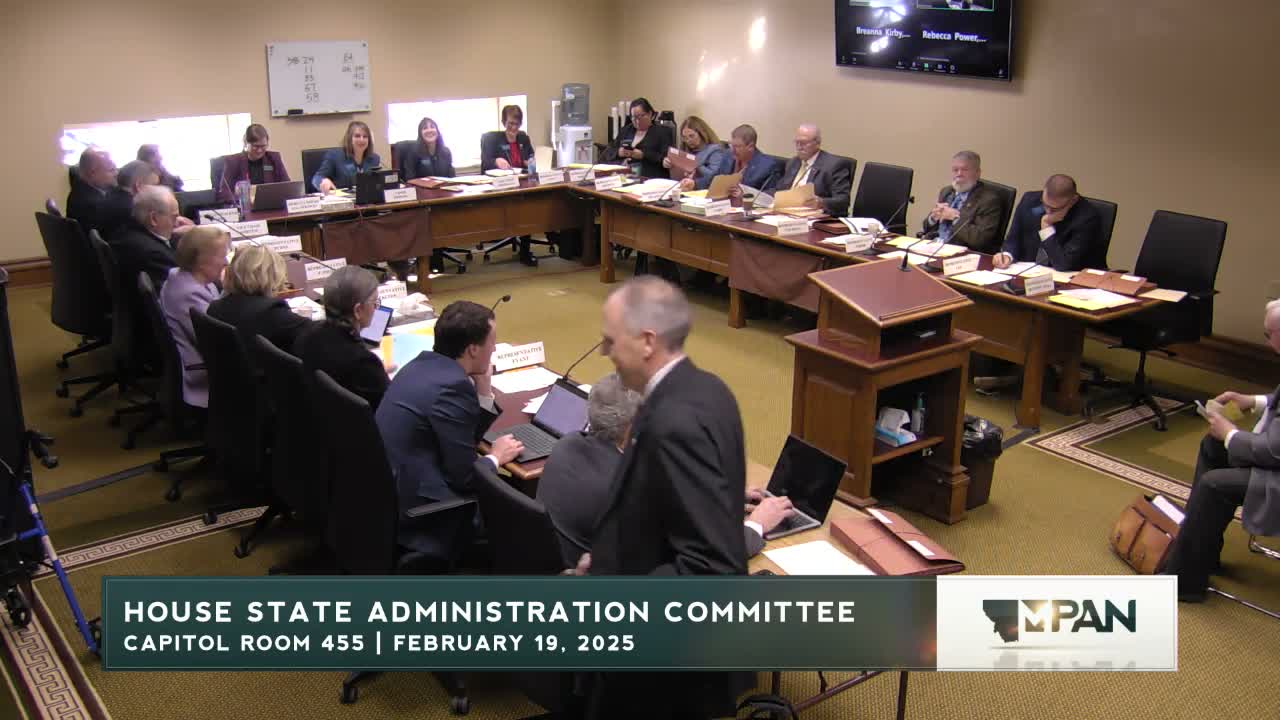
Senators and state officials told the House State Administration Committee that Senate Bill 33 aims to speed delivery of state construction projects by routing building-permit reviews to Montana's Department of Labor and Industry (DLI).
Senator Greg Hertz, sponsor of SB33, said the change is intended to "get these jobs done as fast as possible" and reduce delays when local review slows project schedules. "This bill just allows a little speedier process," he said. The Department of Administration's Architecture and Engineering (A&E) division described a large portfolio of projects that they said strains a small staff.
Misty Ann Giles, director of the Department of Administration, told the committee A&E is managing a $1.45 billion active portfolio with additional projects in the pipeline and does that work with roughly 17 staff; she said she sought a pathway that prevents two- to three-month waits for local permits and keeps projects on schedule. "This bill provides us with the efficiencies that we need, so we don't continue to see project delays and increased costs due to those delays," Giles said.
Russ Katherman, A&E subject-matter expert, offered examples of permit delays that he said cost contractors and the state. He described projects with permit waits of four to six months and cited delay-related contractor costs in the low six figures. "We missed the summer construction season because one permit took us six months to get," Katherman said. He also said shifting permit issuance to DLI would not change the applicable building code or eliminate collaboration with local jurisdictions; rather, it would centralize reviews into the state office that already sets the code.
Opponents raised safety and operational concerns. Mike McIntosh, assistant chief of prevention for Great Falls Fire Rescue, said local fire departments provide crucial front-end input on life-safety details such as fire-department connections, Knox box locations and alarm-riser rooms. "If this bill is passed as it is written, that will take all of that out of the fire services' hands," McIntosh said, urging local involvement in plan review.
Sarah Swanson, commissioner at DLI, told the committee that current statute designates DLI as the state building-code official and that the department already conducts inspections and issues permits for certified jurisdictions. Swanson said the bill would not change occupancy inspections or the fire marshal's authority and that DLI has software and outreach to share plans with local officials and marshals. "This bill does not change public safety," she said.
Committee members pressed both sides on the fiscal note and on where any fee revenue would flow. Swanson and Giles said the change is expected to be revenue-neutral to the general fund because permit fees are special revenue; Swanson noted a potential internal reassignment for one FTE for additional permit workload but said permit fees would fund inspections. Katherman said most of the savings are expected in time and schedule certainty rather than immediate general-fund savings.
The committee closed the hearing on SB33 after extended questioning and sponsor remarks. The bill's future amendments and a possible fiscal-note update were discussed at the end of testimony.