Get Full Government Meeting Transcripts, Videos, & Alerts Forever!
Get email alerts on the HB286 Citizenship Verification topic
No spam. Unsubscribe anytime.
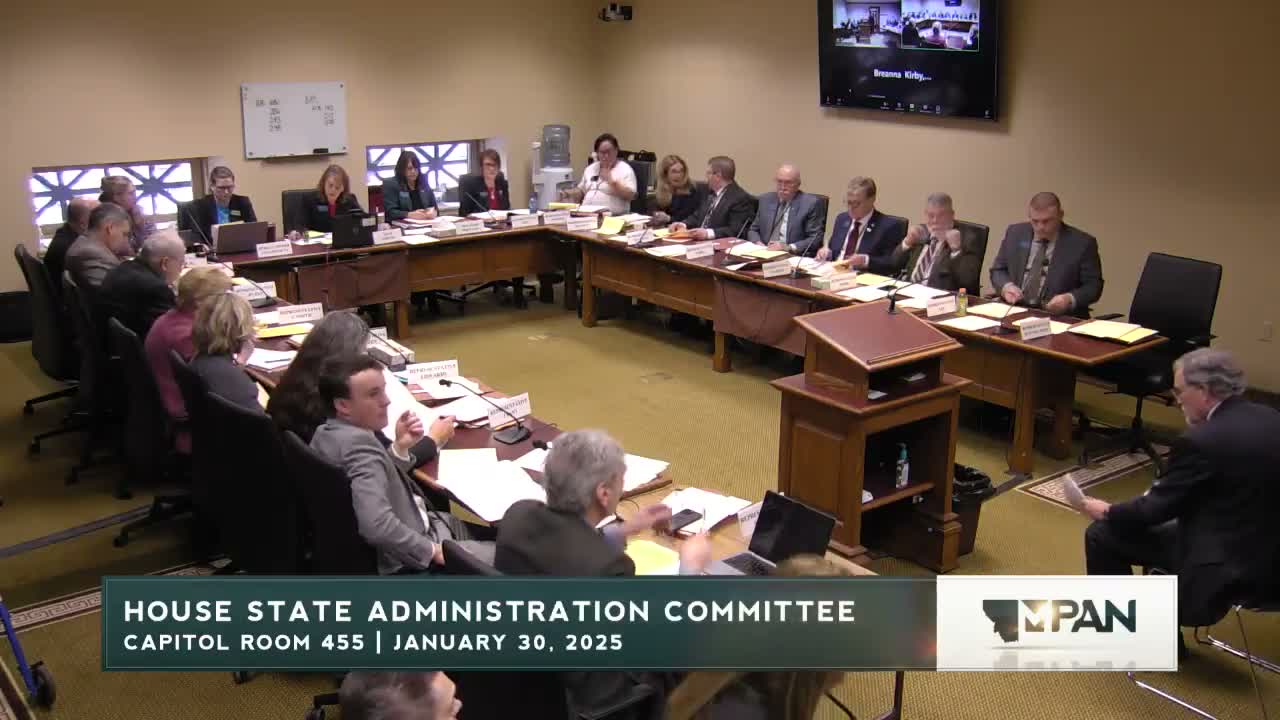
Bill to prepare Montana for federal citizenship verification draws divided testimony from tribal leaders and voting-rights groups
Summary
House Bill 286 would let the Secretary of State prepare Montana’s voter database and adopt rules to implement proof-of-citizenship requirements if federal law changes. Supporters say it enables rapid compliance; opponents, including tribal and voting-rights representatives, say it creates burdens and risks disenfranchising eligible voters.
Representative David Beatty told the committee that House Bill 286 is designed to prepare Montana to implement any future federal requirement to verify citizenship at voter registration. The bill would direct the Secretary of State to add a field in the state voter registration database to record verified citizenship and would grant the Secretary rulemaking authority to implement verification procedures if federal law changes.
Austin James, speaking for the Secretary of State’s office, said the office supports the bill as amended. James said the measure is largely preparatory: most sections would not take effect unless federal law requires citizenship verification. He told the committee that adding a database field would allow clerks to avoid duplicative verification as people move between jurisdictions.
Opponents — including Patrick Yawake (representing several tribes), Keaton Sunchild of Western Native Voice, Linda Beischel (longtime voter-registration volunteer), Rebecca Johnson (online), and the League of Women Voters’ Sharon Haugen — urged the committee to consider practical barriers. Testimony cited lack of consistent access to birth certificates and other documents in some Native communities, the risk of ending or curtailing mail-in or third-party registration, increased workload and security needs for county election offices, and the rarity of documented noncitizen voting cases nationally.
In committee questioning, members pressed for specifics: whether mail submission would be allowed (sponsor: bill does not address that explicitly), what forms of ID would be acceptable (Austin James listed Montana driver's license, state ID, last four of SSN, military ID, tribal photo ID, U.S. passport, and concealed carry permit among existing accepted forms), whether current registrants would be grandfathered (sponsor said he was not certain), and what legal or administrative data the Secretary of State maintains (James said the office is not required to collect data on noncitizen voting). James also confirmed that, under current case law, some college IDs can suffice for registration in certain circumstances.
Sponsor Beatty closed by saying the bill is intended to ensure Montana can respond quickly should federal law change, but committee members expressed concerns about implementation burdens and potential disenfranchisement.
Next steps: The hearing closed; the sponsor and Secretary of State staff indicated willingness to work on clarifying language and implementation details.