Get Full Government Meeting Transcripts, Videos, & Alerts Forever!
Get email alerts on the Housing Density topic
No spam. Unsubscribe anytime.
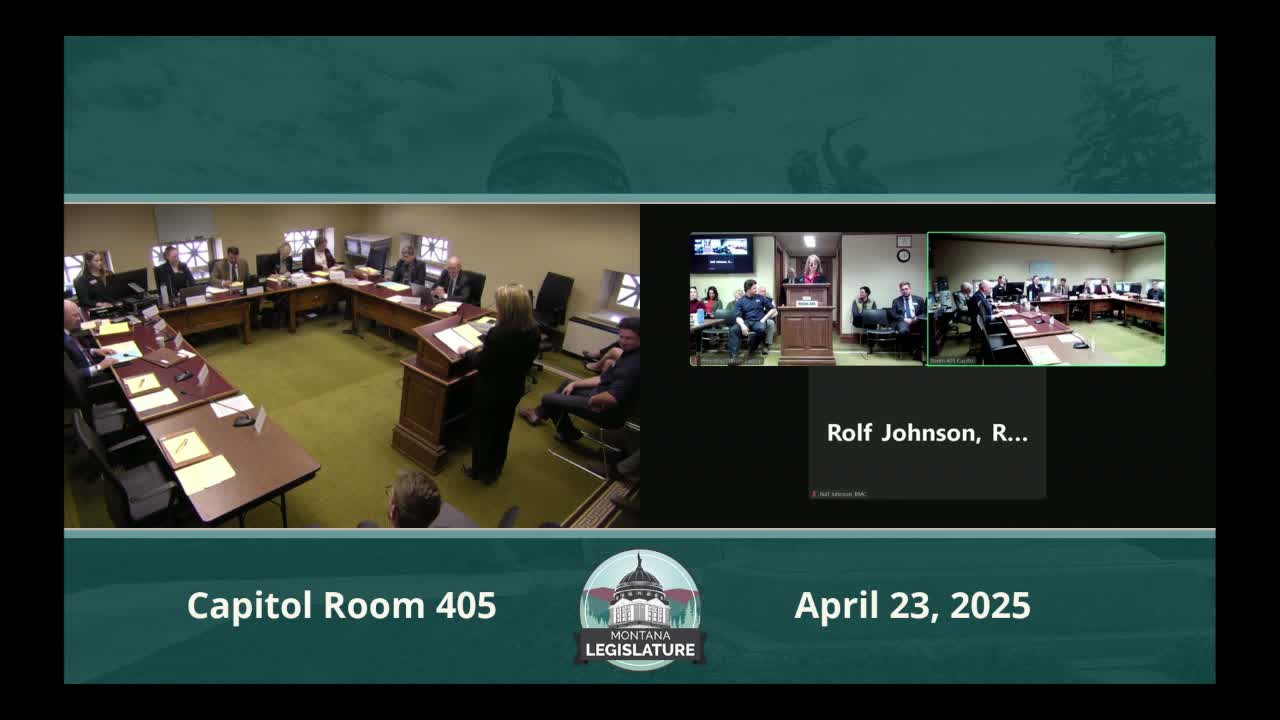
Senate committee approves interim study on housing density and affordability
Summary
The Senate Local Government Committee voted 8–2 to advance House Joint Resolution 30, an interim study to examine finance and policy tools that could increase housing density and affordability across Montana; proponents said denser development can expand housing options while supporting local infrastructure.
The Senate Local Government Committee voted 8–2 to pass House Joint Resolution 30, advancing an interim study of methods to increase housing density and affordability. Representative Julie Darling, sponsor of HJ 30, told the committee the study will explore higher-density housing and report findings to the next legislative session.
Representative Julie Darling said cities and counties "are in dire need of more housing" and that the resolution will examine opportunities such as high-density housing so people who no longer want large lots can downsize while keeping a "small town" feel. "This resolution just seeks to kind of explore some more opportunities such as high density housing," she said.
Proponents testifying before the committee framed the resolution as a targeted, non‑budget study intended to clarify options rather than immediately authorize spending. Jacob Kuntz, executive director of Helena Area Habitat for Humanity, described the Rose Hills neighborhood design at roughly "7 to 8 homes per acre" and said building more units per acre can lower per‑unit costs while increasing the tax base. Kuntz said denser development could "increase the tax base 60 over a traditional single family housing development," a figure he offered in testimony; the testimony did not specify units or percentage and the committee did not provide an additional numeric breakdown on the record.
Adrienne Cotton of the Montana Building Industry Association urged passage, saying the resolution "doesn't ask for more money. It asks for clarity," and asked the interim study to prioritize approaches that actually lower housing costs. Jake Brown of Shelter Whitefish said the state lacks a range of housing options and that "density" can deliver choices better suited to seniors, families and others. Cheryl Cohen, housing division administrator at the Department of Commerce and executive director of the Board of Housing, cited academic research linking density and affordability and warned that "there's no amount of subsidy that we can throw that will solve the housing crisis" without private‑sector incentives and regulatory changes.
Questions from committee members focused on whether the study duplicates prior work, including a gubernatorial housing task force and earlier interim committee efforts. Representative Darling said HJ 30 is intended to concentrate on higher‑density strategies and finance tools that the task force did not fully investigate. Some senators urged the interim group to produce a practical "menu" of finance‑based options (incentives, infrastructure strategies, consolidation approaches) that could lead to committee bills in future sessions.
Vice Chair Beard moved a do‑pass recommendation. On roll call the committee recorded eight votes in favor and two opposed (Senator Trevis and Senator Hertz). The committee recorded the following explicit votes: Vice Chair Beard (Yes), Vice Chair Weber (Yes), Senator Trevis (No), Senator Pope (Yes), Senator Hertz (No), Senator Fern (Yes), Senator Lammers (Yes), Senator Bogner (Aye by proxy), Senator Boldman (Aye by proxy), and Chair Mandeville (Yes). The motion carried, and Senator Fern agreed to carry HJ 30 to the floor.
The committee's action moves the resolution into the interim study process, where the appointed interim group will delineate scope, stakeholders, and deliverables. The study's report is required to be submitted to the next legislative session.