Get Full Government Meeting Transcripts, Videos, & Alerts Forever!
Get email alerts on the Zoning topic
No spam. Unsubscribe anytime.
Senate committee considers shortening county zoning amendment process to boost responsiveness
Summary
Sen. Forrest Mandeville said SB 175 would create a clear, faster process for county text amendments to zoning rules, shortening public‑notice timelines and establishing a separate amendment path from adoption of new zoning districts; proponents supported streamlining but asked for minor notice and drafting clarifications.
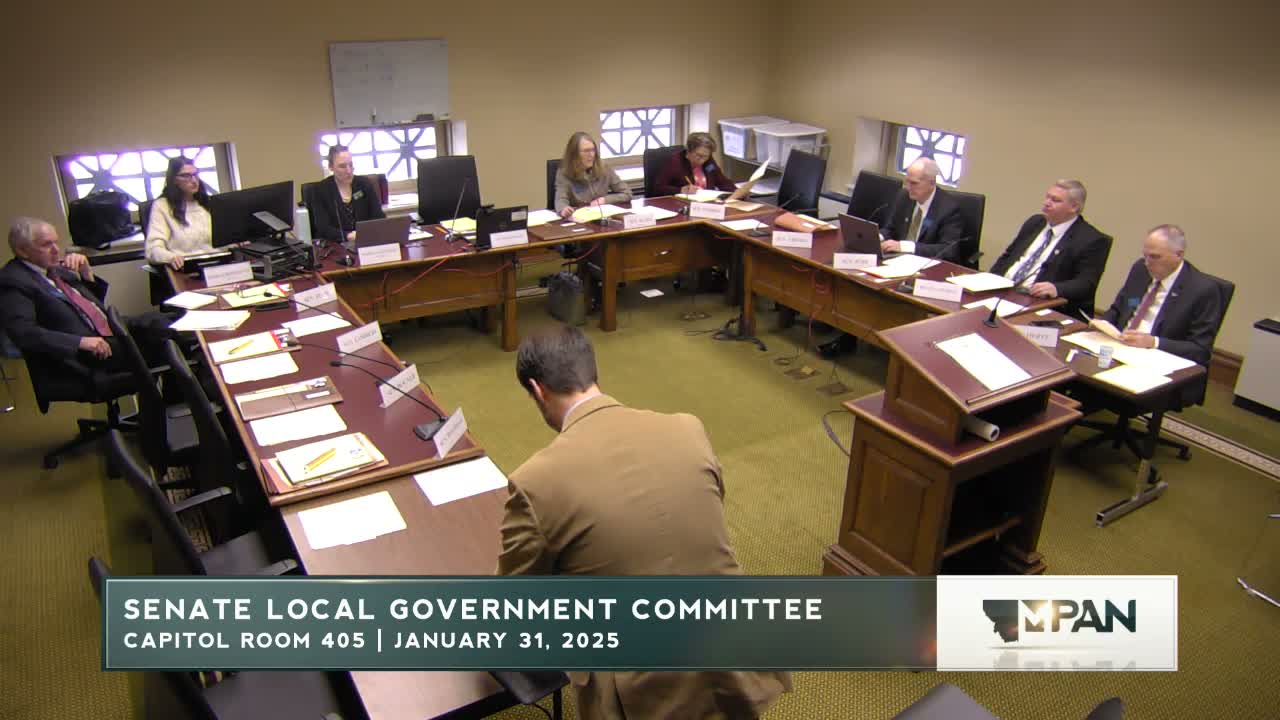
Senator Forrest Mandeville opened the hearing on Senate Bill 175, which would add an explicit procedure for counties to amend zoning text (part 2 zoning) rather than treating amendments the same way as adopting new zoning districts. He described how the current adoption path can take roughly four months (posting, newspaper publication, public comment and adoption timelines) and said the bill would require a shorter public notice—15 days—and a streamlined process where the county retains public inspection of proposed changes.
Proponents included Daniel Cox of the Montana Association of Realtors and Laura Collins of the Montana Environmental Information Center. Collins told the committee she supports the proposed timeline as consistent with other notice requirements, while still allowing meaningful public participation because the county growth policy and public files remain available for inspection.
Online witnesses including attorney Stephanie Baucus and Aaron Wilson (Montana Association of Planners) supported the bill’s intent and suggested modest improvements, such as additional notice mechanisms (county website postings or mailed notices) and a minor title change for statutory consistency. Wilson emphasized the bill’s efficiency benefits but asked that the notice describe proposed changes in general terms rather than republishing lengthy code sections.
During committee questions, members asked whether statute already provided a process for amendments; Mandeville said there is a statutory gap for part 2 zoning and SB 175 fills it, adopting notice practices consistent with other land‑use procedures. He told senators he is open to minor clarifying amendments on title wording and notice content.
The hearing ended without a vote. Committee members and stakeholders broadly supported the bill’s goal to make routine text amendments faster while preserving public access to the proposed language and the opportunity for participation; the sponsor will consider drafting changes the committee recommends before executive action.