Get Full Government Meeting Transcripts, Videos, & Alerts Forever!
Get email alerts on the Civil Rights And Sports topic
No spam. Unsubscribe anytime.
Heated hearing on HJ 10: lawmakers hear competing testimony on transgender participation in girls' and women's sports
Summary
Representative Kerri Seekins Crowe's HJ 10, urging Congress to pass the Protection of Women and Girls in Sports Act and declaring biological males should not play in girls' sports, drew substantial pro and con testimony from advocacy groups, legal advocates and community members.
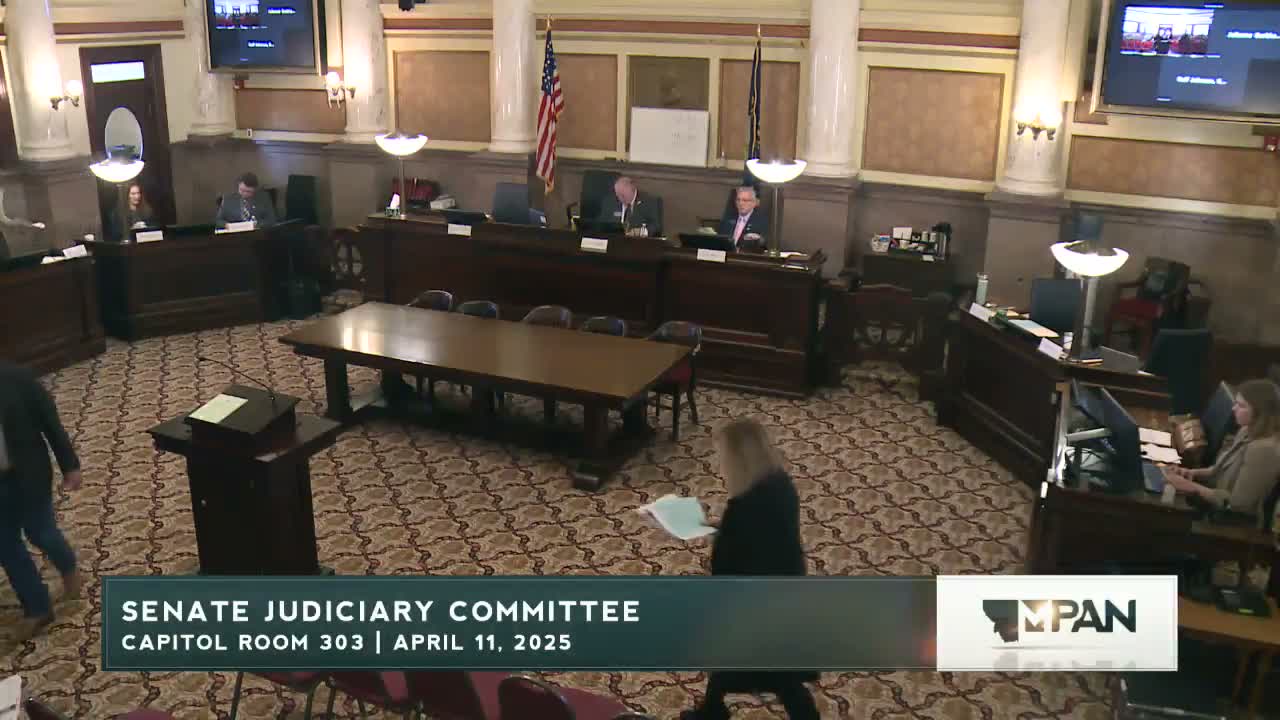
The Senate Judiciary committee heard hours of testimony on House Joint Resolution 10, a joint resolution urging Congress to bar biological males from participating in girls' and women's sports. Representative Kerri Seekins Crowe, sponsor of HJ 10, framed the measure as an effort to protect female athletes and urged a "due pass."
Proponents testified that transgender females can hold a competitive advantage. Patrick Webb of the Montana Family Foundation cited a University of North Dakota survey of Montana high‑school coaches and college examples to argue for restoring clear sex‑based boundaries in sport: "House joint resolution 10 simply urges Congress to pass the Protection of Women and Girls in Sports Act," he said.
Opponents included advocates and service providers who warned the resolution is unnecessary and harmful. Phoebe Howell said critics often lack performance‑based evidence and pointed to studies showing trans women are frequently at a disadvantage in many sports. Sean Reagor of BridgerCare testified that "transgender women are women" and urged the committee to reject the resolution. Legal Voice and other groups urged tabling the resolution, citing Montana's constitution and equality guarantees.
Committee members pressed witnesses on evidence and terminology. Senator Renton and Senator Vinton questioned witnesses about whether disagreement with transgender participation equates to hostility; exchanges included references to specific collegiate cases and study findings. Senator Smith asked proponents to respond to examples cited during testimony; witnesses exchanged competing interpretations of data and anecdotal evidence.
Representative Seekins Crowe closed by saying the resolution is not intended to erase anyone but to protect women’s competitive opportunities and privacy. The committee closed the hearing with no recorded committee vote in the transcript. The record shows strong divisions among advocates, legal organizations and some law‑makers about both the necessity and potential harms of the resolution.