Get Full Government Meeting Transcripts, Videos, & Alerts Forever!
Get email alerts on the Health Care Malpractice topic
No spam. Unsubscribe anytime.
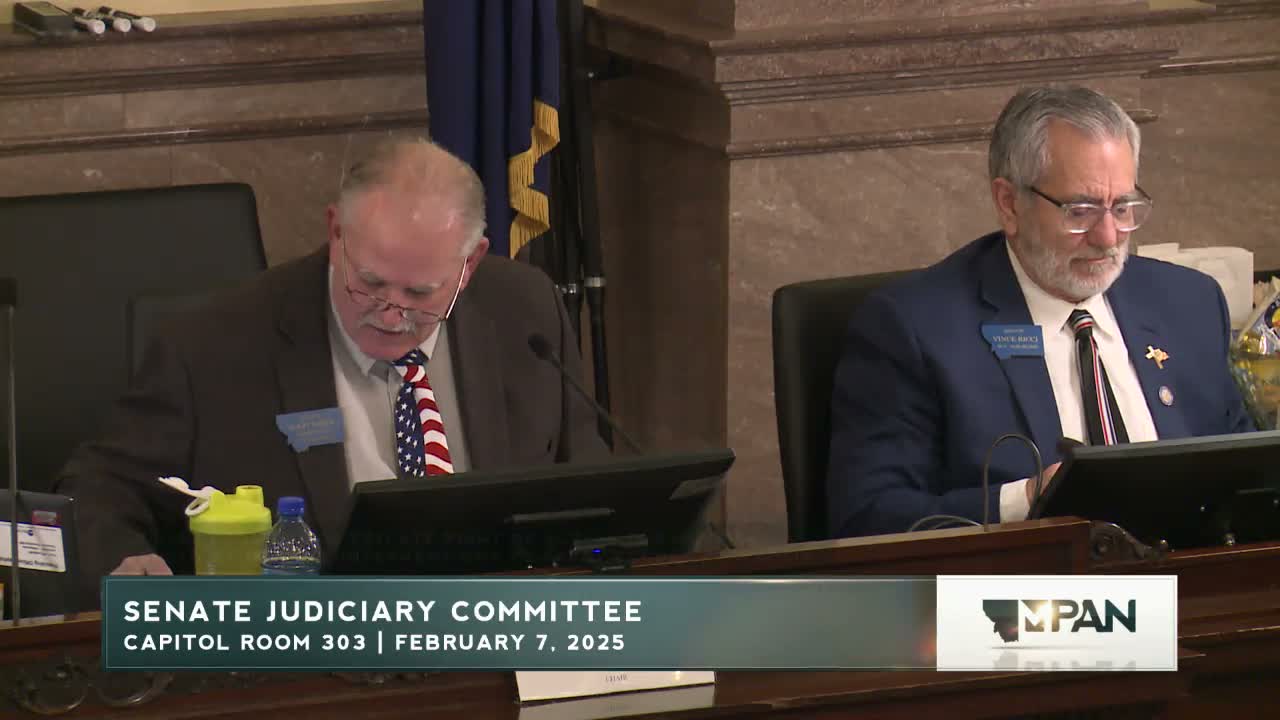
Judiciary committee advances bill creating private cause of action for certain gender-dysphoria interventions amid heated debate
Summary
SB218 would create a private cause of action with a 25-year statute of limitations and impose strict-liability language for specified medical interventions related to gender dysphoria. Proponents said it creates accountability for irreversible interventions; a broad coalition of medical groups, patients and civil-rights organizations warned it would chill care and worsen provider shortages. The committee advanced the bill 6–3.
Senator John Fuller (Senate District 4) introduced SB218 as a civil remedy for people who claim they were harmed by certain medical interventions for gender dysphoria and proposed a 25-year statute of limitations and strict-liability standard for covered care. "Whenever medical practices result in injury, it is logical that the injured party have civil action recourse," Fuller said.
Proponents, including the Montana Family Foundation’s chief legal counsel, argued the bill offers justice to people who later realize they were harmed by irreversible medical interventions such as surgeries and long-term hormonal treatment. The proponent framed the 25-year limit as necessary because some people may not discover harm for decades.
Opponents included the Montana Hospital Association, Montana Psychiatric Association, Montana Academy of Family Physicians, the ACLU of Montana, Planned Parenthood Advocates of Montana and many practicing physicians and trainees. Heather O’Hara of the Montana Hospital Association told the committee SB218 "proposes to implement strict liability into the malpractice statute" and "the 25 year statute of limitations ... is higher and more excessive compared to the existing statute" (citing Montana Code Annotated 27-2-205 for the usual medical statute of limitation).
Clinicians warned the bill’s combination of an extended statute of limitations and strict liability would make malpractice insurance unaffordable or impossible for some providers and could "chill" provision of routine care; several physicians said they might leave the state rather than face prolonged liability exposure. Dr. Catherine Brogan, president of the Montana Psychiatric Association, said the bill "is a legislative overreach into medical care" and urged the committee to reject it.
Supporters disputed those predictions and said the bill simply creates an avenue for harmed people to seek redress. Proponents described online detransition communities and recounted personal accounts of regret; opponents countered with clinician testimony about low regret rates, clinical protocols, and the risks to rural access to care.
After extensive questioning about definitions, scope and the legal doctrine of strict liability, the committee advanced SB218 in executive action on a 6–3 roll-call vote. Committee members said the measure raises constitutional and practical questions but that it merits further consideration on the Senate floor.