Get Full Government Meeting Transcripts, Videos, & Alerts Forever!
Get email alerts on the Health Policy topic
No spam. Unsubscribe anytime.
Heated testimony on Senate proposal to criminalize certain gender‑affirming treatments for minors
Summary
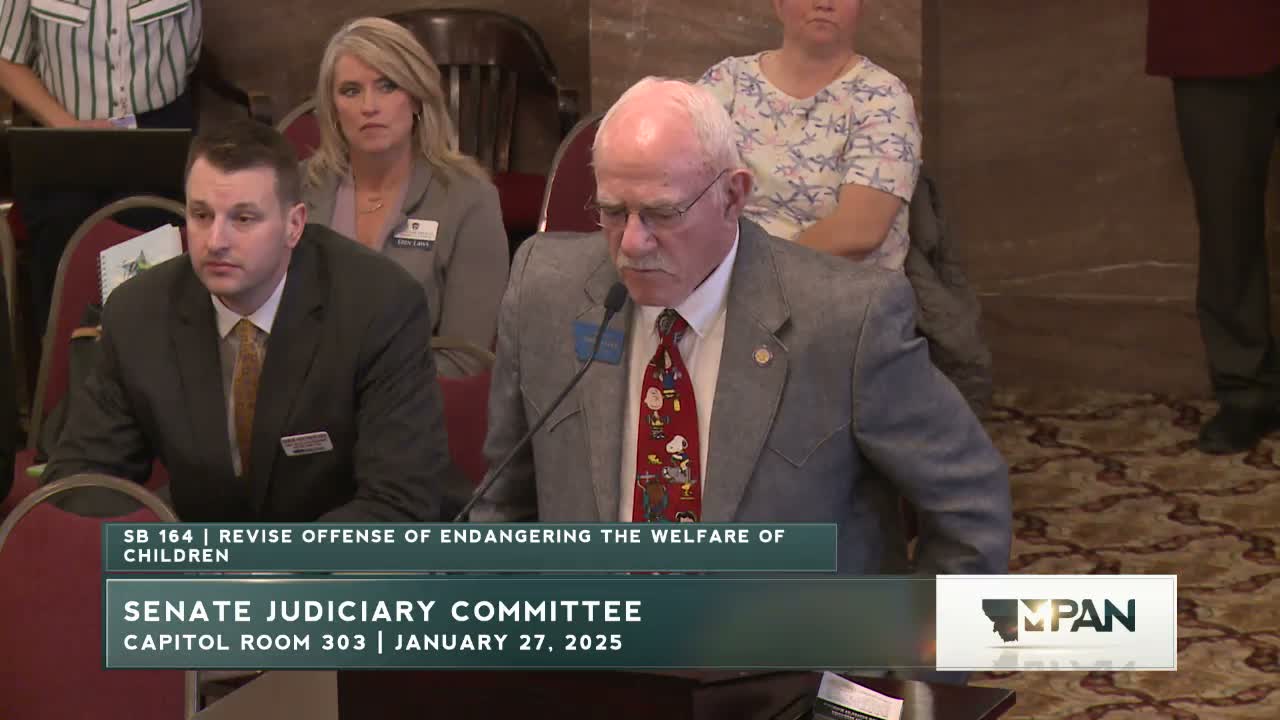
SB164, which would add certain medical interventions for minors to the endangering‑welfare statute, drew hours of testimony from physicians, advocacy groups and families; medical organizations warned it would criminalize standard pediatric care and risk harm to youth. Committee deferred executive action for further review.
Senate Bill 164 — proposing to amend Montana’s endangering‑welfare statute to criminalize knowingly procuring or providing certain treatments to children under 16 for the purpose of "altering the appearance of the child or affirming the child's perception" inconsistent with biological sex — prompted an extended, often emotional hearing in the Senate Judiciary Committee.
Sponsor Senator John Fuller told the committee the amendment would make clear that providing puberty blockers, cross‑sex hormones or surgical interventions to minors for the purpose of affirming gender inconsistent with biological sex could meet the statutory definition of endangering the welfare of a child. "Sterilizing children chemically or surgically altering their sex and afflicting upon them a lifelong dependency on medical intervention is child abuse," he said.
Proponents described hypothetical and personal accounts asserting irreversible harms and urged criminal penalties. Derek Oestricher (Montana Family Foundation) said peers in Europe were restricting these interventions and that Montana should act to protect children.
Medical witnesses, professional societies and advocacy groups provided extensive opposing testimony. Dr. Lauren Wilson (Montana chapter, American Academy of Pediatrics) told the committee gender‑affirming care is individualized and that "there are no medications that are given to children prior to puberty" according to accepted protocols; she said surgery for minors is not consistent with clinical guidelines and that criminalizing care would deter clinicians from practicing in Montana. Dr. Catherine Brogan (Montana Psychiatric Association) warned the bill would criminalize evidence‑based care and risk placing children into foster care and away from supportive families.
Multiple organizations — including the Montana Hospital Association, BridgerCare, Planned Parenthood Advocates of Montana, the ACLU and the Montana Academy of Family Physicians — opposed the bill, citing clinical standards, constitutional and privacy concerns, the risk of lawsuits, and harm to an already strained health workforce. Witnesses repeatedly warned bill language is broad enough to capture routine pediatric or intersex care and noted the state has a shortage of specialists who may leave rather than face legal exposure.
Committee members pressed clinicians on definitions (Tanner stages for puberty blockers, typical ages for hormones), detransition rates and the potential scope of the statute; clinicians explained puberty blockers are sometimes used at Tanner stage 2 to pause puberty while the child matures and that genital surgery for minors is contrary to guidelines. Lawmakers also raised constitutional and parental‑rights questions; witnesses noted prior litigation around similar statutes and the prospect of additional lawsuits.
After several hours of testimony and follow‑up, senators requested more time to review constituent input and possible amendment language. The committee removed executive action on SB164 from today’s agenda to allow members to study the bill further; no committee vote was taken.