Get Full Government Meeting Transcripts, Videos, & Alerts Forever!
Get email alerts on the River Census topic
No spam. Unsubscribe anytime.
River census bill advances after detailed fiscal and methodological questions
Summary
HB 762 would require Fish, Wildlife and Parks to sample and publish biannual river‑use reports across selected river stretches; staff described sampling methods, a fiscal note of about $2.7M and a sunset date for the project. Sponsors said the census is intended to inform management, not to impose fees.
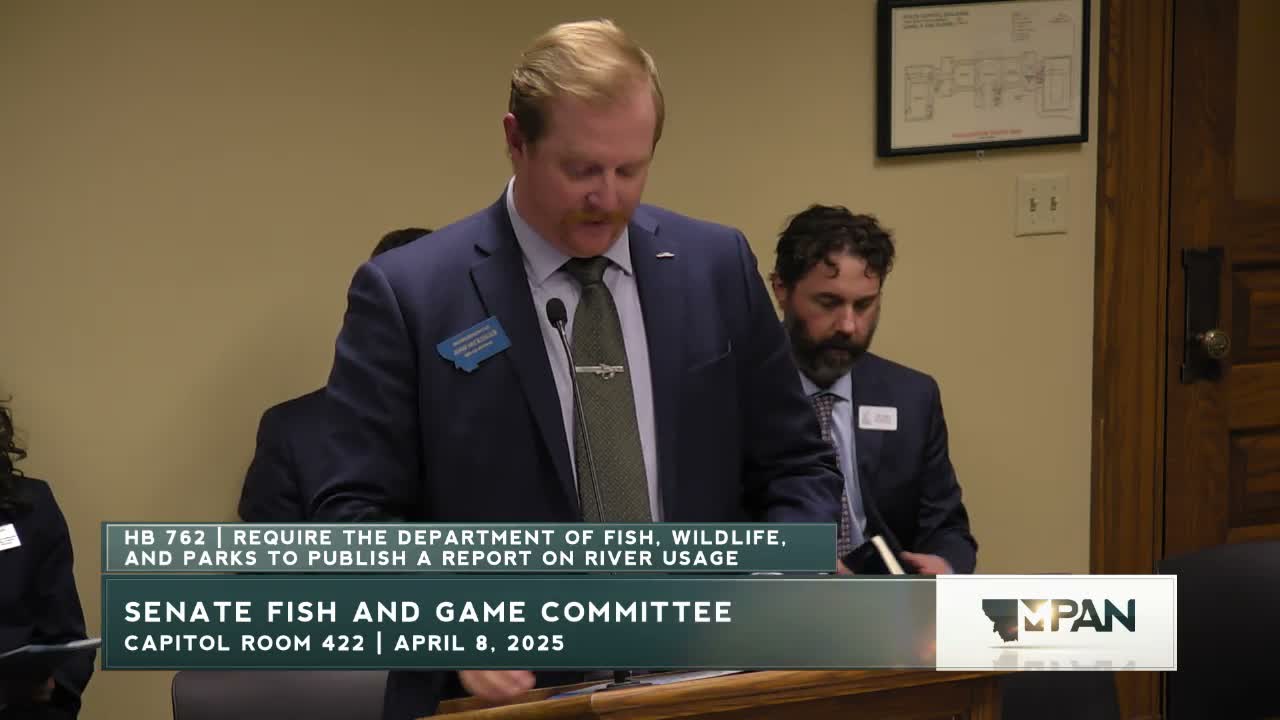
Representative Josh Secinger told the Senate Fish and Game Committee that House Bill 762 — labeled the "river census" bill — seeks a baseline measurement of recreational use across 16 river stretches covering roughly 966 miles, with data to be broken down by vessel type and by commercial versus private users.
"This bill calls for counting and categorization of all floating vessels carrying people, rafts, kayaks, drift boats, canoes, tubes, and even inflatable unicorns," Secinger said, describing the bill’s intended comprehensiveness. He noted the study would complement an ongoing Montana State University effort and produce a week‑by‑week, river‑by‑river analysis usable for future management decisions.
FWP officials described sampling methods and costs. Renee Lemon, parks and outdoor recreation division administrator, explained the plan calls for one sampling period per river stretch (May 15 through Sept. 15, with the Jefferson extended into October) and for seasonal technicians and supervised analysts to estimate weekly counts from those samples. Lena Havron, FWP CFO, told the committee the fiscal note estimates a $2.7 million cost over the biennium while the appropriation in the bill is $2.6 million, noting the department could realign priorities or request an amended appropriation if needed.
Committee members asked whether the data would be used to impose fees; Secinger said the purpose is to create objective data for management decisions, not to charge new fees. Multiple stakeholders — including Trout Unlimited, the Fishing Outfitters Association of Montana and other conservation and outfitter groups — testified in support, citing crowding concerns and the need to separate perception from reality when proposing river management changes.
FWP said funding would come from parks and outdoor recreation state special revenue (including marijuana tax receipts, campground fees and license plate revenue). The bill includes a sunset provision (the sponsor pointed to a sunset date in 2028 for the census effort) and directs a biennial public report. The committee closed the hearing after questions and sponsor closing remarks.