Get Full Government Meeting Transcripts, Videos, & Alerts Forever!
Get email alerts on the Data Privacy Wildlife topic
No spam. Unsubscribe anytime.
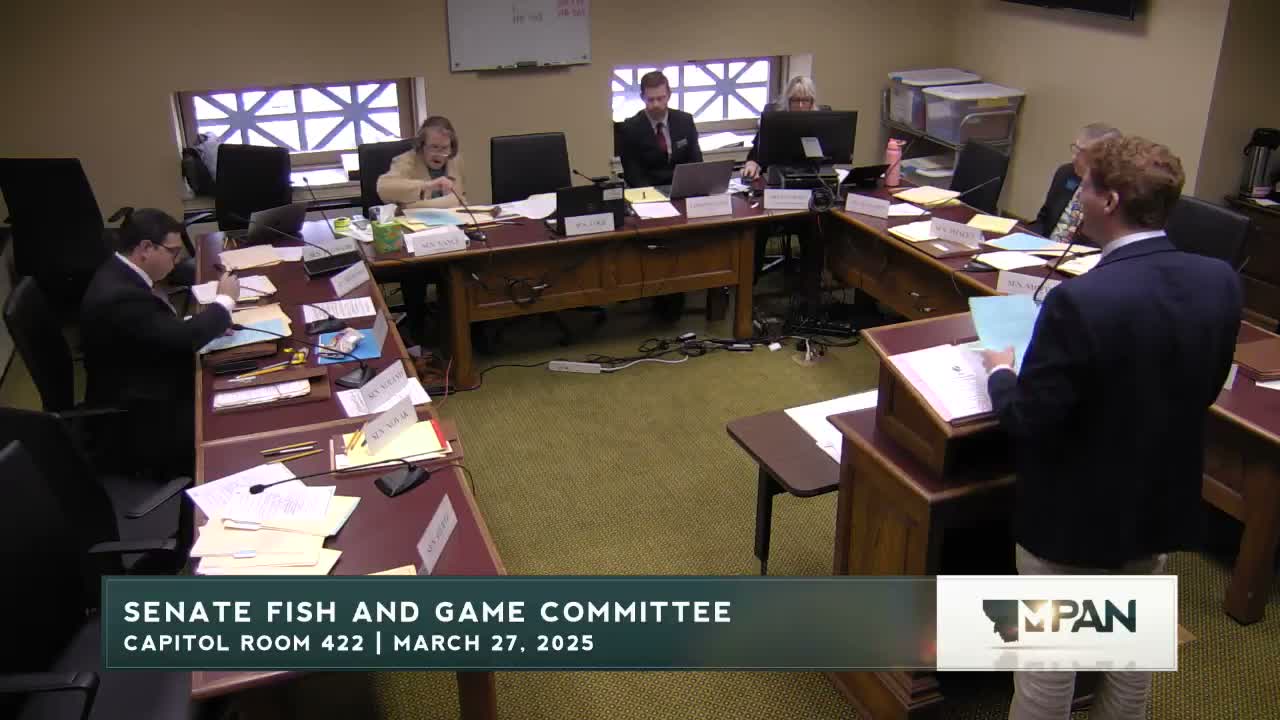
Panel hears bill to delay release of precise wildlife‑location data by one year
Summary
House Bill 264 would impose a one‑year buffer before precise GPS collar and tracking data collected for research are released to the public, with exceptions for environmental permitting and project partners; supporters said the change protects fair‑chase hunting, landowner privacy and researchers' data while opponents urged careful wording to preserve data access for wildlife‑crossing projects.
Representative Jonathan Karlen introduced House Bill 264, saying the bill "ensures a precise collar or other tracking device used for research is not released in a way that undermines fair chase hunting, landowner participation, and the integrity of research." The bill would create a one‑year buffer before exact wildlife location data from collars and other tracking devices are made public; exceptions are made for environmental permitting and data flows to the state library.
Karlen and multiple proponents described examples and rationale: he said the department received roughly 120 requests for wildlife location data last year and that many requests were specific and intended for hunting. Joshua Millspaugh, a professor and director of the Boone and Crockett program at the University of Montana, argued the bill prevents near‑real‑time release that could be used to hunt animals and protects landowners and researchers who collaborate on collars and tracking studies. Mike Mershon (Montana Wildlife Federation) and Kevin Farron (hunter, Missoula) also supported the bill, noting conservation partners and environmental projects would still have access through data‑share agreements.
Kaly Wicks of the Greater Yellowstone Coalition expressed "soft opposition," asking that "project partners" be included to ensure trusted partners working on wildlife‑crossing projects and similar conservation efforts can access data promptly. Sponsor and FWP witnesses explained that data‑share agreements typically include non‑distribution provisions and that the prohibition would carry forward to receiving partners. Sponsor said the bill was scaled from a three‑year buffer to a one‑year buffer to strike a compromise and preserve legitimate conservation uses.
The committee closed the hearing on HB 264; the transcript records discussion but no formal committee action.