Get Full Government Meeting Transcripts, Videos, & Alerts Forever!
Get email alerts on the Public Defense topic
No spam. Unsubscribe anytime.
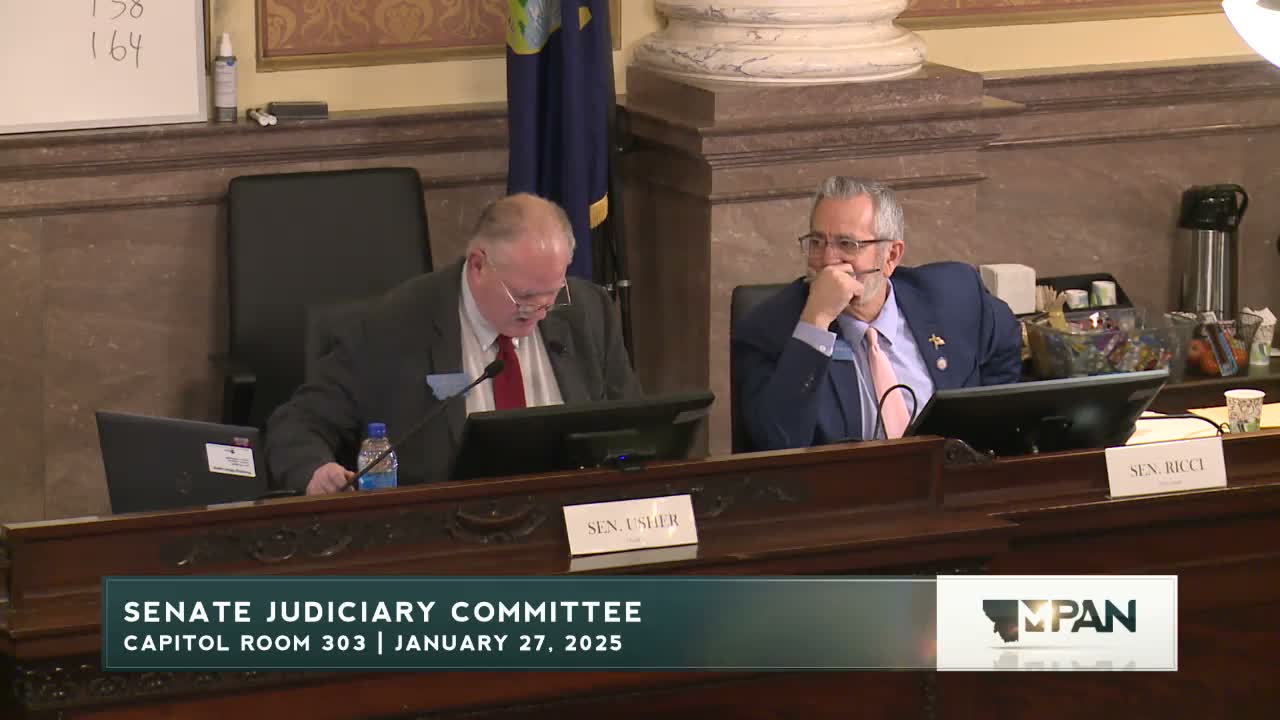
Senate Judiciary advances bill to create child‑focused units in public defender’s office
Summary
The Senate Judiciary Committee advanced SB151, a measure to create specialized children and parent representation units within the Office of the State Public Defender. Supporters said specialized OPD units shorten assignment times and improve training; proponents urged an appropriation to staff the units.
Senate Judiciary advanced legislation on which the Office of the State Public Defender and child‑welfare advocates agreed would speed legal representation for parents and children in child‑protective cases.
Sponsor Senator Dennis Lehi told the committee SB151 builds on last session’s changes that mandated counsel in many child protective cases and would formalize organizational units "for parents and organizational unit for children" inside OPD to improve training, supervision and consistency.
Kelly Driscoll, family defense bureau chief with the Office of the State Public Defender, said having a dedicated bureau produced measurable operational gains. "When we have OPD attorneys representing parties in these cases, our average days to assignment is 1 day," she said, comparing that to an average six days for contract counsel. Driscoll said dedicated teams let attorneys pool resources, mentor less‑experienced lawyers and enforce case limits so attorneys can manage workloads.
Brett Shandelson, director of the Office of State Public Defender, told the committee OPD supports the policy but noted the bill contains no appropriation; his office expects a separate appropriations request to fund staffing. "We support this bill with the understanding that an appropriation would be added in the House," he said.
Committee members queried how an "organizational unit" would be structured and heard that units are geographically distributed and firewalled to prevent cross‑access to confidential materials. Driscoll described a typical unit as multiple attorneys paired with supervisors and case managers, with assignments guided by geography.
After questions and clarifications, the committee voted SB151 do pass by voice vote. Committee members and agency witnesses repeatedly emphasized that the policy’s benefits depend on dedicated funding to staff the new units and preserve OPD’s broader workload.
The committee forwarded the bill to the next stage with unanimous support in committee; details about any appropriation will be determined in subsequent budget proceedings. The bill’s next procedural step will be consideration on the floor and appropriation discussions in the House.