Get Full Government Meeting Transcripts, Videos, & Alerts Forever!
Get email alerts on the Operating Budget topic
No spam. Unsubscribe anytime.
La Crosse officials to seek $2.7 million in cuts to meet budget threshold; staff weigh insurance, hiring pauses and service reductions
Summary
City leaders reviewed a proposed $4.66 million increase to the 2026 operating budget and heard staff say about $2.66 million in reductions would be needed to meet the city's ERP target. Options discussed included using insurance fund balance, a temporary hiring moratorium and targeted service cuts; a special council meeting was scheduled to identify specifics.
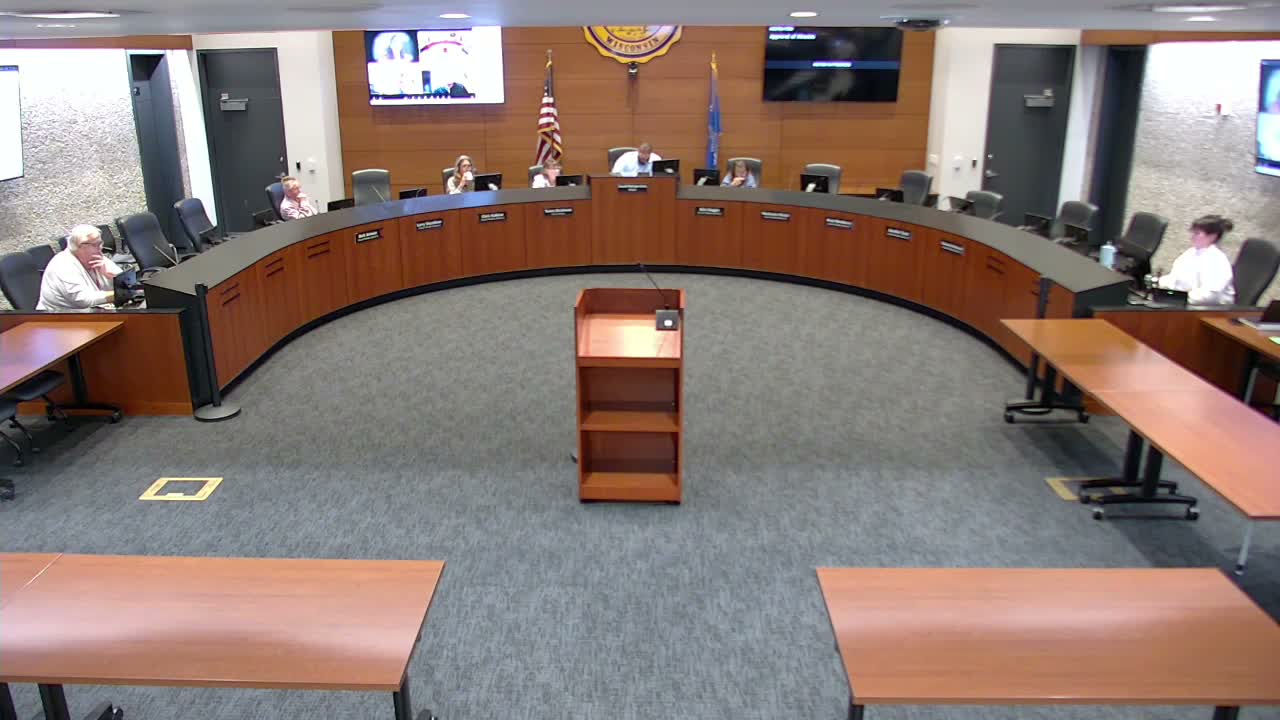
La Crosse's Board of Estimates spent much of its Sept. 4 meeting laying out the scale of the challenge in the proposed 2026 operating budget and agreeing to a special council session to pin down potential reductions.
Director Hawkins told the board the packet before members shows a proposed operating increase of about $4.66 million for 2026 and that staff calculated roughly $2.66 million in reductions would be required to meet the city's ERP threshold. Hawkins said mill-rate worksheets were omitted at this stage because those numbers will change as council decisions shape the final plan.
The discussion quickly turned to where cuts could come from and what staff could recommend. Hawkins said roughly 83% of the proposed increase ' about $3.76 million ' is for salaries and benefits and that the rest reflects nonpersonnel increases such as fuel and utilities. To reduce pressure without immediate service cuts, Hawkins suggested using cash reserves in the health insurance fund to lower an anticipated large insurance increase and considering a short hiring moratorium on vacant positions to realize near-term savings.
Several council members pressed for department-level detail. One council member said a prior directive asked for a 3% reduction in operating expenses but that the current materials did not show that planning. Another asked whether the movement of an inspection unit from the Fire Department to Planning explained apparent discrepancies in department totals; Hawkins replied the net effect across departments is about $1 million but the transfer skews how increases appear on line-item comparisons.
Department heads joined the discussion in part to explain why councilors cannot simply cut individual line items without operational context. Director Odegaard, speaking for parks and recreation, urged caution about micro-managing budgets and noted the difficulty of mapping a single line item to a program's actual service levels, using mowing frequency as an example of how operational choices affect costs.
Council members suggested a range of ideas. One council member asked staff to explore whether certain CIP projects could be deferred to reduce near-term pressure, while another proposed studying new revenue options ' mentioning a 'premier resort area' tax (the transcript rendered the phrase as ''Pratt tax''). Hawkins cautioned that ERP compliance depends on reducing expenses, not only on raising revenue, because ERP is driven by expense levels.
The board also handled routine business: members moved and seconded approval of the prior meeting's minutes and adopted the approval by voice vote with no abstentions recorded. Toward the end of the session, members agreed by unanimous consent to cancel an optional next-day parameter meeting and asked the mayor to schedule a special council meeting before the first week of October for more detailed budget deliberations with department heads.
Next steps: the mayor and Director Hawkins said staff will work with department heads to produce more detailed line-item and program-level analyses and circulate potential dates for a special council meeting so members can vote on any formal reductions or other budget amendments.