Get Full Government Meeting Transcripts, Videos, & Alerts Forever!
Get email alerts on the School Budget topic
No spam. Unsubscribe anytime.
Uxbridge schools propose $28.55 million FY26 budget, add nurse and ELL teacher while relying on one-time offsets
Summary
Superintendent Dwyer presented a $28,545,376 FY26 budget that meets the town'.6% limit by adding a 0.5 FTE nurse, a district ELL teacher and a therapeutic-classroom teacher while using $225,000 from the daycare revolving fund and drawing on school-choice revenue. Committee members asked for a five-year projection and analyses of school-choice and revolving-account sustainability.
Superintendent Dwyer presented the Uxbridge Public Schools proposed FY26 budget totaling $28,545,376 and said the district designed the plan to meet the Town's 3.6% guidance while protecting essential services.
The superintendent said the FY26 plan includes three staffing additions judged essential to student safety and mandate compliance: a 0.5 full-time-equivalent nurse (districtwide), a district English-language-learners teacher and a therapeutic-classroom teacher at Whiting. Dwyer said those additions respond to rising student medical and behavioral needs and to DESE expectations for ELL services.
Nut graf: The budgetary choice trades longer-term investments (textbooks, districtwide professional development and staffing stability) for immediate capacity in nursing, special-education supports and ELL services. Officials told the committee they are using one-time and revolving revenues to limit the operating increase, and members pressed staff for sustainability analyses before final recommendations.
Dwyer outlined the funding mix: Chapter 70 state aid, school-choice receipts, revolving-account offsets and grants. Key figures presented by staff include the $28,545,376 total; a districtwide salary increase package that adds about $475,052 overall; a $122,000 Chromebook allocation; and a one-time $225,000 draw from the daycare/extended-care revolving account to offset operations. The administration also budgeted $710,000 in school-choice revenue to help balance FY26.
Director Toth highlighted service demands driving the spending requests. "In March alone, we had 27 new referrals," she said, noting the district's referrals for special-education evaluation have increased and that many students require direct medical supports that only licensed nurses can provide. Toth described the range of supports covered by the proposed nursing expansion (for example, catheterization or G-tube care during the school day) and said the therapeutic classroom staffing is intended to expand a model already operating at Taft.
Officials emphasized pressures from out-of-district placements and transportation contracts. Staff said they budgeted a 3.5% increase for private/residential tuition and noted out-of-district transportation costs rose materially; transportation rates are largely contractual and can range by placement and distance.
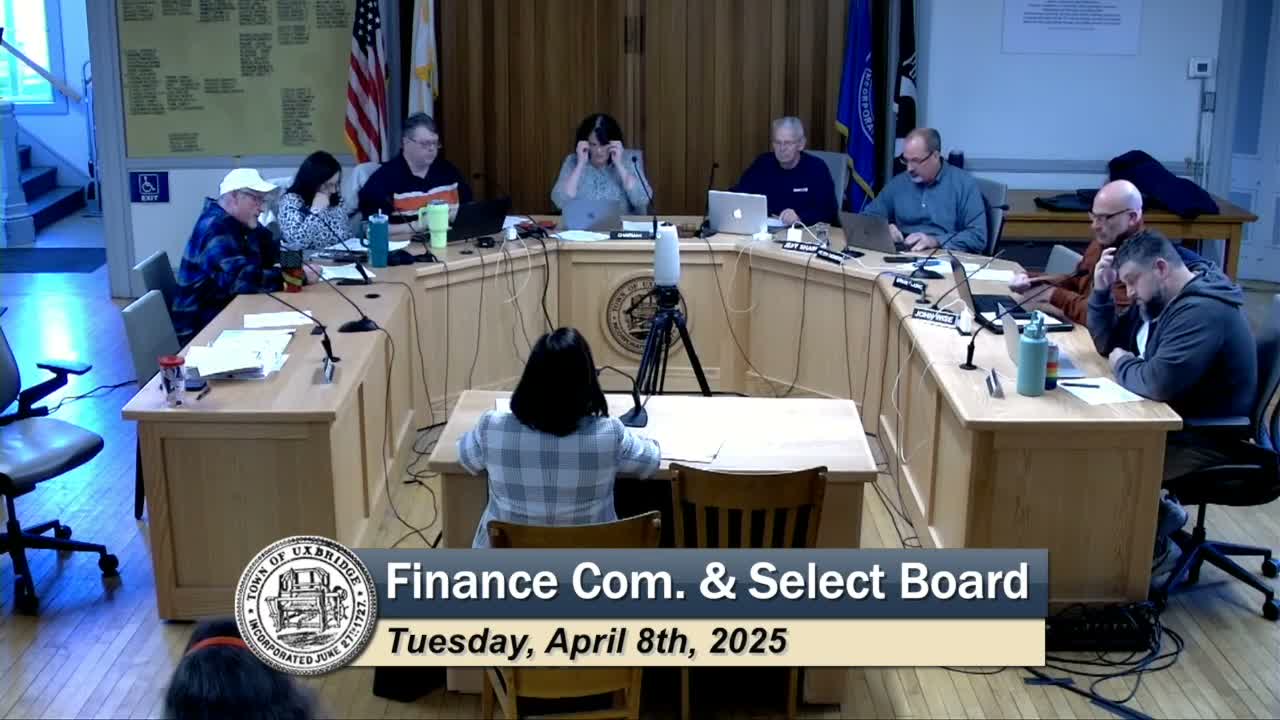
Several committee members scrutinized how the district met the 3.6% target. Members asked for a clear accounting that distinguishes positions cut in prior years from positions requested and denied this year. Dwyer acknowledged cuts in prior budgets and said the FY26 reductions and offsets were chosen to preserve what the district leaders judged to be non-negotiable services for students.
Sustainability concerns drove much of the questioning. Staff reported that, under current assumptions, the school-choice account's projected ending balance could be nearly exhausted by the end of FY26 (staff cited a projected residual of about $19,000 based on the district's revenue and planned uses). Committee members requested a detailed financial evaluation of school-choice trends and a five-year projection to inform the board's upcoming recommendation.
On revolving accounts the administration said the $225,000 daycare draw is a one-time measure and acknowledged it will leave the daycare account with a negative or near-zero balance heading into FY27; staff committed to provide account balances and a tuition/fee analysis. "This is a one-time expense," Dwyer said, "and we cannot take this money again in the same way." The district agreed to return with more detail on daycare tuition, preschool tuition benchmarking and athletic and other revolving-account balances.
Members also raised the town-level cost pressure from health insurance. Several elected officials asked that negotiations around health benefits be coordinated across town and school bargaining units to avoid destabilizing budget consequences.
Next steps: staff committed to deliver a five-year projection and other requested analyses in advance of the joint April 28 meeting and a follow-up meeting planned for April 9 to continue the public hearing. The administration will present the requested revolving-account balances, an LED-savings estimate for recently installed lighting, a school-choice trend analysis and additional cost breakdowns for committee review.
Ending: The committee agreed to consider the additional materials when it meets again; the public hearing was continued and will resume at the time already posted by the town.