Get Full Government Meeting Transcripts, Videos, & Alerts Forever!
Get email alerts on the Road Maintenance Districts topic
No spam. Unsubscribe anytime.
Lawmakers hear from homeowners and counties on bill to let residents form road maintenance districts without county consent
Summary
The House Local Government Committee heard testimony on House Bill 369, which would let homeowners form special road maintenance districts for non‑county roads after a county announces it will stop maintenance. Proponents from Georgetown Lake urged the change; multiple county officials and the Montana Farmers Union opposed it as overbroad and a potential diversion of county road funds.
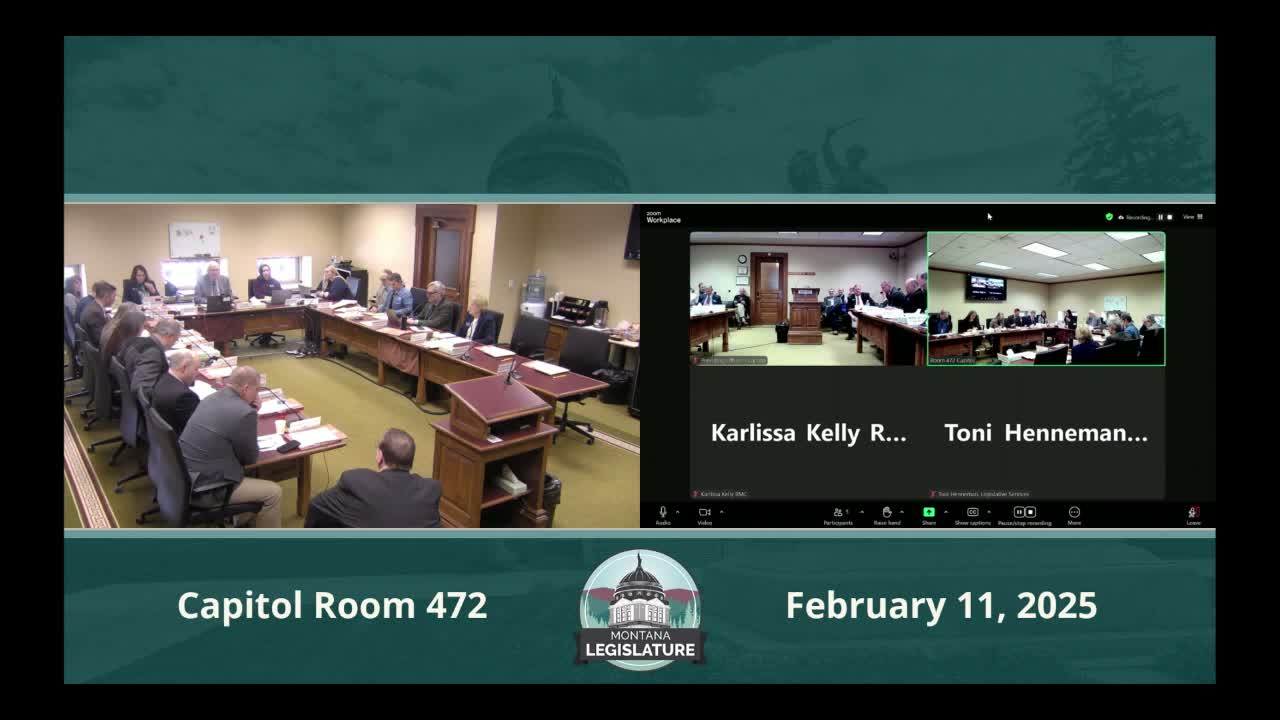
Representative John Fitzpatrick (House District 76) opened the House Local Government Committee hearing on House Bill 369 by telling lawmakers the proposal creates "a new way of creating a road maintenance district" that would allow a group of property owners to form a district without county commission consent if a county publicly announces it will discontinue maintenance on roads owned by a non‑county entity, such as the U.S. Forest Service.
Supporters from Georgetown Lake said the county has steadily reduced services and declined federal matching grants, leaving private roads in disrepair. Brian Clark, president of the Georgetown Lake Homeowners Association, said residents have watched maintenance deteriorate for about six years and asked the Legislature to give homeowners ‘‘the tool to do so’’ and avoid paying twice for road upkeep. Dan Villa, who said he worked as a lineman in the area, told the committee the lake area generates about 25% of Granite County's taxable value yet receives minimal county services.
Opponents — including county officials, county attorneys and several commissioners — urged the committee to reject or narrow the bill. Roy Rost, a Fallon County commissioner, told the panel he reviewed Montana Code and pointed to existing rural improvement district statutes (citing Montana Code 7‑12‑21) that already govern creation of similar districts; he warned HB 369 would limit protest and appeal rights for property owners who do not wish to join a new district. Blaine Bradshaw, Granite County attorney, said the matter should be resolved locally and that the bill would remove bargaining power counties use when negotiating maintenance agreements with the Forest Service.
Other county witnesses raised broader concerns. Cascade County Commissioner Joe Briggs and Montana Association of Counties representatives said the bill's 66% petition threshold is lower than the existing 85% threshold in current law and that the proposed process could be used in other counties or for other federal or state‑owned roads (BLM, Department of Defense) with unintended results. Jasmine Krotkov of the Montana Farmers Union warned the bill would reduce tax dollars available for general county roads if private districts could divert maintenance funds without county oversight.
Committee members pressed sponsors and county officials on facts in the record: whether a petition had already been filed, the history of a federal grant opportunity and matching fund amounts, and whether the existing rural improvement district statutes apply to Forest Service roads in the same way. Granite County's attorney said the county had put down a partial match and engaged in discussions with the Forest Service about a federal highways grant, but that additional federal funds were not a firm commitment. Sponsor Fitzpatrick said he would consider amendments to give counties and petitioners time to negotiate and to cap the annual amount a district could raise.
The hearing closed with Fitzpatrick saying he would seek amendments (including a possible cap on district revenue and a delayed effective date) and asking the committee to hold the bill for a few days to try to resolve outstanding concerns. The committee took no final vote on HB 369 during the hearing.
What happens next: The bill is open for amendment, and sponsors signaled a willingness to negotiate changes addressing oversight, petition thresholds and revenue limits before the committee takes further action.