Get Full Government Meeting Transcripts, Videos, & Alerts Forever!
Get email alerts on the Infrastructure Funding topic
No spam. Unsubscribe anytime.
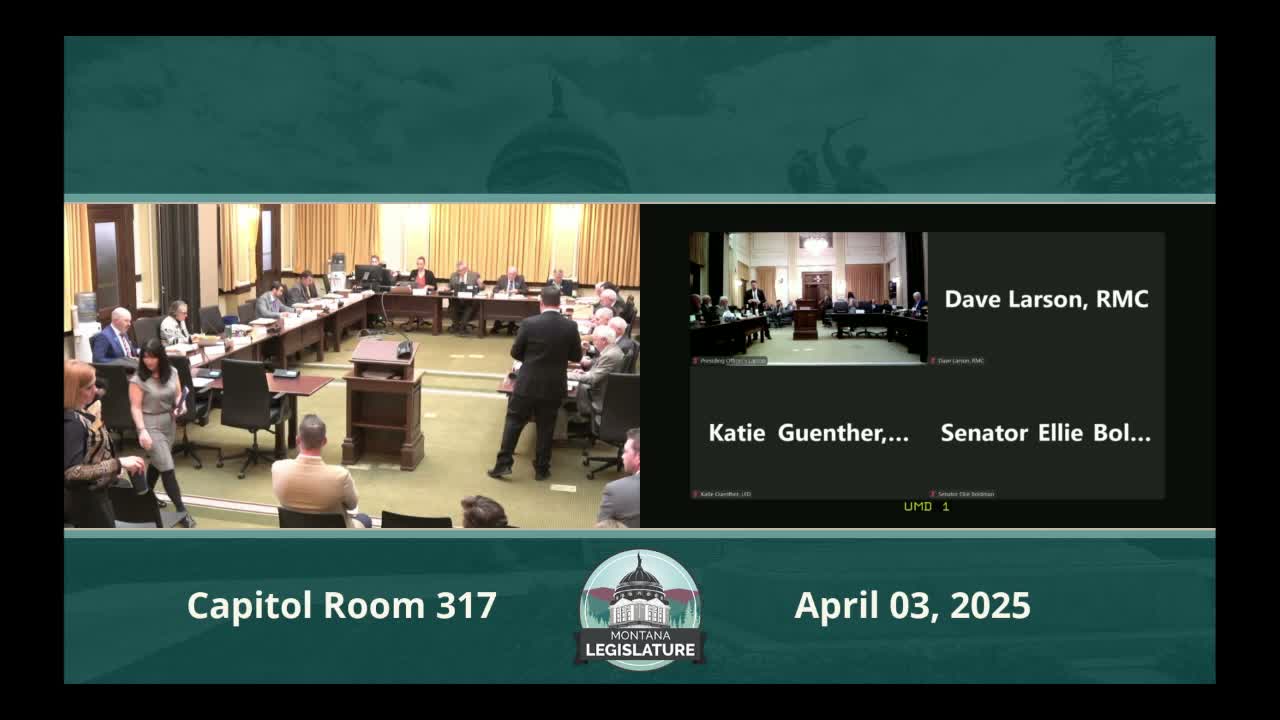
Senate panel advances $50 million seed for bridge grants, increases luxury-vehicle registration fee
Summary
The committee gave SB 324 a due pass to create a $50 million seed for a Better Bridge Fund and to increase the luxury vehicle registration fee (amended in transportation committee); proponents said it provides needed local bridge support and public-safety funding, opponents warned of industry effects and tariff risks.
Senator Josh Kasmier introduced SB 324 as legislation to provide $50 million in seed funding for a Better Bridge Fund, fund the Montana Highway Patrol (MHP) salary needs, and provide ongoing support for the Motor Vehicle Division (MVD) and victim-service programs. The measure targets "off-system" local bridges that are not eligible for federal on-system funding.
Ryan Evans of the governor's budget office said the bill, as introduced, provides $50 million of seed money and would support a $10 million per-year grant program to local governments. Evans urged the committee to consider amending the bill back closer to its original introduced form to better match the governor’s budget request.
Chris Dorrington, director of the Montana Department of Transportation, described the local-bridge problem as substantial — many structures date to the 1930s and replacement costs can range from about $1 million to $20 million. Dorrington said the bill would not solve all needs but would create a revenue stream and a seed fund to help local agencies address urgent failures and load-posted bridges.
Industry witnesses and opponents raised concerns about relying heavily on growth in the commercial registered-agent and luxury-vehicle registration market to fund the bill. Kalli Wicks (LLC TLC) and other registration-service representatives warned that raising registration-related fees could prompt businesses and registrants to move filings out of state, especially given competitive alternatives such as Alaska and the new 25% tariff on some foreign vehicles that could reduce registrations.
Committee questions focused on the fiscal note, the $6.6 million annual contribution historically provided by the 3% administrative fee (which SB 324 would eliminate in some versions), and whether a tiered-fee structure or other amendments could reduce market disruption while preserving revenue. Sponsor Kasmier acknowledged that the amended fee level adopted in transportation did not generate all needed revenue and said the bill needed further work but should continue to move forward.
In executive action the committee voted by roll call (13 yes, 9 no) to give SB 324 a due pass out of Senate Finance and Claims. The chair noted the bill will follow required second‑reading procedures on the floor because of earlier legislative stages.