Get Full Government Meeting Transcripts, Videos, & Alerts Forever!
Get email alerts on the Student Privacy topic
No spam. Unsubscribe anytime.
Privacy concerns collide with school‑efficiency pitch in bill to preapprove vendor contracts
Summary
House Bill 255 would let districts rely on preapproved vendor or consortium contracts for student‑data protections to speed procurement; school boards and tech directors supported streamlining, while privacy professionals warned the change could expose student records and district liability.
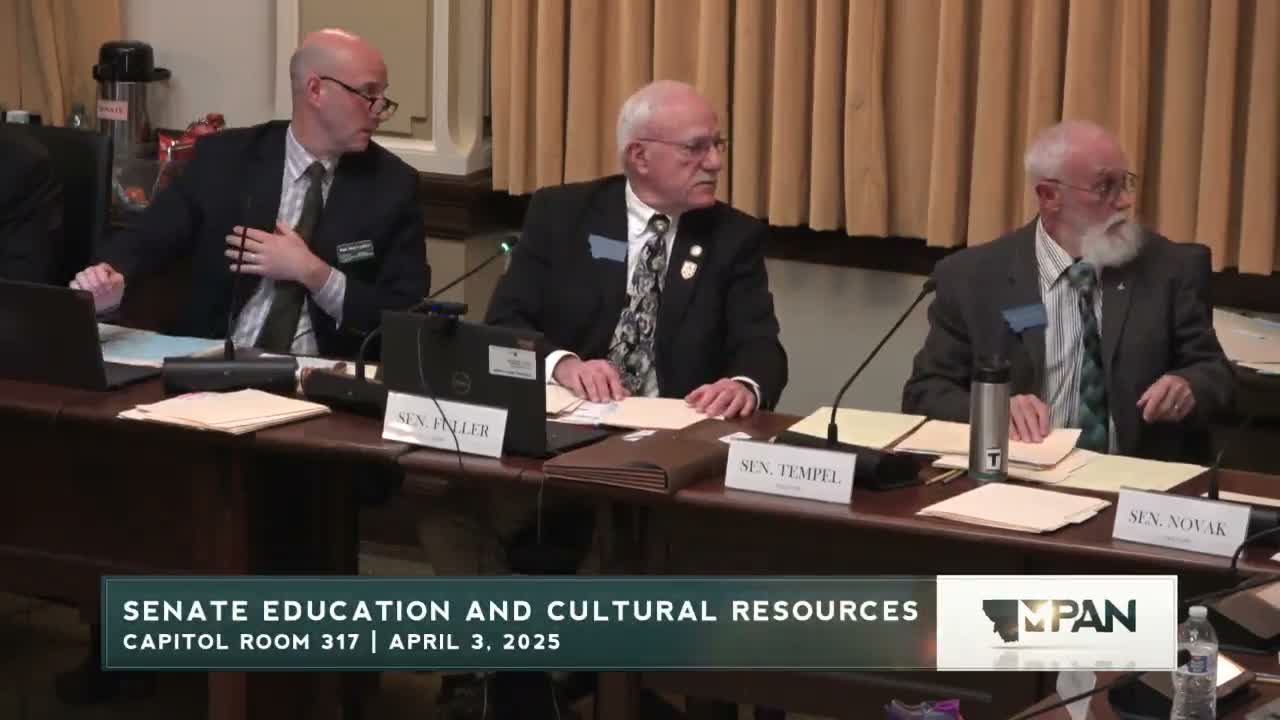
Representative Bob Carter presented House Bill 255 to the Senate Education Committee as a procurement and student‑privacy streamlining measure. The bill would let a school district satisfy statutory contract requirements by executing a contract that has been preapproved by a vetted consortium or a model contract, allowing districts to reuse vetted arrangements instead of negotiating each agreement from scratch.
Proponents including the Montana School Boards Association, superintendents and district technology directors said the current process is slow and manual. Lance Melton (MTSBA) told the committee that school-district counsel currently reviews each contract and that a vetted model or consortium could reduce the administrative burden and help districts get tools into classrooms faster. Rick Duncan, a longtime superintendent, and Carol Phillips, district technology director, urged support and described local experience with lengthy contract reviews.
Don Cape, representing the Coalition for Safety and Justice and describing himself as a privacy professional, urged rejection. Cape said the proposed change ‘‘violates a student's right of privacy in article 2 of Montana Constitution by exposing records to multiple parties without consent’’ and raised federal concerns including FERPA and COPPA. He warned that third‑party processors named in vendor contracts are not always subject to district contracts and may have separate policies or overseas storage, increasing legal and security risk.
Committee members pressed proponents and the sponsor on practical details: how model or consortia contracts would be vetted, whether vendors influence model wording, who bears liability if data is mishandled, and how data deletion would be enforced when contracts terminate. Representative Carter said suppliers must remove data on contract termination and that districts would retain discretion to decline any model contract and continue bilateral negotiation. MTSBA counsel said their office could vet consortia contracts and maintain regular review.
The hearing drew robust questioning and both sides said they were willing to provide additional materials; the committee closed the hearing and will take executive action at its next scheduled EA.