Get Full Government Meeting Transcripts, Videos, & Alerts Forever!
Get email alerts on the Benefit Cap topic
No spam. Unsubscribe anytime.
Bill to remove weekly wage cap splits business and labor in Helena hearing
Summary
SB 308 would eliminate the statutory cap on the weekly wage used to calculate workers' compensation benefits, prompting labor groups to argue it restores fairness for higher-wage injured workers and business groups to warn of significant premium increases and weakened incentives to return to work.
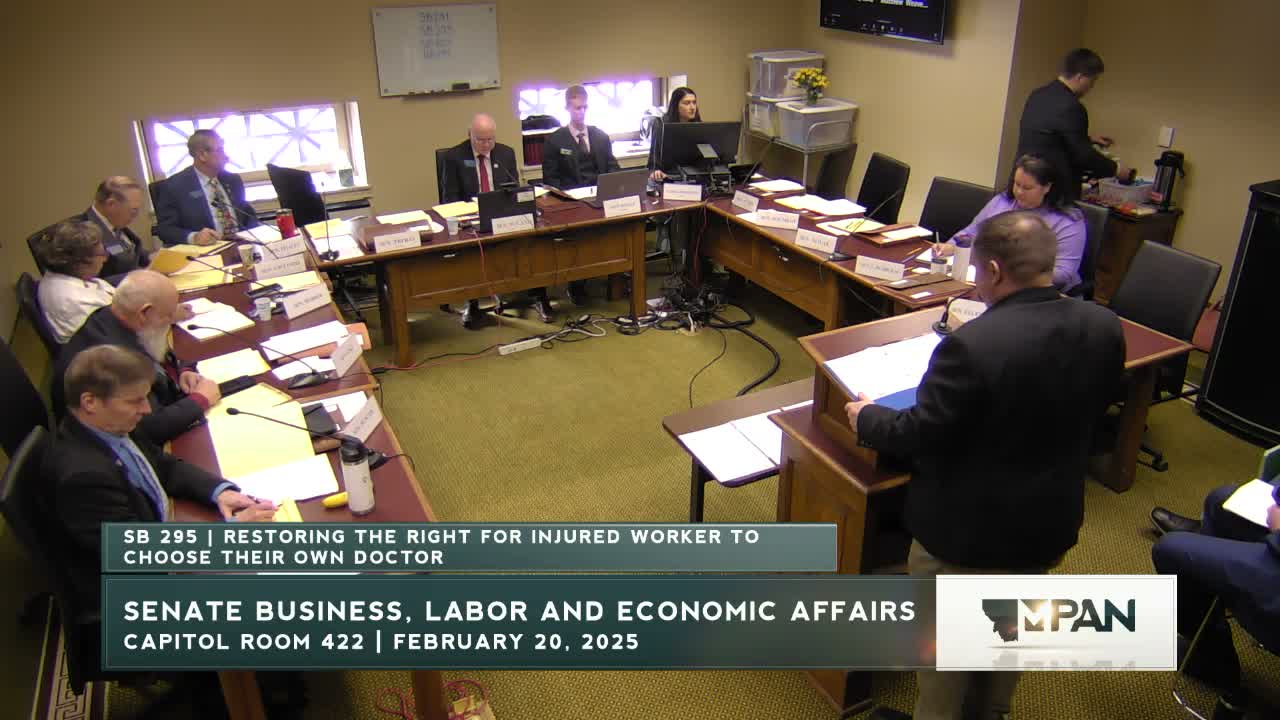
Senate Business, Labor and Economic Affairs heard Senate Bill 308, a proposal to strike the statutory cap that currently limits the weekly wage used to compute workers' compensation weekly benefits.
Sponsor Senator Derek Harvey said Montana's current average-weekly-wage cap (the figure published annually by the Department of Labor) prevents higher-earning workers from receiving the 66.67% wage replacement the statute otherwise guarantees. "If somebody's accustomed to a lifestyle based off of their wage and they get hurt at work, I feel that they should at least be making that reduced amount based off of their wage," Harvey told the committee.
Labor and building trades testified in support, giving numerical examples: Amanda Frickel (AFL-CIO) and Adam Haight (Labor Local 1686) explained how the cap creates a weekly shortfall for workers earning above the State average and described compounding losses during long recoveries. Proponents said removing the cap ensures that workers receive two-thirds of their actual wages, preventing financial ruin for families and preserving access to housing and child care while injured.
Insurers, Chamber and employer groups strongly opposed the bill. Peter Strauss and others said national actuarial analyses (NCCI) estimate rate increases and immediate employer cost impacts if the cap were removed; Strauss estimated a single-year employer cost increase that could amount to several million dollars statewide. Opponents argued the cap is part of the statutory bargain that keeps employers' costs reasonable and preserves incentives for return to work.
Committee members asked State Fund and industry representatives for class-code and fiscal breakdowns; State Fund reported roughly 15% of current claims would be capped under the present statutory calculation and indicated a fiscal note was pending. Senators probed the distributional effects across industries and whether small employers or municipalities would disproportionately bear increased premium costs.
Senator Harvey said he would be open to an effective-date change to allow insurers and employers time to adjust policies; the hearing concluded without a vote. The committee requested fiscal analysis and data by employer class before considering action.