Get Full Government Meeting Transcripts, Videos, & Alerts Forever!
Get email alerts on the Medical Residency topic
No spam. Unsubscribe anytime.
Senate committee hears bill to let medical residents obtain limited full licenses after one year
Summary
Senate Bill 347 would allow medical residents to obtain a full practicing license after one year of accredited residency provided they remain enrolled and in good standing, enabling them to bill payers for relief shifts in rural hospitals and potentially ease physician shortages.
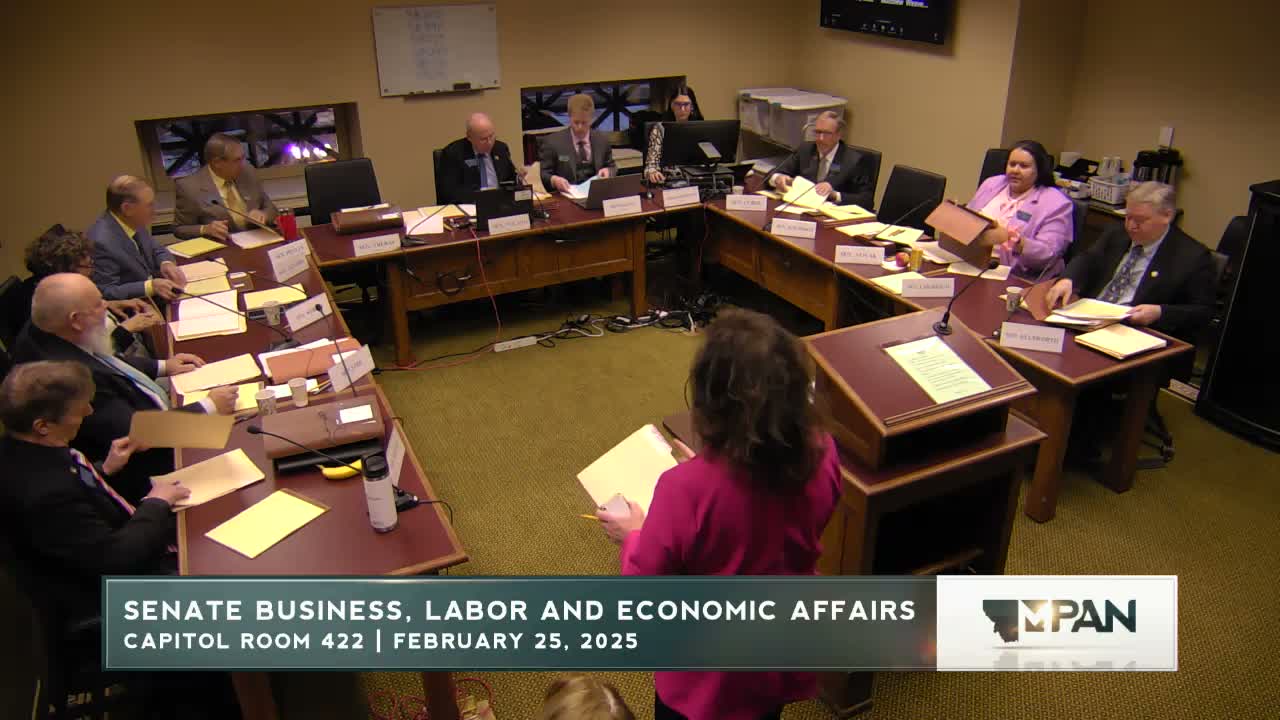
Senate sponsor Sue Vinton introduced legislation to allow qualifying medical residents to receive a full practicing license after one year of residency, a change proponents said would let residents work paid "relief" shifts and help rural hospitals cover staffing gaps.
"Montana has a significant and growing need for additional positions," Vinton said, noting residents already provide supervised patient care. The bill would permit a resident to hold a full license after completing one year of an accredited residency while remaining enrolled and in good standing, enabling enrollment with payers so hospitals can bill for services.
Health-care organizations and program leaders told the Business, Labor and Economic Affairs Committee they support the change. JJ Carmody of Billings Clinic Logan Health said the measure "would align Montana licensure with other states and open up opportunities to utilize residents to alleviate physician shortages." He and other proponents described residents covering weekend or short-notice shifts as a practical way to reduce locum costs and maintain services in thin-margin rural hospitals.
Program directors emphasized safeguards. Rob Stenger, program director for the Family Medicine Residency of Western Montana, said program directors must provide written approval before a resident moonlights and residency accreditation imposes hour limits. "There are safeguards in place to protect the public and ensure any clinical activity is appropriate to their level of training," he said.
Committee members pressed proponents on safety and reimbursement. Kevin Bragg of the Professional Licensing Bureau said approximately 26 states allow licensure after one year of postgraduate work, and explained Montana's current law requires full completion of residency for a full license. Proponents argued that the proposed pathway would be narrow, limit eligibility to residents in good standing and to work within their competency, and that only a small fraction of residents would use the option.
Committee members also asked whether payers, including Medicaid and Medicare, would reimburse for such work; proponents said those payers would qualify and that the more difficult payers have been private insurers. Members requested data on retention; proponents cited that about two-thirds of medical residents who train in Montana remain to practice in the state.
The hearing concluded with the sponsor urging a do-pass recommendation; the committee did not take a formal vote during the hearing. The bill will proceed through the committee process for amendment and potential executive action.