Get Full Government Meeting Transcripts, Videos, & Alerts Forever!
Get email alerts on the Cryptocurrency topic
No spam. Unsubscribe anytime.
Committee hears bill allowing taxpayers to pay state income tax with cryptocurrency; DOR cautions on implementation
Summary
Representative Rannon Gregg told the committee House Bill 453 would let taxpayers direct third-party vendors to convert cryptocurrency proceeds to U.S. dollars for state income-tax payments; proponents argued modernization and taxpayer choice while Department of Revenue witnesses identified administrative and tax-reporting ambiguities.
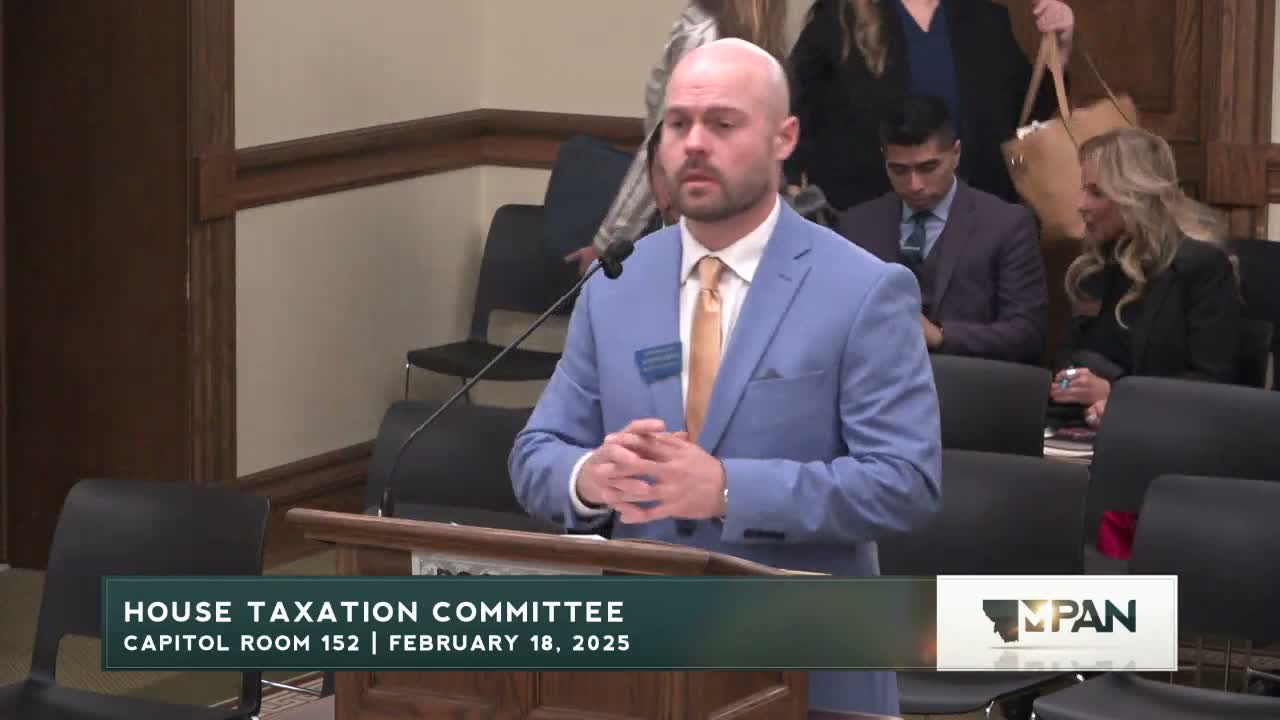
Representative Rannon Gregg opened House Bill 453 as a measure to modernize state tax payment options by allowing taxpayers to use cryptocurrency. Gregg said third-party vendors would convert crypto to U.S. dollars before remittance, ensuring the state receives the same dollar revenue while offering taxpayers choice. "Whether someone chooses to use cryptocurrency or not, our state should not stand in the way of those who do," Gregg said.
Proponents described both the policy rationale and practical mechanics. Tanner Avery (policy director, Frontier Institute, testifying personally) outlined blockchain basics and argued that accommodating digital payments would help Montana attract innovators. Thaddeus Prior, a Bozeman-based crypto professional, said conversion costs can vary but are often modest (he estimated typical off-ramping fees of roughly 1% to 3% depending on service) and suggested that taxpayers paying in stablecoins could avoid volatility-related losses.
Department of Revenue staff raised implementation questions. Derek Bell (Business and Income Tax Division) and John Irey (applications manager) said the department had engaged vendors and had questions about how transaction fees would be handled (passed to the payee vs. absorbed by the state), existing credit-card arrangements, and whether third-party fees might be passed onto taxpayers in practice. Bell noted Colorado uses PayPal for crypto acceptance and that fees are passed to the customer in that model.
Committee members sought clarification on tax-treatment details. Representative Thain asked about language in section 3 that appeared to affect capital-gains treatment; DOR staff said section 3 was ambiguous and recommended clarifying or removing it to avoid unintended consequences. Staff explained that converting crypto for payment could generate federal reporting (Form 1099) and recognition events that would flow through federal taxable income and, depending on Montana start-point rules, could affect state income taxes. Gregg said he was open to amendments to make clear that fees are borne by the payee and to align state treatment with federal tax rules where appropriate.
The hearing closed with the sponsor urging passage so Montana would remain open to payment innovation. No committee vote occurred at this hearing; DOR staff recommended further technical drafting to clarify capital-gains interaction and fee allocation.