Get Full Government Meeting Transcripts, Videos, & Alerts Forever!
Get email alerts on the Beneficial Use Reporting topic
No spam. Unsubscribe anytime.
Bill would require reporting of 'beneficial use' leases on exempt property; Missoula warns of unintended consequences
Summary
Rep. Sherry Esman presented House Bill 25 to require annual reporting to the Department of Revenue of leased business uses on tax‑exempt property; proponents said it improves transparency, while the City of Missoula warned it could force minor‑league teams and concessions to pay property taxes absent clarifying amendments.
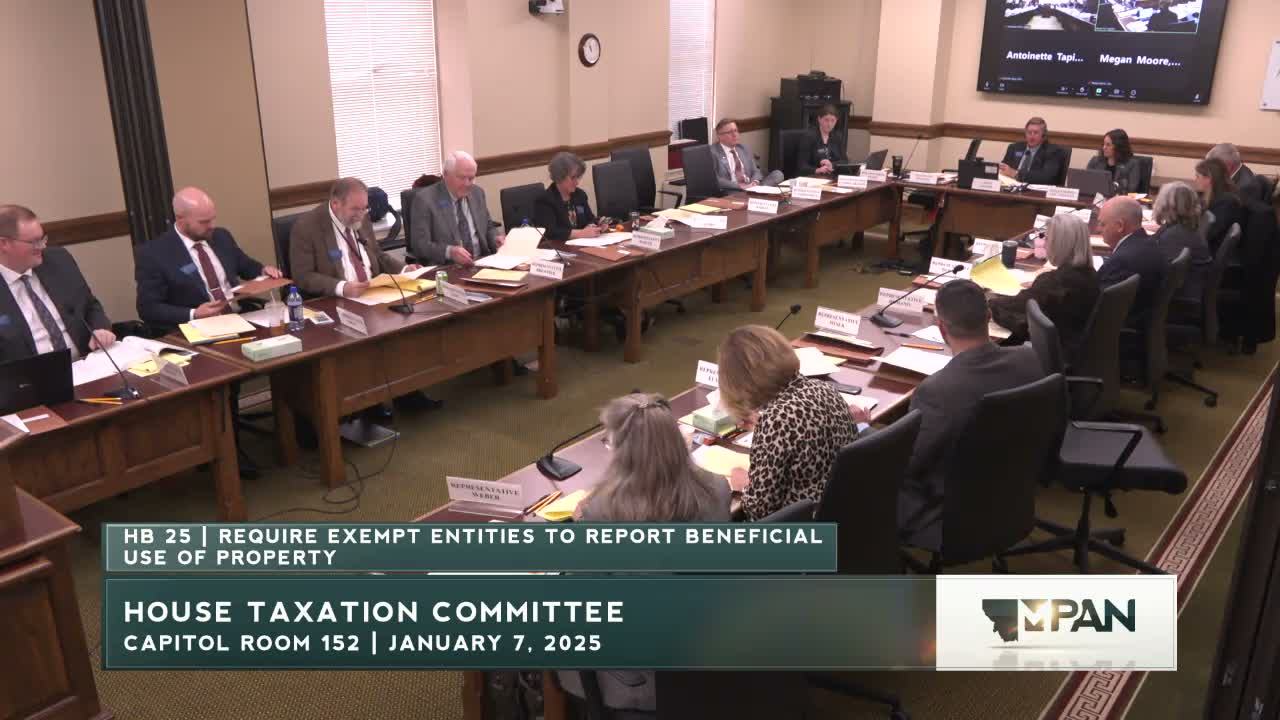
Representative Sherry Esman opened the hearing on House Bill 25, explaining the bill implements a Legislative Audit Division recommendation to require owners of tax‑exempt property to report beneficial use leases (for example, a private vendor operating in a leased commercial space on exempt property) to the Department of Revenue and to provide penalties for noncompliance. Esman said the new section is intended to improve information for DOR so the department can administer beneficial‑use taxation consistently.
Bob Story (Montana Taxpayers Association) supported the concept, arguing businesses operating out of nonprofit or public property that compete with private businesses should be counted and that reporting would shed light on such arrangements. Ella Smith, speaking for the City of Missoula, opposed the bill as drafted; she said earlier efforts at similar reporting were abandoned because they risked making venues such as Ogren Park (Big Sky Baseball’s Osprey Stadium at Auburn Park) subject to property tax and “would cause most, if not all of Montana’s minor league baseball teams to cease to exist.”
Robin Rude, deputy administrator at the Department of Revenue, and David Singer from the Legislative Audit Division appeared as informational witnesses. Singer said the audit’s recommendation focused on improving reporting of beneficial use and noted that the underlying statutes (including 15‑24‑12‑03) already authorize taxation of beneficial use with defined exceptions. Rude clarified that, in practice, taxation would typically apply to the leased portion of property used for industrial, trade, or other business purposes (for example, the square footage occupied by a concession). She said lease wording often determines whether the lessee or the public owner pays the tax and that forthcoming amendments may address responsibility for tax payments and refine statutory placement.
Committee members asked technical questions about statutory cross‑references and exceptions; staff said drafting changes are expected and that copies of amendments would be provided before executive action. Representative Esman closed by committing to work with DOR and the Legislative Audit Division to produce clarifying amendments.
No executive action was taken during the hearing; committee staff and the sponsor said they will return with amendment language addressing concerns raised by the City of Missoula and others.