Get Full Government Meeting Transcripts, Videos, & Alerts Forever!
Get email alerts on the Taxation topic
No spam. Unsubscribe anytime.
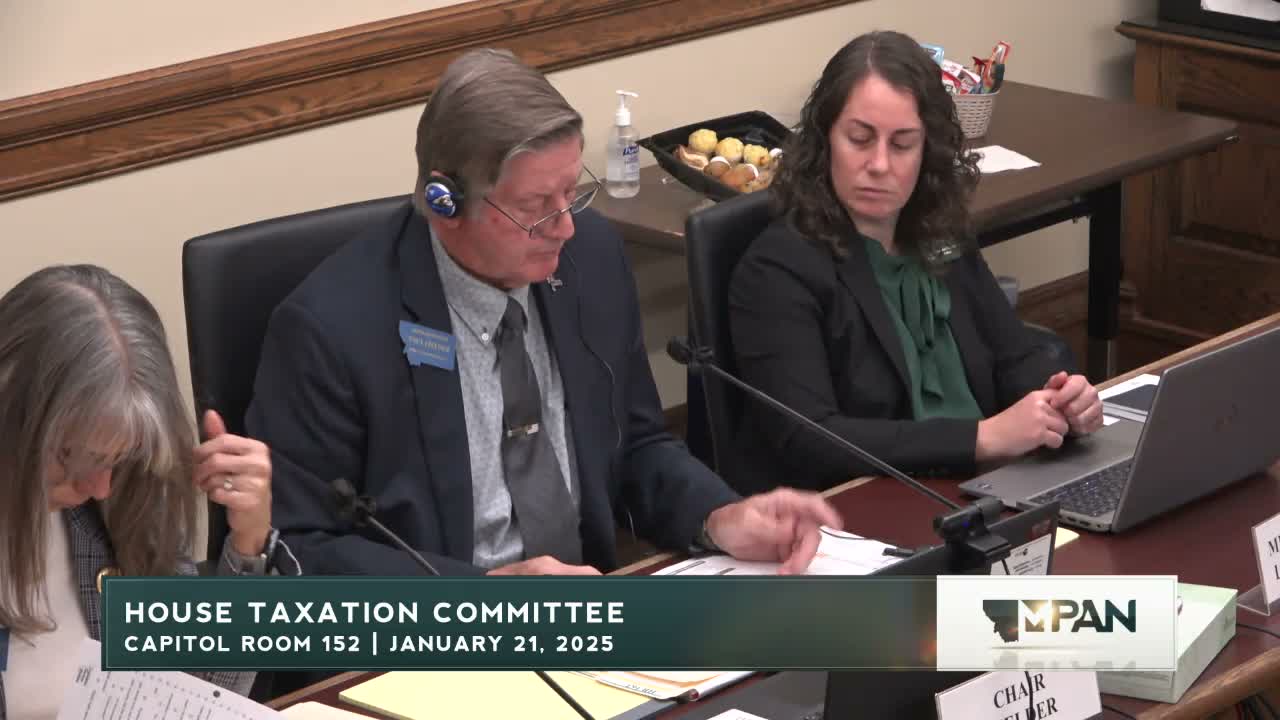
Committee hears bill to create income tax credit for health‑care preceptors
Summary
House Bill 163 would create a nonrefundable income tax credit to incentivize licensed clinicians who volunteer at least 100 hours supervising health‑care students; proponents said it would help retain clinical capacity in Montana while opponents cautioned about using income‑tax credits rather than direct state payments.
Representative Walsh introduced House Bill 163 as an income tax credit to encourage licensed Montana clinicians to serve as unpaid preceptors for students in health‑care training programs. The bill defines a qualifying clinical rotation as a minimum of 100 hours and would provide a $1,000 credit per qualifying rotation, up to a maximum of $5,000 per preceptor, the sponsor and witnesses said.
Proponents described the statewide shortage of preceptors and clinical learning opportunities. Sarah Shannon, dean of nursing at Montana State University, said advanced practice nursing students need roughly 500–1,000 clinical hours (she cited “765 hours” for nurse practitioner students) and that supervising students imposes additional time burdens on clinicians. “This bill is not paying the preceptor for care. It’s paying the preceptor for that extra time that the education requires,” Shannon said.
Leaders from higher‑education and provider groups testified the credit is a practical response to out‑of‑state programs that pay preceptors and thereby compete for Montana clinical placements. John Cech, president of Carroll College, and Liz Whiting, director of graduate medical education at Touro University, said programs bringing paid out‑of‑state students can draw scarce clinical slots away from Montana students; Cech described planned local expansion (a physician‑assistant program) that will increase demand for preceptors.
Health‑system and professional associations testified in favor. Heather O’Hara of the Montana Hospital Association and representatives of the Montana Pharmacy Association and Montana Nurses Association said acknowledging preceptors’ time via a tax incentive could expand capacity. Joel Gaertig of the Montana State Firefighters Association supported the concept and asked the sponsor to consider adding paramedics to eligible preceptors.
An opponent, Allen Lloyd of the Montana Society of CPAs, said the society is reluctant to support income‑tax credits in principle and recommended a direct payment approach — citing Washington State as a model — so preceptors receive immediate compensation rather than waiting until tax filing.
Department of Revenue and the Office of the Commissioner of Higher Education appeared informationally; OCHE staff confirmed clinical capacity is a primary barrier to graduating more providers. Committee members asked detailed questions about how many placements programs need, how many clinical hours constitute a rotation, and typical compensation elsewhere; witnesses and the sponsor clarified the bill’s definitions (the draft defines a clinical rotation as at least 100 hours) and noted the $1,000 per 100‑hour median seen in other states.
The hearing closed with the sponsor asking the committee to consider the bill as an incentive to retain Montana preceptors and expand training opportunities for Montana students. The committee took no action and closed the hearing on HB163.