Get Full Government Meeting Transcripts, Videos, & Alerts Forever!
Get email alerts on the Local Economy topic
No spam. Unsubscribe anytime.
House panel hears 'Montana Food First' bill to give retailers tax incentive to stock local food
Summary
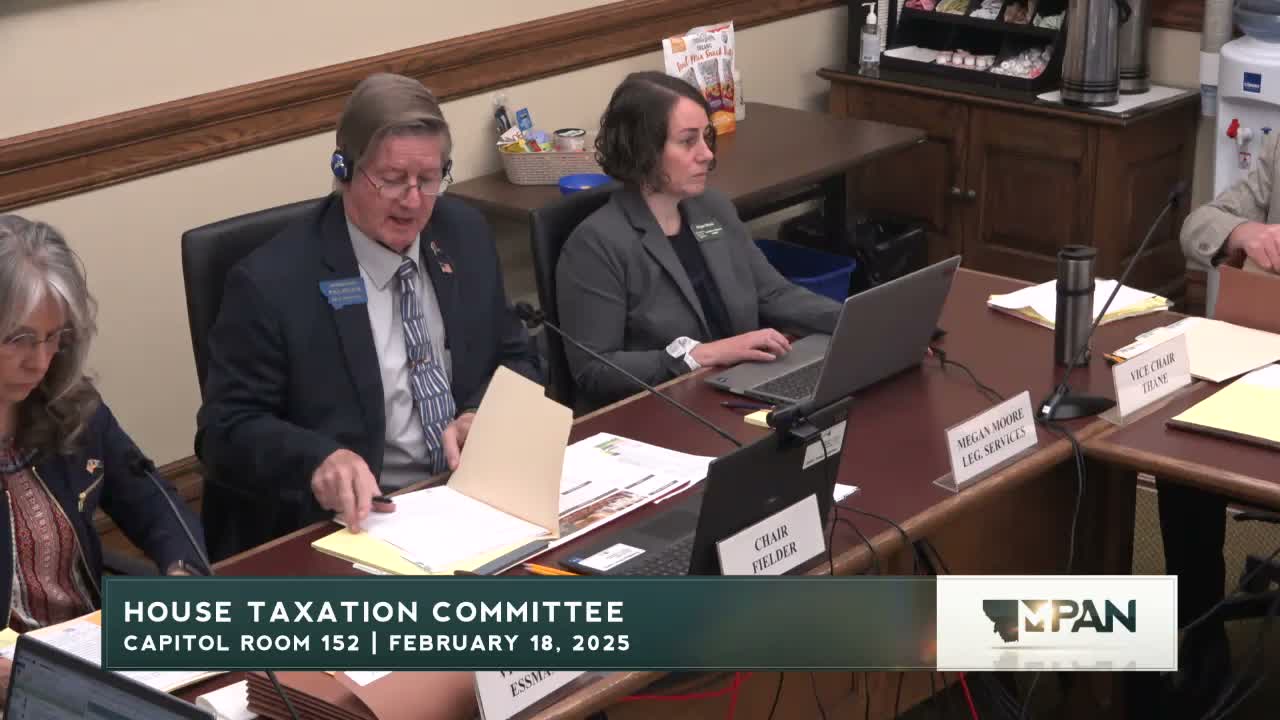
Representative Jane Weber told the House Taxation Committee that House Bill 440 would allow retailers to subtract 50% of net income from sales of Montana-produced foods and require reporting of vendor identification; producers and food-policy groups supported the bill as a way to increase shelf access for local farms and food businesses.
Representative Jane Weber introduced House Bill 440, the 'Montana Food First' plan, to the House Taxation Committee as a voluntary tax incentive aimed at helping Montana farmers and ranchers place their products on grocery shelves. Weber told the committee the bill would let a grocer subtract 50% of the net income attributable to sales of Montana-produced food items at point of sale and would require grocers to report that a vendor had identified a product as Montana produced. "Montanans deserve to have locally produced foods accessible to them," Weber said in her opening remarks.
Proponents gave in-person and remote testimony describing persistent market barriers for small producers. Jasmine Krotkov of the Montana Farmers Union said the policy would help address supply-chain problems exposed during the COVID-19 pandemic and "level the playing field" with national distributors. Kaly Wicks of Grow Montana cited market-size estimates and employment figures during her testimony, saying local food sales account for roughly $158,000,000 annually and that a large share of those sales come through retailers and food-service channels.
Several producers and a former grocer described industry practices such as slotting allowances, promotional discounts, and product-sampling programs that national manufacturers use to secure prominent shelf placement. Mike Novak, who ran a local grocery for decades, outlined those practices and said smaller producers often lack the resources to compete for premium display space. Proponents argued the bill is voluntary for grocers and would provide an incentive comparable to those national suppliers receive.
Department of Revenue (DOR) staff identified implementation concerns. Finn McMichael of the Tax Policy and Research Unit and Keith Broussard of the DOR's Natural Resource tax bureau said the fiscal note reflects an estimate of participation and that the department estimated needing 2 full-time equivalent staff to assist with auditing and administration if the program is adopted. Committee members asked for further data on the dollar magnitude of slotting and promotional incentives and whether the fiscal estimate was accurate; proponents and the former grocer described discounts and allowances but did not provide a single statewide dollar figure.
Representative Minor raised a legal note about possible Commerce Clause challenges. Weber responded that the bill is voluntary for retailers, cited the Complete Auto Transit v. Brady four-part test for state taxes, and said she and counsel believed the measure could be crafted to avoid discrimination against interstate commerce.
Weber closed by asking the committee for a "do pass" recommendation, saying the bill would help Montanans find local foods on shelves and help small producers reach consumers. The hearing record contains the sponsor's request and the committee's questions; the committee did not take final action on HB 440 during this meeting.