Get Full Government Meeting Transcripts, Videos, & Alerts Forever!
Get email alerts on the Partisan Local Elections topic
No spam. Unsubscribe anytime.
Bill to require partisan local elections draws split testimony from county officials and elections staff
Summary
Representative Lucas Schubert sponsored HB 482 to make local elections partisan, arguing it would increase transparency; county officials, election administrators and tribal representatives testified it would undermine local voter choice and inject polarization. Committee held Q&A; sponsor requested do-pass but no committee vote occurred.
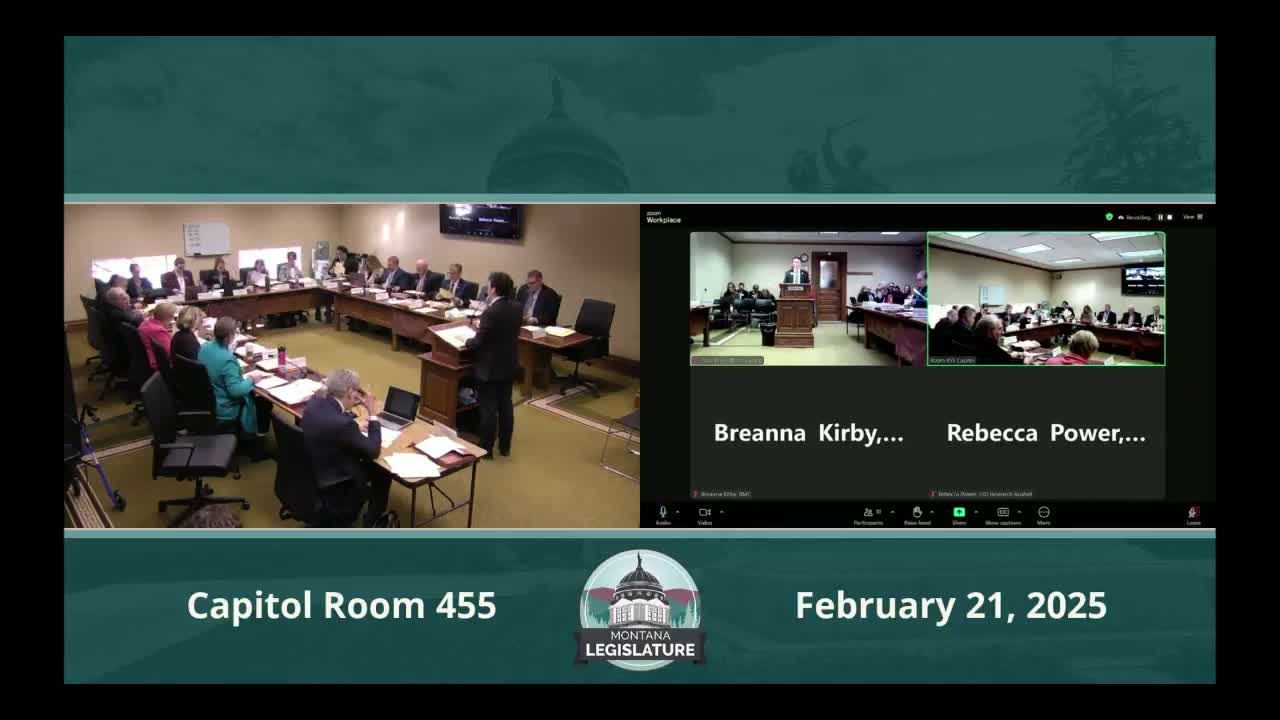
Representative Lucas Schubert introduced House Bill 482, a proposal to require local government elections be conducted on a partisan basis, saying party labels give voters useful information about candidates’ ideological leanings.
Schubert told the House State Administration Committee the measure is intended as a transparency reform: “people…do have some sort of bias,” he said, and party labels help voters who are not “political junkies” understand where candidates stand. He asked the committee to give the bill a do-pass recommendation and stood open for questions.
Opposition testimony came from a range of local officials and election administrators. Patch Kawaki, representing tribal interests, said the bill would “inject partisan politics into our local municipal and county” elections and urged the committee to respect local decisionmaking. Candace Payne, a Lewis and Clark County commissioner, noted that county voters chose nonpartisan elections in 2019 and asked lawmakers to “let the voters in Lewis And Clark County … continue” with the earlier choice. Several county officials, including elections staff and the Montana League of Cities and Towns’ legal director, said day-to-day municipal work — trash collection, roads, water — does not turn on party platforms and that partisan elections risk polarization and discourage public service.
Elections officials explained why ballot language is written to be neutral during county votes on election format and emphasized that local procedures exist for voters to choose partisan or nonpartisan status. Committee members pressed the sponsor on the premise that all candidates have an identifiable bias; Schubert replied that people develop ideologies that affect their decisions even on local matters.
The hearing closed after extended questions; Schubert renewed his request for a do-pass recommendation. No committee action or vote was recorded during the hearing.
What’s next: The committee recessed; sponsors asked for flexibility on scheduling and the bills will appear again on the executive action calendar. The committee did not vote on HB 482 during this hearing.