Get Full Government Meeting Transcripts, Videos, & Alerts Forever!
Get email alerts on the District Realignment topic
No spam. Unsubscribe anytime.
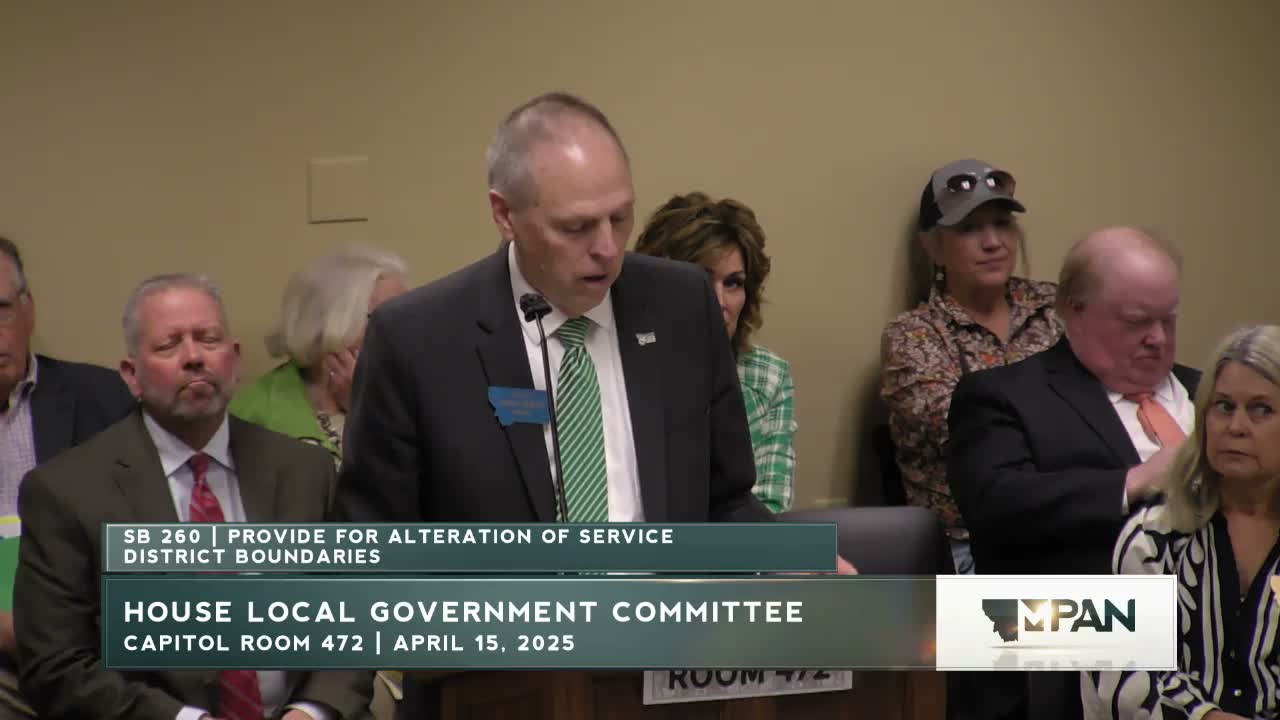
House panel advances Big Sky boundary realignment bill with phased reconciliation payments
Summary
Senate Bill 260 lets isolated communities petition to realign school and hospital district boundaries and includes negotiated reconciliation payments and advisory provisions; proponents and hospital leaders said an amendment protects existing district finances and the committee passed the bill as amended.
A House Local Government Committee vote Tuesday advanced Senate Bill 260, a negotiated package that enables boundary realignment for isolated communities and sets a phased reconciliation payment system to protect existing school and hospital district finances.
The measure, discussed at length by a sponsor identified in committee only as “Senator,” responds to a long‑running dispute between Big Sky-area residents and the larger districts (Ennis School District and Madison Valley Hospital District). Proponents from Big Sky and representatives of local districts described arrangements that would allow residents in the geographically isolated area to petition for inclusion in a different district of attendance and create a payment formula that follows the students or steps down hospital district payments over time.
Kevin Germain, chair of the Big Sky Resort Area District, said the area contributes a large share of assessed value to multiple districts but has limited voting representation in those districts. Jesse Luther and Jackie Haines described the bill’s safeguards: required petitions, public hearings, an obligation to join a like district and an advisory council to connect parents in Big Sky to district decision‑making. The bill establishes definitions such as “isolated pupil” (students who live in one district but attend another) and a reconciliation payment calculation based on isolated pupils attending the district of attendance.
Opponents included representatives of Madison Valley Hospital and Madison Valley Medical Center, who said the original draft risked hospital finances; they and the Big Sky proponents described a negotiated amendment implementing an 8‑to‑10‑year step‑down payment schedule so that the newly formed district gradually receives local tax revenue while the original district can meet bond and operating obligations. Hospital representatives said the amendment resolves their concerns and makes the bill acceptable.
Committee members asked how the parties reached a compromise. The sponsor credited extensive local negotiations and said the bill provides a template for similar disputes elsewhere. After debate the committee adopted the negotiated amendment and reported the bill passed. The sponsor said Representative Jones will carry the bill on the House floor.
Key numeric items cited in testimony include an estimated phased payment amount (witnesses cited about $23 million in step‑down payments and larger figures reflecting local tax flows); those numbers were presented in testimony as estimates tied to the specific local example and will be clarified in the bill’s fiscal documentation.