Get Full Government Meeting Transcripts, Videos, & Alerts Forever!
Get email alerts on the Driver Data Privacy topic
No spam. Unsubscribe anytime.
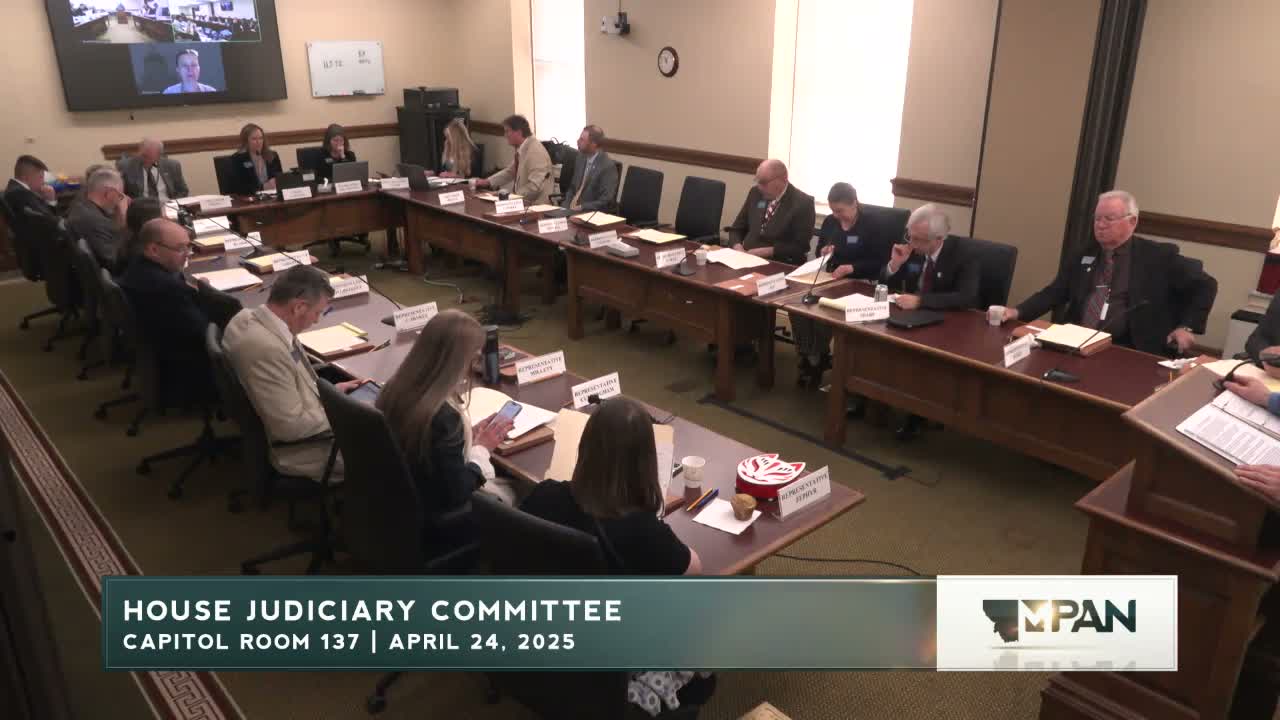
House Judiciary advances study resolution on motor-vehicle data sharing; HJ 72 passes 19-1
Summary
The House Judiciary Committee voted 19-1 to pass House Joint Resolution 72, a study measure asking state agencies to review what motor-vehicle registration and purchase data the DMV shares, who buys it, and whether protections should be strengthened.
At a meeting of the House Judiciary Committee, members voted 19-1 to advance House Joint Resolution 72, a study resolution that asks state authorities to review how driver and vehicle records are shared and whether additional protections are warranted.
Sponsor Representative Bob Carter, of House District 96 in Missoula, told the committee HJ 72 is intended to map what motor-vehicle data is available and how it is released. “I have for your consideration a study bill of personal information being shared by the DMV,” Carter said, arguing that registration and purchase data are valuable to data brokers and marketers.
Carter placed HJ 72 in the context of earlier efforts, telling members a related bill, HB 662 (the Montana Driver Protection Act), passed the House unanimously but was tabled in the Senate. He described a statutory distinction he said warrants review: “There’s a section that has critical [identifying] information that’s very well restricted,” Carter said, and “another section that can allow insurance companies or companies that demonstrate the appropriate need to be able to get your information.” He said the phrase “appropriate need” is vague and should be examined.
Representative Baum pressed the sponsor on how private parties obtain the records and the consumer harms involved, saying some “older folks get inundated with this stuff” and may be targeted by solicitations. Carter described enforcement concerns from the prior bill — opponents sought to avoid a fiscal note by arguing against a state enforcement mechanism — and recounted a consumer harm that motivated him: a foster youth who paid $450 for an extended vehicle warranty that took weeks to unwind.
After testimony and questions, the committee took executive action. Vice Chair Deming moved to pass HJ 72; the roll-call vote recorded 19 yes and 1 no, and the chair announced that the resolution had passed House Judiciary. The committee record shows named affirmative votes by Vice Chair Deming, Representatives Baum, Klacken, Griffith, Millett, Overstreet, Cunningham, Zephyr, Staffman, Kametz, Sharp, Kelly, Joy, Echart, Howell (by proxy), Jay Hinkle, Vice Chair France and Chair Regier; Representative Mitchell voted no. The committee did not record a second to the motion in the transcript.
HJ 72 is a study resolution rather than an immediate regulatory or statutory change; its passage directs the committee and relevant agencies to identify what DMV data are publicly available or disclosed, who receives those records, and possible protections. The record does not specify which state statute sections will be reviewed or any timetable for the study.
The committee adjourned after completing business.