Get Full Government Meeting Transcripts, Videos, & Alerts Forever!
Get email alerts on the Probation And Revocation topic
No spam. Unsubscribe anytime.
Bill would let receiving county attorneys petition to transfer probation revocations, sponsors say
Summary
Senate Bill 5‑52 would allow a county attorney in a new county to file a petition to transfer a probation revocation when an offender moves, a change supporters say will reduce transport costs and allow the local county to address misconduct more efficiently.
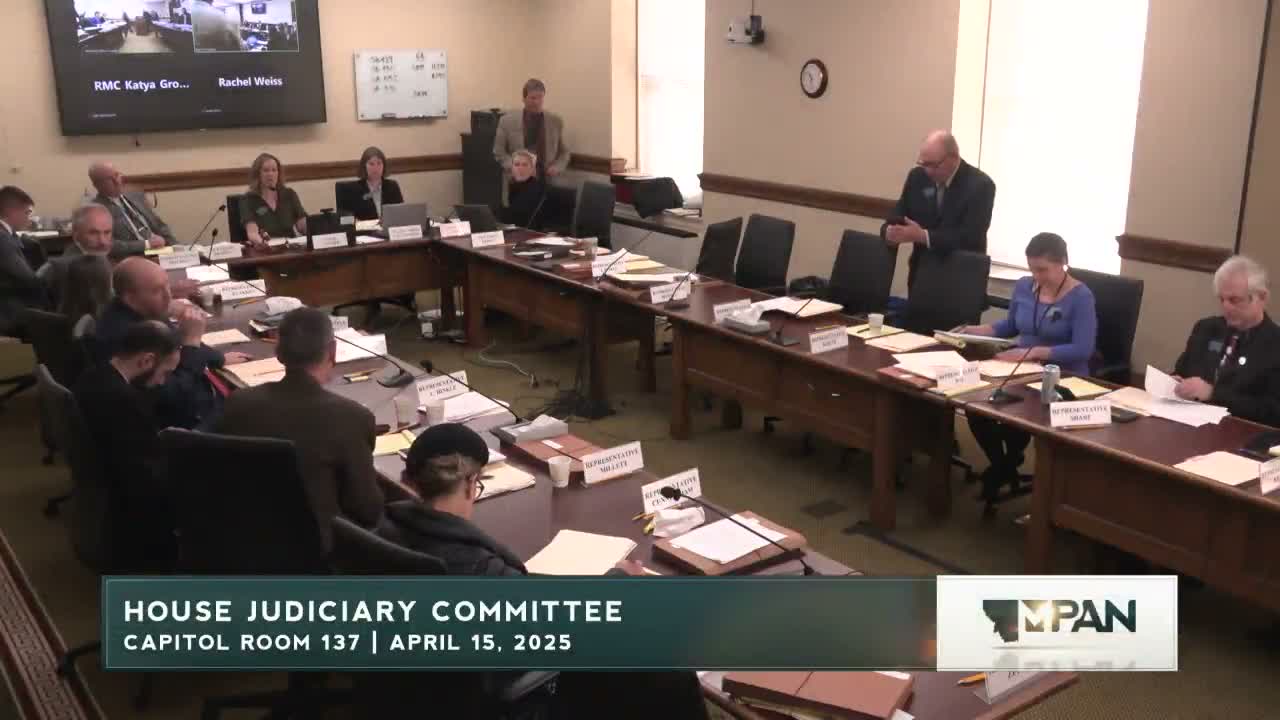
Senate Bill 5‑52, presented to the House Judiciary Committee by Senator Barry Usher, would let a county attorney in a receiving county file a petition to transfer a probation revocation when a defendant moves jurisdictions.
Senator Usher, sponsor of the bill, told lawmakers the change is intended to close a procedural gap that can make it inefficient for a county where an offender is causing trouble to obtain revocation if the offender remains under supervision in another county. "This allows the county attorney in the new county to actually file a petition to be able to have permission to file for that revocation," he said, explaining that the measure was drafted after county attorneys identified the need.
Fergus County Attorney Kent Sipe, who testified in support, said the measure was vetted by the County Attorneys Association and would improve efficiency by letting the county experiencing new offenses proceed with revocation and avoid repeated transports between counties. Sipe described a recent case in which a defendant living in a different county faced new charges there; transferring the revocation would let the local prosecutor handle the matter with better knowledge of the defendant's current behavior and reduce costs.
No opponents were recorded in the hearing and the sponsor closed the SB 5‑52 hearing without a committee vote recorded in this transcript.
What happens next: The bill received proponent testimony and the sponsor said he would be available for follow‑up questions as the measure moves through committee.