Get Full Government Meeting Transcripts, Videos, & Alerts Forever!
Get email alerts on the Mental Health Commitments topic
No spam. Unsubscribe anytime.
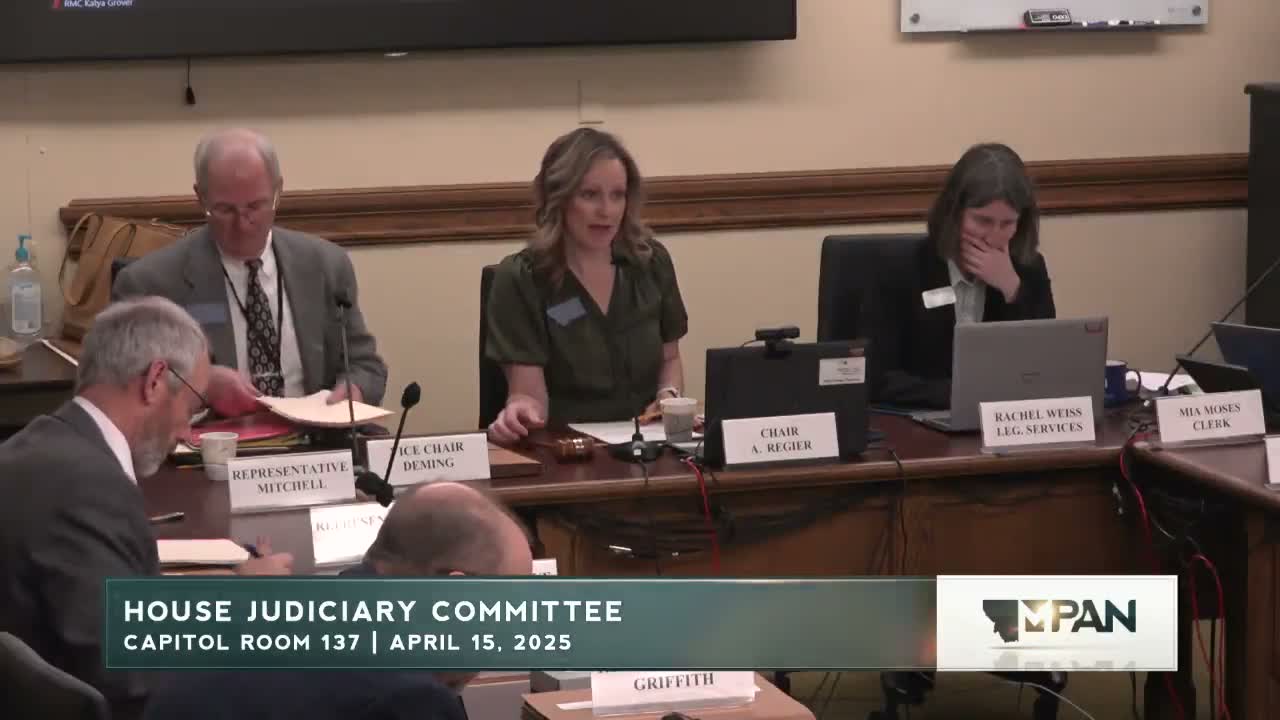
House Judiciary hears package to narrow contempt rules and expand community restoration for forensic and civil commitments
Summary
Lawmakers heard Senate Bills 4‑29 and 4‑30, a paired forensic/civil package that narrows contempt findings when hospitals lack capacity, tightens court orders, and expands community restoration and prioritization at the state hospital to reduce backlogs.
At a House Judiciary hearing, lawmakers and stakeholders reviewed a pair of bills aimed at reducing court‑hospital conflict and expanding community treatment options for people undergoing forensic or civil commitment proceedings.
Senator John Esp, sponsor of the bills, told the committee the bills limit circumstances that can trigger contempt when hospitals lack beds or required licensing or when medical records are not available. "So that's basically the cliff notes version of what this bill does," he said in opening remarks.
The Department of Public Health and Human Services (DPHHS) framed the measures as procedural fixes. Chad Parker, DPHHS deputy chief legal counsel, said the bills ‘‘narrowly, narrowly focused what should and should not be contempt’’ and add statutory language to prevent courts from issuing overly broad commitment orders that delay treatment. Parker said the package also opens additional community‑level treatment and restoration options and includes prioritization language for the state hospital (referred to in testimony as the Galen facility) that ranks pretrial defendants needing restoration, violent defendants with transport orders, and then other defendants.
Stakeholders including Nanette Gilbertson (representing the Montana Sheriffs and Peace Officers Association and the Montana County Attorneys Association) and Matt Kuntz, executive director of NAMI Montana, testified in support. Gilbertson emphasized that the bills are intended to be read as part of a broader package that includes other legislation to create capacity and payment mechanisms (witnesses listed House Bill 912, House Bill 643, House Bill 574, House Bill 2 and related measures).
Committee members pressed DPHHS on the fiscal implications and on who would pay for evaluations and restorations. Representative Kelly raised a scenario where an inmate subject to a commitment order could be denied admission when there is no available medical evaluation or bed, asking, "What's the remedy for those type of scenarios, knowing that this sort of gives everybody an out for not following the directive?" Parker responded that the contempt change is meant to avoid costly court litigation when compliance is impossible and that funding and capacity questions are being handled across multiple bills and the governor's budget.
Several members also asked about how the bills address the so‑called "revolving door" — patients who are restored, leave the hospital, stop medication and later return. Parker and other witnesses said the bills increase coordination among courts, county attorneys, hospitals and the state hospital and add discharge planning and community treatment pathways to reduce returns to custody.
No final action was taken; the committee closed the hearing and the sponsors reserved the right to close later in the legislative process.
What happens next: The bills were heard; sponsors and DPHHS staff indicated they are part of a package of measures addressing capacity and funding and that follow‑up and appropriations steps will determine implementation timing and scale.