Get Full Government Meeting Transcripts, Videos, & Alerts Forever!
Get email alerts on the Drones Trespass topic
No spam. Unsubscribe anytime.
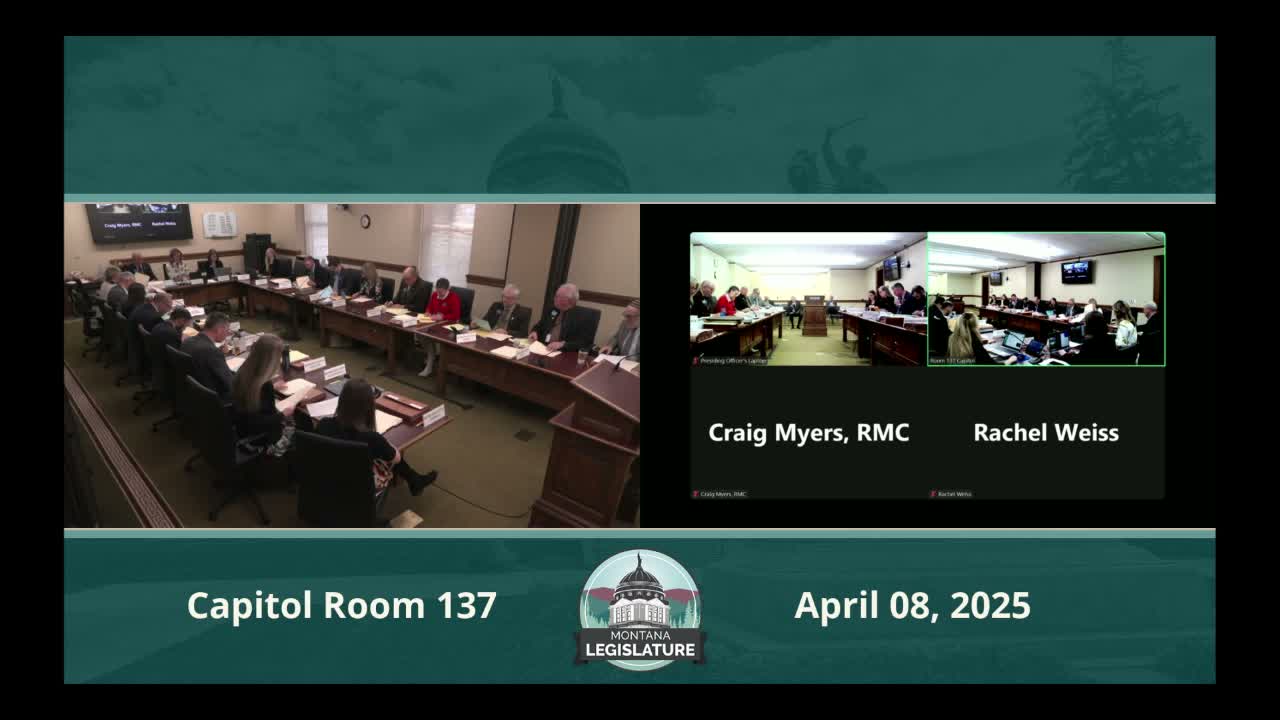
Montana committee hears bill to make low-altitude drone flights over private property a trespass
Summary
Sen. Greg Hertz told the House Judiciary Committee his bill would criminalize flying a drone 200 feet or lower over another person’s residence or property without authorization, with narrow exceptions for government, FAA‑licensed operations, easements and emergency response. Opponents urged tighter limits and authentication safeguards.
Sen. Greg Hertz (District 7) told the House Judiciary Committee he is sponsoring a bill to address residents’ complaints about drones flying low over private property, saying the measure would make low-altitude incursions a crime and impose a $500 fine in some cases.
Hertz said the proposal draws a line at 200 feet: "So if we look at the bill page 1 line 12 that's where we talk about the 200 feet or lower over property of a resident or another person without authorization of the property owner or resident and a person's convicted of criminal trespassing with a $500 fine." He acknowledged the 200‑foot figure is an initial policy choice, not a technical boundary: "Is 200 feet the number? I don't know. But that was the recommendation…we start there and work forward." (Sen. Greg Hertz)
The bill includes several exceptions. It would not apply to drones operated by federal, state, tribal or local government agencies acting within their duties; to contractors performing essential post‑disaster utility or broadband work; to peace officers operating with a warrant; or to FAA‑licensed commercial operators operating consistent with federal rules. Hertz emphasized that many FAA‑authorized systems broadcast identification signals that allow regulators to identify operators.
Greg Van Horsten, representing State Farm Insurance, supported the bill on grounds that licensed insurers use drones for timely and safer post‑catastrophe inspections: "State Farm is the first insurance company to be FAA licensed for the use of drones…we view it as very valuable," he said.
Opponents flagged property-rights and easement issues. Charles Denow of United Property Owners of Montana said property rights historically extend above and below the surface, and he cautioned that the Senate amendment carving out FAA‑licensed operators (the bill’s subsection e) could be interpreted to give broad immunity to commercial operators at low altitudes: "This bill speaks to, under 200 feet…So there's no minimum bound in this bill. It's from 0 to 200." (Charles Denow)
Committee members pressed the sponsor and witnesses on how to define "legitimate business purpose," how the bill would interact with public rights‑of‑way and easements, and how enforcement would work in practice without reliable operator identification. Hertz said he would consult the Attorney General's office and was open to drafting clarifications. He also recounted a deputy sheriff’s experience receiving repeated drone flights over his yard as an illustration of enforcement gaps.
The hearing record shows interest in tightening exemptions and in whether public land or rights‑of‑way should be carved out; the sponsor said he is open to amendments. The committee took no formal vote on the bill during the hearing.
What happens next: The sponsor asked the committee to advance the bill; members indicated they may seek clarifying amendments on definitions and the interplay with federal aviation rules and easement law.