Get Full Government Meeting Transcripts, Videos, & Alerts Forever!
Get email alerts on the Immigration Reporting topic
No spam. Unsubscribe anytime.
Committee advances bill that would require broad mandatory reporting of undocumented individuals amid strong opposition
Summary
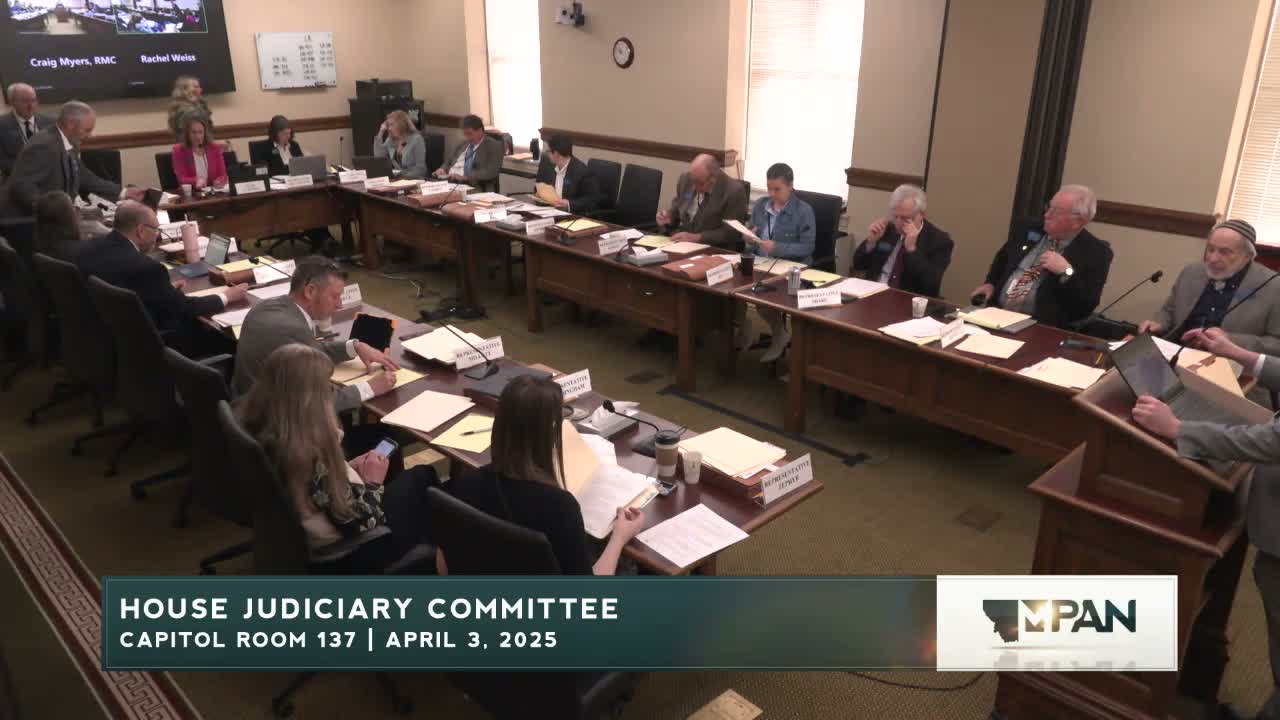
The House Judiciary Committee voted 12–8 to pass HB 927, which would require many professionals to report people believed not lawfully present. Health-care, education and nonprofit witnesses warned it would undermine confidentiality and access to services.
Representative Lucas Schubert opened the hearing on House Bill 927, a proposal to require specified professionals to report individuals they reasonably believe are "not lawfully present" in the United States. Schubert told the committee the bill would expand existing mandatory-reporting frameworks to cover immigration status and said the measure would be "first in the nation" in sweeping scope.
Proponents included a few online commenters who framed the bill as a tool to address human trafficking and criminal activity tied to undocumented presence. Several proponents urged passage as a public-safety and immigration‑control measure.
Opponents were numerous and included health-care professionals, educators, nonprofits and legal advocates. Dr. Elizabeth Kolstad, a licensed psychologist, said mandatory reporting in clinical settings would violate confidentiality and that she would refuse to comply rather than betray patient trust. "It is not protective. It is harmful," Kolstad said, invoking duties to clients and patients. The Montana Nurses Association and school boards warned the bill would chill care and education access; the Montana School Boards Association cited potential conflicts with federal law, including Plyler v. Doe and FERPA, that protect students’ access to education and limit school data disclosures. Legal advocates and service providers warned of disproportionate harms to trafficking survivors and other vulnerable individuals who need safe access to services.
Several witnesses raised implementation and fiscal concerns: the Montana Department of Justice representative said the bill would likely require larger staffing than the $500 figure in the fiscal note and recommended the legislature consider reporting pathways to federal partners rather than creating a new state-processing system.
During Q&A, members pressed about scope, training, and where reports would be sent. The sponsor said he planned to amend the bill to send reports directly to federal immigration authorities (ICE) instead of the state DOJ, if it advanced.
After extended debate, Vice Chair Deming moved the bill do pass. The committee held a roll-call vote and reported HB 927 do pass by 12–8. Supporters described the vote as a step to enforce immigration law at the state level; opponents warned the bill could damage essential services, disproportionately harm vulnerable populations and invite litigation.
What happens next: HB 927 is reported out of the House Judiciary Committee and will proceed toward full House consideration; its constitutional questions and conflicts with federal privacy rules and access‑to‑education precedents are likely to be focal issues on the floor.