Get Full Government Meeting Transcripts, Videos, & Alerts Forever!
Get email alerts on the Judicial Ethics topic
No spam. Unsubscribe anytime.
Bill would limit judges’ use of 'rule of necessity' to avoid recusal
Summary
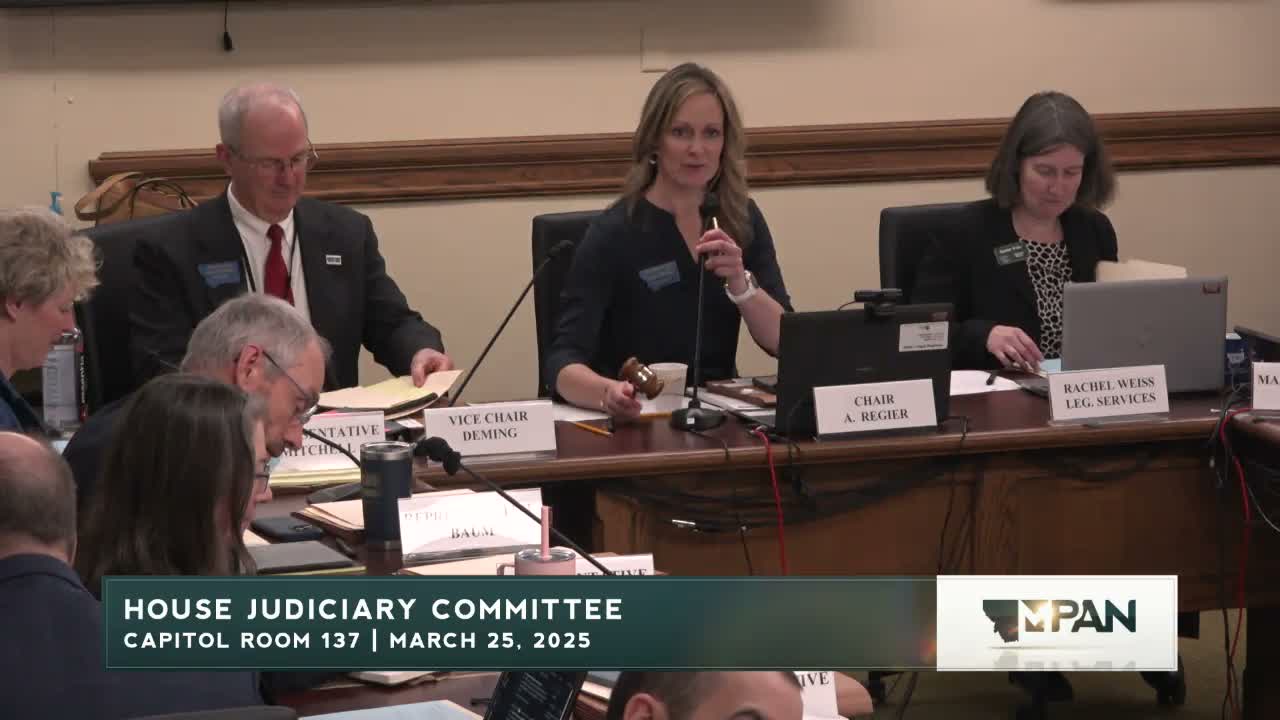
Sen. Tom McElvray told the House Judiciary Committee Senate Bill 30 would bar use of the 'rule of necessity' to avoid recusal when other judicial officers with lesser conflicts are available, citing McLaughlin v. State as motivating precedent.
Sen. Tom McElvray presented Senate Bill 30 as a narrow statutory clarification that would prevent a judicial officer from invoking the “rule of necessity” to avoid recusal when other judges with lesser or no conflicts are available. “A judicial officer may not use the legal doctrine of the rule of necessity to avoid recusal because of a conflict of interest in which other judicial officers with less immediate or less significant conflicts are available to serve as substitutes,” McElvray read from the proposed language.
McElvray told committee members the change arises from the McLaughlin v. State matter and from interim judicial oversight work and said the intent is to align code with the long‑standing common‑law principle so that recusal is meaningful. Representative Staffman asked whether placement of the new language in the existing statutory subsection meant it would apply only to financial contribution conflicts; McElvray said the provision is a general restriction on judicial officers and was drafted into that section because the drafter placed it among restrictions on judicial officers.
The hearing closed without additional witnesses. The bill is positioned as a technical change to clarify recusal doctrine and the committee may take it up for executive action in a subsequent meeting.