Get Full Government Meeting Transcripts, Videos, & Alerts Forever!
Get email alerts on the Land Use topic
No spam. Unsubscribe anytime.
Bill would require courts to invite governing bodies to weigh in on some land‑use orders
Summary
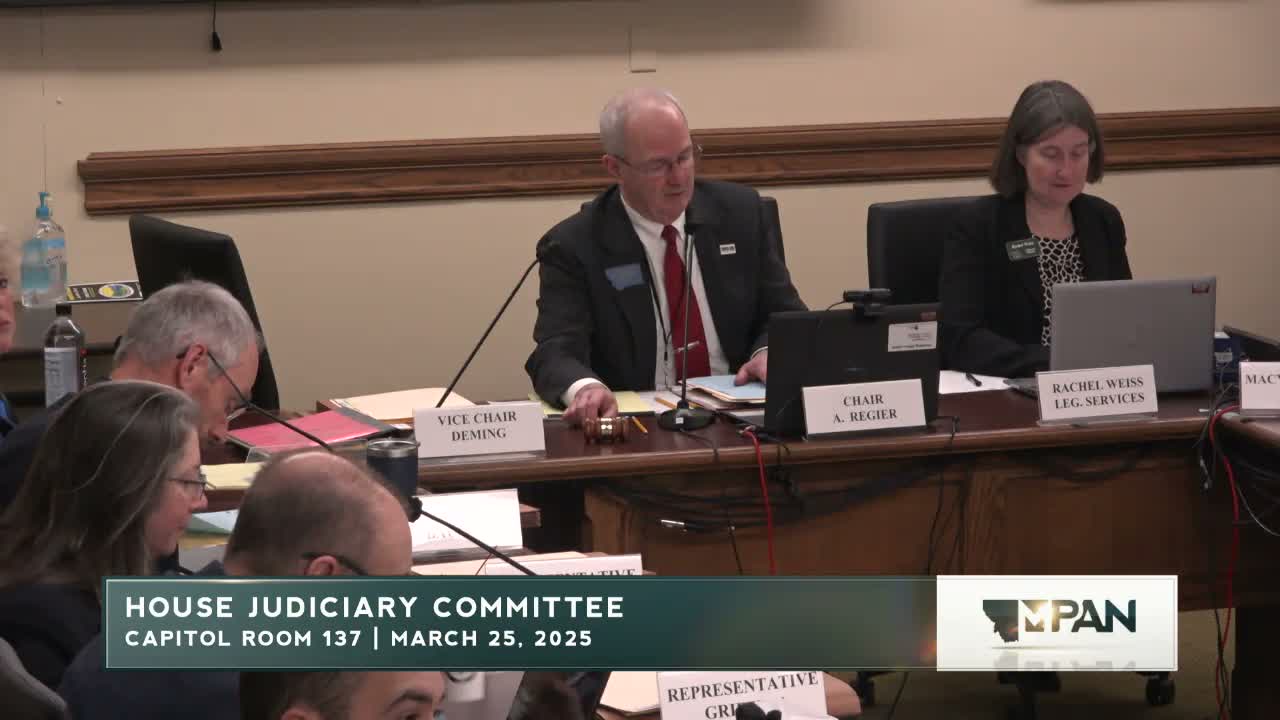
Sen. Forrest Mandeville told the House Judiciary Committee his bill would ask courts to invite similarly situated governing bodies to file amicus briefs before issuing certain land‑use orders, aiming to reduce disruptive statewide effects from isolated district decisions.
Sen. Forrest Mandeville told the House Judiciary Committee that Senate Bill 239 would ask district courts, before issuing orders that interpret land‑use code, to invite other governing bodies that administer the same code to submit amicus briefs and provide “sufficient time” to respond.
Mandeville said the measure grew from challenges after out‑of‑district decisions — he cited the Horse Creek Hills case — produced statewide ripples in how counties interpret subdivision and primary review criteria. “This would…allow the courts to kind of set that…look this is a—simple what we think is simple we have a week this is more complex you have a month,” he told members.
Committee members probed practicalities. Representative Griffith warned that inviting dozens or more governing bodies could place a heavy burden on courts and asked whether the bill would effectively require district courts to notify all 56 counties and many municipalities. Mandeville said he expected courts to use existing contact methods and that “sufficient time” was intentionally flexible to reflect case complexity, but committee members pressed for clarity on notice methods and timelines.
Representative Overstreet asked whether the idea had been run past district judges; Mandeville said he had not yet contacted the district court judges association but had discussed the concept with planners and local government groups. Representative Millett called “sufficient time” subjective and urged that the committee consider a specific day count if needed.
The hearing closed with Representative Overstreet agreeing to carry the bill in the House. The committee may consider amendments to define notice procedures and timing before any executive action.
What’s next: Sponsors and staff may work to add clearer notice mechanics or a fixed response period to address committee concerns.