Get Full Government Meeting Transcripts, Videos, & Alerts Forever!
Get email alerts on the Pretrial Monitoring topic
No spam. Unsubscribe anytime.
Montana bill would let domestic‑violence fund subsidize pretrial GPS monitoring
Summary
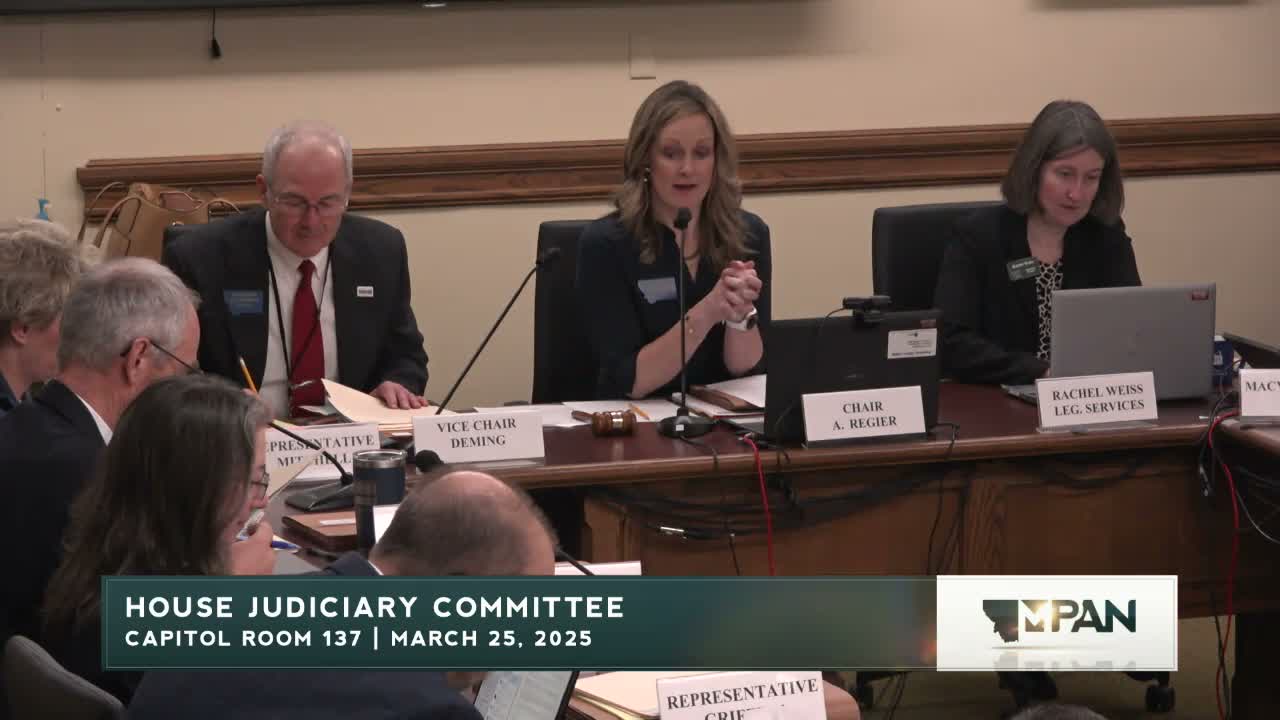
Sen. Mike Yackiewicz told the House Judiciary Committee Senate Bill 280 would allow Montana Board of Crime Control grants, funded by a portion of marriage license fees, to be used for pretrial GPS and other monitoring to reduce jail populations and support victims’ safety.
Sen. Mike Yackiewicz told the House Judiciary Committee that Senate Bill 280 would allow the Montana Board of Crime Control to direct existing domestic violence intervention grant funds toward pretrial monitoring for people charged with certain offenses. “The funding comes from the domestic violence intervention budget…30 of every marriage license fee goes into this fund,” Yackiewicz said, describing a fund balance he estimated at about $400,000 and an annual outlay of roughly $120,000.
The bill would let communities apply for grants to subsidize monitoring costs — for example ankle GPS units, drug and alcohol monitoring, and related supervision — before trial so people who cannot afford monitoring costs are not detained solely for lack of money. Yackiewicz said the measure is “not asking for any money…it's just asking some different allocation of that money for pretrial.”
Proponent Amanda Stonerock, a consultant who works with domestic violence intervention programs in Yellowstone County, testified that providers have used Board of Crime Control funds for monitoring, drug testing and counseling since 2014 and that the requested change would let programs serve more clients at the pretrial and felony levels. She told committee members that subsidies can reduce the financial burden on people required to pay for monitoring and cited risk assessments and court orders as the mechanism that determines who is referred to supervision.
Committee members pressed sponsors and witnesses on operational and safety limits. Representative Kelly and Representative Sharp asked how geofencing and alcohol‑ or drug‑detecting monitors work and whether systems create a false sense of victim protection. Yackiewicz and Stonerock both said technology has improved and emphasized courts and probation staff would be the first line of oversight; Stonerock described local practices that use validated risk assessment tools and court orders to screen eligibility.
Representative Griffith asked why the bill would allow people who previously violated an order of protection to be eligible; sponsors deferred to the statutory language and noted the bill reflects existing statutory eligibility in part. Members also asked whether the measure carries a fiscal note; sponsors said it does not create new spending, only a reallocation of currently dedicated funds.
The committee did not take a formal vote during the hearing. The bill will proceed through the committee process; sponsors requested favorable consideration.
What’s next: The committee may put the bill on an executive action calendar or consider amendments to clarify eligibility, screening, and reporting before sending it to the full House.