Get Full Government Meeting Transcripts, Videos, & Alerts Forever!
Get email alerts on the Legal Ethics topic
No spam. Unsubscribe anytime.
Bill shielding certain elected attorneys from disciplinary referrals draws sharp opposition
Summary
Senate Bill 49 would prevent referrals to the Office of Disciplinary Counsel for specified constitutional officers and legislators who are attorneys when acting in official duties. The State Bar and multiple attorneys opposed the bill, calling it a threat to professional accountability and possibly unconstitutional.
Sen. Barry Usher pitched Senate Bill 49 as a narrow measure to protect constitutional officers and other elected officials who are also attorneys from referral to the Office of Disciplinary Counsel for actions taken in the course of their public duties. "It gives some immunity. It's free speech issue," Usher said.
Bruce Spencer, representing the State Bar of Montana, opposed the measure in strong terms. The State Bar's testimony argued that lawyers are "officers of the court" and must remain subject to rules of professional conduct at all times. Spencer warned that giving attorneys a statutory carveout when they act in an official capacity would undermine public confidence and might conflict with Article 7, Section 2 of the Montana Constitution, which assigns regulation of the practice of law to the Supreme Court.
Other attorneys and commenters echoed the concern, saying the bill risks creating a two-tiered accountability system and could be open to abuse. Opponents argued the bar can and should litigate questions about the scope of disciplinary proceedings without changing professional standards by statute.
Supporters and the sponsor framed the bill as protecting legitimate official speech and noted similar protections in some other states. The sponsor argued the proposal is narrow and applies only to actions within the performance of official duties and said the bill is not intended to permit criminal acts or actions outside public duties.
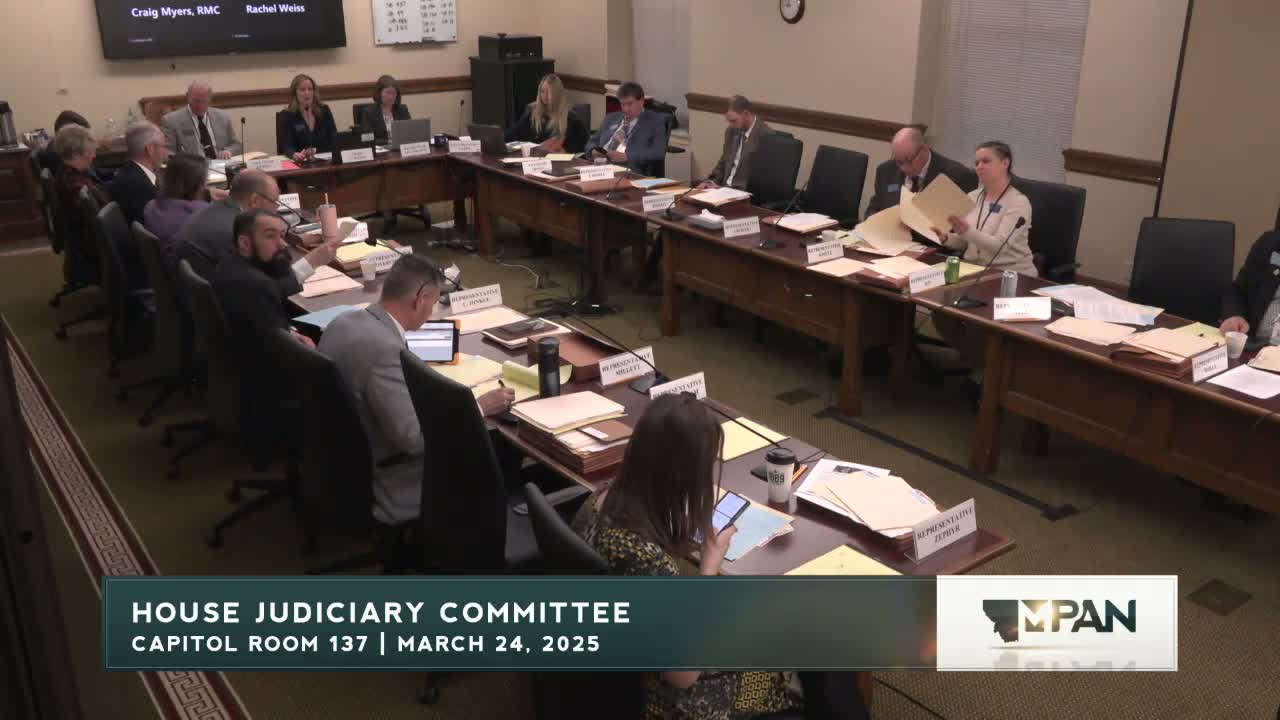
Committee questioning focused on whether the bill changes separation-of-powers principles, whether the Attorney General — who appears in court on the state's behalf — should be exempt, and how a claim that discipline would 'deter' official duties would be adjudicated. Witnesses described existing proceedings and how a commission or the Supreme Court might evaluate claims.
What’s next: The hearing closed after a long debate; the committee record includes substantial disagreement over constitutionality and professional standards.