Get Full Government Meeting Transcripts, Videos, & Alerts Forever!
Get email alerts on the Judicial Oversight topic
No spam. Unsubscribe anytime.
Proposal to modernize impeachment grounds draws warnings it could politicize removals
Summary
Senate Bill 15 would enumerate additional impeachment grounds (corruption, incompetence, negligence, oppressive use of office, misconduct). Supporters say it modernizes statutory language and fills enforcement gaps; legal groups and bar associations warned negligence is too vague and risks politicizing impeachment.
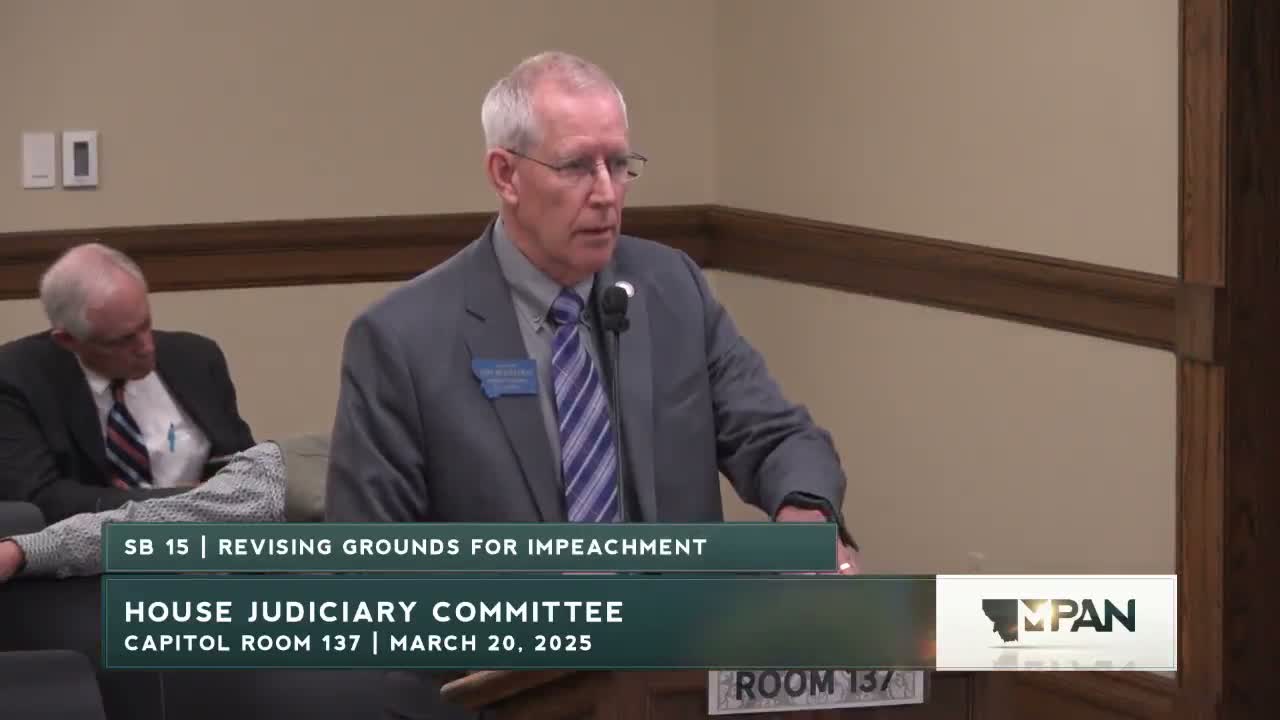
Sen. Tom McGilvrey presented Senate Bill 15 as an effort to modernize Montana’s statutory grounds for impeachment, enumerating items such as corruption, incompetence, negligence in the performance of duties, willful neglect, oppressive use of office, and a catchall misconduct provision. McGilvrey cited Article V, section 13 of the Montana Constitution and said the law should be written in modern language with clearly enumerated grounds so the House and Senate understand the options available for removal proceedings.
Opponents including the State Bar, Friends of the Third Branch, and experienced litigators told the committee the bill would lower the bar for impeachment and invite politically motivated filings. Witnesses emphasized that negligence is commonly a civil standard for mistakes and that making negligence an impeachment trigger risks turning the constitutional remedy into a partisan tool. The State Bar representative warned the measure could chill judicial independence and create a surge in litigation and complaints.
Committee members asked whether existing statutes and judicial oversight mechanisms (judicial standards commissions, JSC) already provide remedies, how standards like ‘‘negligence’’ would be defined, and whether the 2/3 vote threshold in the House and conviction threshold in the Senate are adequate guardrails. Sponsors responded that 2/3 thresholds are high and that enumerating statutory grounds would clarify, not cheapen, the process.