Get Full Government Meeting Transcripts, Videos, & Alerts Forever!
Get email alerts on the Judicial Procedure topic
No spam. Unsubscribe anytime.
Bill would shift initial review of ballot-statement disputes from Montana Supreme Court to district courts
Summary
Senate Bill 13 would remove most of the Supreme Court’s original jurisdiction over ballot-statement challenges, routing initial factfinding to district courts; supporters say it improves record development, opponents warn it will delay ballot timelines and may undercut the initiative process.
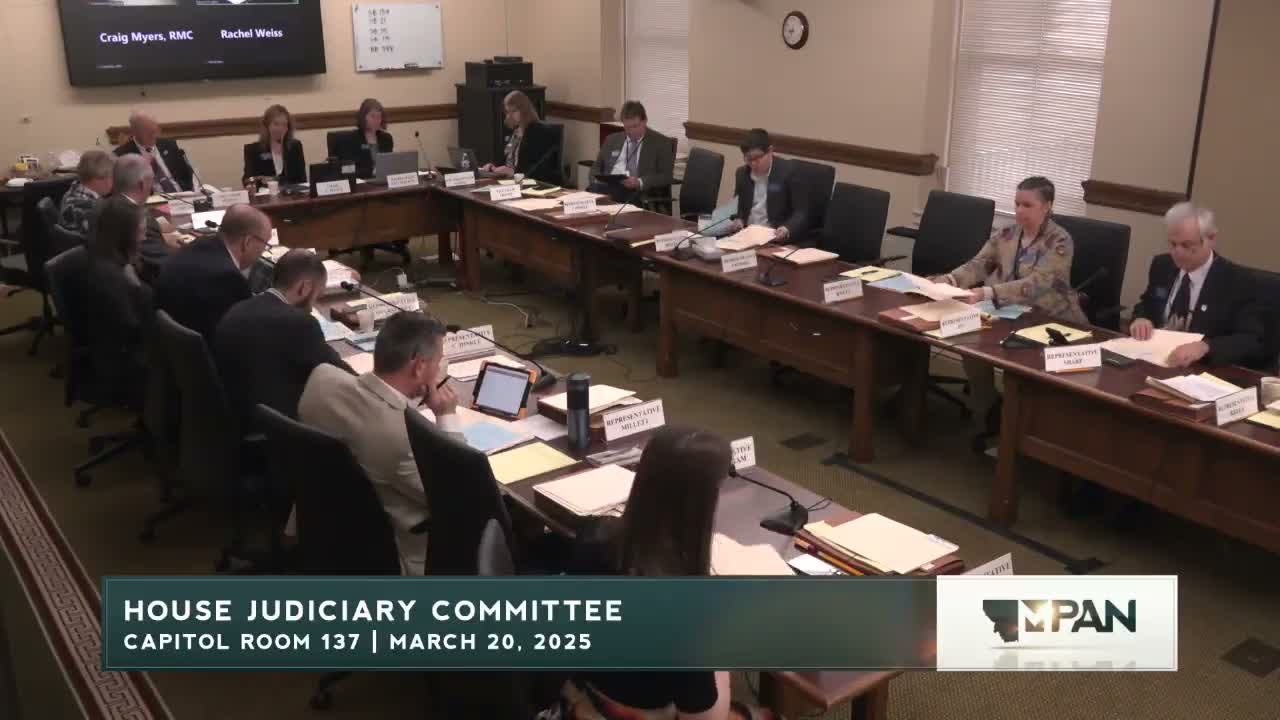
Sen. Daniel Emrich told the committee Senate Bill 13 would eliminate the Supreme Court’s original jurisdiction over most ballot-statement disputes — leaving only writs of habeas corpus as original jurisdiction — and require district courts to perform initial factfinding. Emrich said the change would produce fuller records for appellate review and restore public confidence in judicial decision-making on ballot matters.
Opponents — including attorneys and ballot-process advocates — argued current law (citing statute 32-202) already provides mechanisms for factfinding and for sending matters to district court when needed. They warned that sending the disputes first to district courts would add hearings, increase expense, lengthen timelines for signature gathering and risk undermining the initiative-and-referendum process that must meet tight electoral deadlines.
Witnesses with long experience in ballot litigation described the history: Montana shifted original jurisdiction to the Supreme Court in the late 1970s to streamline the process and to give local election officials more time to prepare ballots. Several attorneys said disputed facts in ballot disputes are rare; a district-court-first approach could be duplicative. Sponsor Emrich countered that district-court factfinding will produce more robust records for review and help protect the court’s public legitimacy.
Committee members questioned whether SB 13’s repeal language removes broader writ authorities and raised separation-of-powers concerns. The sponsor said the bill’s goal is to ensure a thorough factfinding process while maintaining expedited scheduling for pre-election disputes.